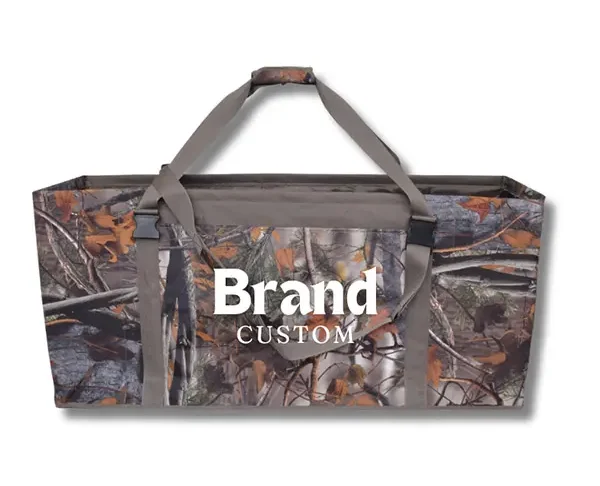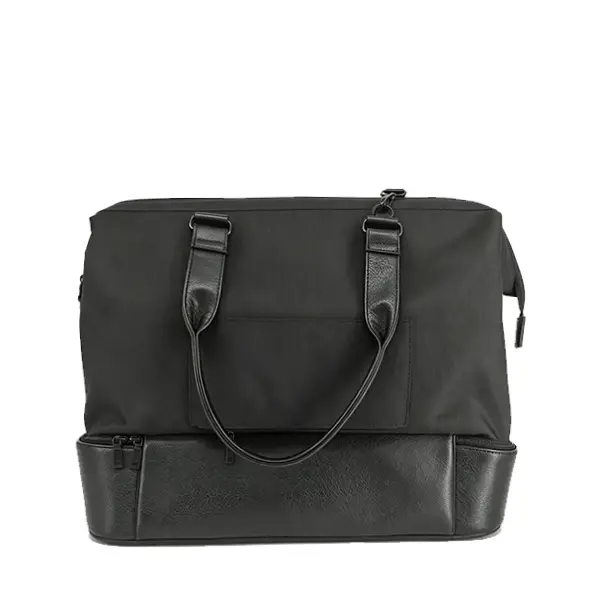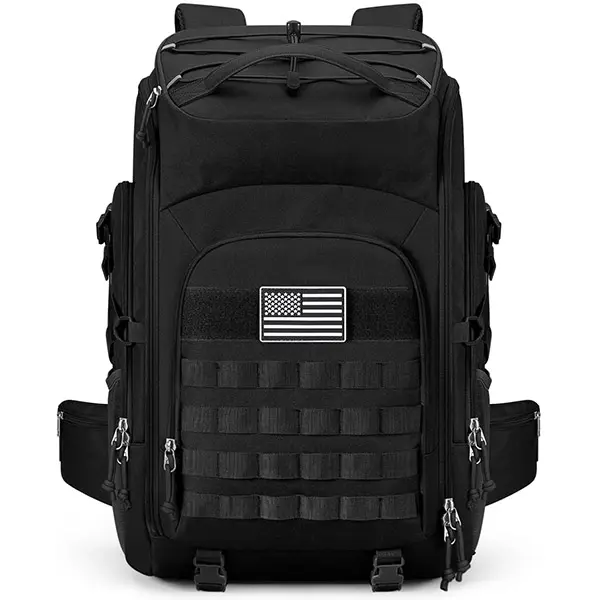
A bag quote compresses an entire material decision into one line: 600D polyester Oxford with PU coating. That line names a weave, a fiber, a yarn thickness and a finish, then quietly sets the hand, the print method and the rain performance. Buyers who cannot separate the four compare quotes that describe different fabrics.
Oxford fabric is a basket weave in which two or more warp yarns interlace with two or more weft yarns, producing a fine checkerboard surface. Bag-grade Oxford is almost always polyester filament between 210D and 1680D, back-coated for water resistance and body. The weave supplies texture; the fiber, denier and coating supply performance.
This guide separates those layers, from loom to spec sheet, so the next quote you approve describes the fabric you intend to buy.
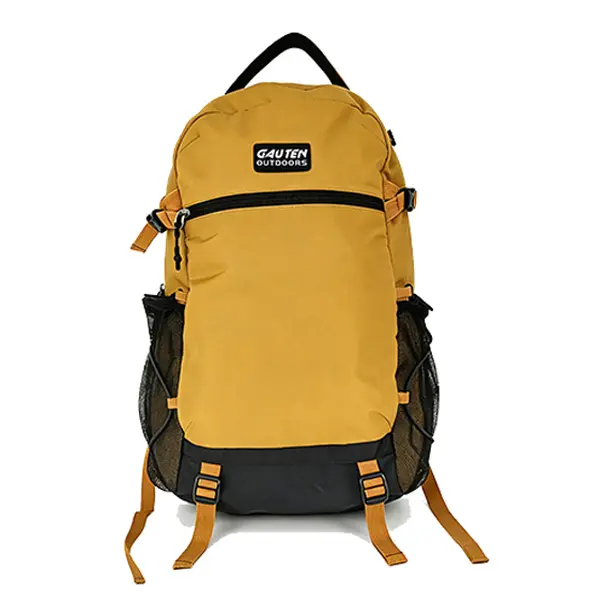
What Is Oxford Fabric?
Oxford is a weave structure first and a fiber second. A cotton Oxford shirt and a 600D polyester tool bag share the interlacing pattern and almost nothing else.
A Weave Name Before It Is a Fiber Name
In a basket weave, warp and weft pass over and under each other in pairs instead of singly. The change produces the checkerboard grain on backpack panels and gives more body per gram than a plain weave from the same yarn. References describe Oxford cloth as a 2×1 basket weave, with single weft threads crossing bundles of two warp threads. Bag cloth usually runs 2×2 or a weft rib, which packs more yarn into the area and holds coating evenly.
The name owes nothing to the university. A Scottish mill launched four shirtings named after Oxford, Cambridge, Yale and Harvard in the 19th century, and only Oxford survived, carried by the button-down shirt. For bags, cotton Oxford matters only in heritage lines.
Why Bags Standardized on Polyester
Polyester filament replaced cotton for three reasons: lower cost at equal strength, better coating adhesion after washing, and no mildew in a damp warehouse. Nylon Oxford adds 10 to 15 percent abrasion and tear resistance at identical construction, which is why a hiking backpack manufacturer selling into wet climates pays the 20 to 35 percent premium. Elsewhere polyester is the default, and its price spread comes from denier, density and coating rather than from the weave.
How Oxford Fabric Is Made for Bags
Polyester filament is woven, desized, dyed, heat-set and back-coated before it reaches a cutting table. The coating decides water resistance and much of the hand, so it belongs in a specification as a number, not an adjective.
From Greige Roll to Coated Roll
- Warping and weaving on a water-jet loom, 150 cm wide as standard.
- Desizing and alkali reduction to strip weaving size and soften the filament.
- Dyeing and heat setting, where shade and dimensional stability are fixed.
- Back coating by knife, roller or lamination, then calendering and inspection.
What Each Coating Adds
The coating separates a soft liner from a rain-resistant shell. Add-on weight, not the type name, is the number to negotiate.
| Coating | Add-on weight | Hydrostatic head | Hand | Typical use |
|---|---|---|---|---|
| PA | 8–20 g/m² | 800–1,500 mm | Softest, almost no body | Linings, pouches, light totes |
| PU | 25–40 g/m² | 1,500–3,000 mm | Soft with light body | Default for backpacks and duffels |
| PU, double pass | 45–65 g/m² | 3,000–5,000 mm | Firm, slightly stiff | Laptop bags, travel bags |
| TPU | 30–60 g/m² | 5,000–10,000 mm | Rubbery, weldable | Seam-sealed waterproof bags |
| PVC | 80–150 g/m² | 3,000–6,000 mm | Stiff and heavy | Tool bags, luggage shells |
| Silver | 20–40 g/m² | Not rated | Slight metallic sheen | Cooler bags, heat reflection |
A 420D with a 55 g/m² PU coat beats a 600D with a 20 g/m² PA coat in rain and feels lighter. Denier sells the story; the coating decides the complaint rate.
What Are the Different Types of Oxford Fabric?
The industry sorts Oxford fabric four ways: by denier, by fiber, by weave variant and by finish. Denier is the one that appears on quotes, and it is the least self-explanatory.
By Denier
The denier measurement is the mass in grams of 9,000 meters of yarn, so 600D yarn weighs 600 grams at that length. Thread density falls as denier climbs, because thicker yarns occupy more space.
| Grade | Coated weight | Threads per inch, warp x weft | Typical use |
|---|---|---|---|
| 210D | 110–160 g/m² | 70 x 64 | Linings, drawstring bags, packing cubes |
| 420D | 180–260 g/m² | 50 x 46 | Daypacks, commuter bags, storage |
| 600D | 250–340 g/m² | 42 x 38 | Backpacks, duffels, tool bags, pet carriers |
| 840D | 300–380 g/m² | 36 x 34 | Trolley cases, heavy travel bags |
| 1000D | 340–430 g/m² | 32 x 30 | Tactical packs, protective cases |
| 1680D | 560–660 g/m² | 24 x 22 | Luggage shells, base and corner panels |
420D is the grade a laptop backpack manufacturer usually settles on for a commuter shell: it carries a laptop without feeling like a suitcase.
By Fiber
- Polyester filament, FDY or DTY, is the volume material and takes coatings predictably.
- Nylon Oxford is lighter at equal strength and more abrasion resistant, at a higher price.
- Cotton and polyester-cotton Oxford belong to shirting and heritage bag lines, where the grain is the point.
- Recycled rPET Oxford, usually GRS certified, performs close to virgin and is now standard for brands with published material targets.
By Weave Variant
Plain basket weave is the baseline. Diamond and grid weaves build a raised pattern into the interlacing, so the texture survives abrasion. Ripstop Oxford adds a heavier yarn at intervals to stop a tear from running. Twill-look Oxford trades the checkerboard grain for a diagonal surface, and jacquard or printed bases are chosen when the fabric itself is the branding.
By Finish
Finishers add ultraviolet stabilizers for covers, flame retardancy to NFPA 701 or ISO 6941, anti-mildew treatments for medical and cooler bags, and C0 fluorine-free repellents where long-chain fluorochemicals are restricted. Calendering is the cheapest upgrade: more sheen and sharper print for a fraction of a cent per meter.
Properties That Decide How an Oxford Bag Performs
Oxford fabric’s reputation rests on three properties: abrasion resistance, tear strength and a favorable strength-to-weight ratio. Water resistance is a fourth, and it belongs to the coating rather than the cloth.
Abrasion and Tear
Abrasion is reported as cycles on a Martindale or Taber machine; tear is the force needed to propagate a slit. The two do not move in lockstep, because tear depends on weave geometry and yarn mobility as much as on yarn size.
| Grade | Martindale cycles | Tongue tear |
|---|---|---|
| 420D | 15,000–22,000 | 90–140 N |
| 600D | 18,000–26,000 | 220–320 N |
| 1000D | 30,000–45,000 | 320–450 N |
| 1680D | 55,000–85,000 | 520–760 N |
The jump between 420D and 600D is larger than the weight difference suggests, which is why 600D became the volume grade for anything carried daily.
Water Resistance and Where It Fails
Hydrostatic head is the water column the fabric holds before leaking: under 1,500 mm covers drizzle, 1,500 to 3,000 mm covers steady rain for an hour or two, and above 5,000 mm approaches sustained protection. A coated fabric is still not a waterproof bag. Water enters at needle holes, at zipper tape and at untaped stitch lines long before the coating fails, so a waterproof claim without seam sealing is incomplete.
Weight, Hand and Shape Retention
At equal abrasion resistance, Oxford runs 30 to 40 percent lighter than canvas or denim, which matters after two hours on a shoulder. Its body comes from coating weight and density as much as denier, so a tight 420D with double-pass PU can stand straighter than a loose 600D with a thin coat.
Is an Oxford Cloth Bag Durable?
Yes, with one qualifier: the fabric is durable, the bag is only as durable as its weakest component. In practice, seams, zippers, coatings and bottom panels fail before the weave does.
What Wear Actually Looks Like
Four failure modes account for most returns. Corner and base abrasion comes first, because those points take the load when the bag is set down. Coating peel or cold cracking appears on PVC-heavy builds after a winter in an unheated warehouse. Ultraviolet fade bleaches dark panels. Seam slippage opens where stitch density is low. Only the first is a fabric problem; the rest are construction decisions a spec sheet can prevent.
How to Read a Durability Claim
A durability claim without a method and a cycle count is marketing. “Heavy duty” cannot be compared across suppliers; “Martindale 25,000 cycles, ISO 12947-2, no hole” can be accepted or rejected. Put the number, the method and the acceptance criterion in the purchase order.
What Is Oxford Fabric Commonly Used For?
Oxford fabric is used wherever a woven shell needs strength, printable surface and moderate water resistance at low cost: backpacks, duffels, luggage, covers, pet carriers and promotional bags dominate production.
Bags and Luggage
| Bag type | Recommended grade | Reason |
|---|---|---|
| Commuter and laptop backpack | 420D, PU 40 g/m² | Weight matters more than maximum abrasion |
| Hiking and outdoor daypack | 600D, PU double pass | Abrasion at the base and sides, rain exposure |
| Gym and sports duffel | 600D, PU or PVC | Shape retention, wipe-clean surface |
| Travel bag and trolley case | 600D body, 1680D base | Weight budget with reinforced contact points |
| Tool and equipment bag | 1000D to 1680D | Cut and abrasion resistance under hard loads |
| Pet carrier and cooler bag | 600D, silver or TPU | Cleanability, odor control, thermal reflection |
A travel bag manufacturer pairs a lighter body with a heavy base, because that is the panel meeting airport floors.
What an Oxford Material Bag Actually Promises
A product page that says “Oxford material” promises a basket-woven synthetic shell and little more: not a denier, not a coating weight, not a hydrostatic rating, not sealed seams. Two bags described identically can differ by 40 percent in fabric cost. Three questions close the gap: what denier is the shell, what coating weight sits behind it, and are the seams taped where rain protection is claimed. If the second answer is vague, the first is decoration.
Beyond Bags
The same cloth covers furniture and machines, tent floors and rain flies, cargo curtains, medical organizers and trade show giveaways. Each pushes a different variable: covers want UV stability, tent floors want hydrostatic head, medical bags want wipeable finishes, giveaways want print quality at the lowest weight that survives a season.
Oxford Fabric vs Canvas, Nylon and Ripstop
Oxford wins on balance rather than on any single property: lighter than canvas, stiffer than plain nylon, easier to print than ripstop, cheaper than all three at comparable performance.
| Fabric | Coated weight | Abrasion | Tear | Hand | Cost index |
|---|---|---|---|---|---|
| 600D Oxford | 250–340 g/m² | High | High | Structured | 1.0 |
| 12 oz canvas | 400–450 g/m² | Medium | Medium | Stiff, textured | 1.1–1.3 |
| 420D nylon Oxford | 180–240 g/m² | High | High | Softer, more stretch | 1.3–1.5 |
| 210D ripstop nylon | 100–140 g/m² | Medium | Very high against propagation | Light, crinkly | 1.5–1.8 |
Canvas brings breathability and a surface no coating reproduces, and remains right for heritage retail. Nylon wins where grams count and the budget allows. Ripstop wins where a tear must not propagate, which is why it dominates tents and ultralight packs. Oxford keeps the middle: structured enough for a loaded bag, cheap enough for volume, printable enough for brand programs.
How to Specify Oxford Fabric for a Bag Order
Name six things: denier with filament count, target weight after coating, weave, coating type with add-on weight, test methods and tolerances. Quotes built on that brief land within 5 percent of each other; quotes built on “600D Oxford” can differ by 25 percent.
Six Lines a Spec Sheet Needs
- Denier and filament count, written 600D/96F rather than 600D.
- Finished weight in g/m² after coating, plus or minus 5 percent.
- Weave, such as 2×2 basket or weft rib.
- Coating chemistry and add-on weight, for example PU at 40 g/m².
- Test methods and acceptance values for tear, abrasion and hydrostatic head.
- Color at gray scale 4 to 5, and AQL 2.5.
Test Methods and Tolerances
| Property | Method | Typical acceptance |
|---|---|---|
| Tensile strength | ASTM D5034 | 600 N warp, 500 N weft at 600D |
| Tear strength | ASTM D2261 | 240 N minimum at 600D |
| Abrasion | ASTM D3884 or ISO 12947-2 | 20,000 cycles, no hole |
| Hydrostatic head | AATCC 127 or ISO 811 | 2,000 mm minimum for a rain shell |
| Spray rating | AATCC 22 | Grade 4 after five washes |
| Lightfastness | AATCC 16 | Grade 4 at 40 hours |
The AATCC test methods index lists each procedure by number, which ends disagreements about what “water resistant” meant. A bag manufacturing services team that already runs these tests will quote to your method, not its own habit, which removes most of the surprise at inspection.
FAQ
Three questions sit outside the specification sheet but decide whether the material survives its first year of use.
Can Oxford fabric be recycled or made from recycled content?
Polyester Oxford is mechanically recyclable, but the coating must be separated first and most municipal streams will not take it. Recycled rPET Oxford with GRS certification performs close to virgin; the constraint is color, since feedstock limits the shade range.
Does printing or embroidery weaken Oxford fabric?
Screen printing and heat transfer sit on the coated face and leave strength intact. Sublimation needs an uncoated or prepared surface, so it runs on white grounds. Embroidery is the risk: every needle penetration holes the coating, and a dense logo on a waterproof panel becomes a leak path tape cannot fix.
How should an Oxford bag be washed without damaging the coating?
Wipe with a damp cloth and mild soap. For a full wash, use water under 30°C, no bleach, no softener and no machine drying, since heat cracks PU and PVC films. Air dry in shade. Repellency fades with washing and returns with a spray-on finish on a clean, dry surface.