Few packing decisions shape a trip as much as the size of the bag you carry everything in. Travel backpacks range from slim 20-litre daypacks to expedition packs above 85 litres, and choosing the wrong capacity leads to familiar problems: an oversized bag invites overpacking, shoulder pain and checked-bag fees, while an undersized one forces painful choices about what to leave behind. Airline baggage rules add another layer of pressure, because a backpack that does not fit the overhead bin can turn a smooth airport experience into an unplanned queue at the check-in desk.
For most travellers, a 30 to 40 litre backpack is the ideal size. This range holds one to two weeks of clothing, meets the carry-on limits of most airlines, and stays comfortable on cobblestone streets, stairs and public transport. Weekend trips call for 20 to 30 litres, multi-week journeys through mixed climates justify 40 to 50 litres, and only trips that involve camping gear or specialised equipment really need 55 litres or more.
The sections below explain how backpack capacity is measured, how airline rules constrain your choice, and how to match a backpack to your trip length and travel style.
How Backpack Sizes Are Measured
Backpack size is measured in litres, which describe the total internal volume of the main compartment and external pockets. Most travel backpacks fall between 20 and 85 litres, and each size band serves a clearly different purpose.
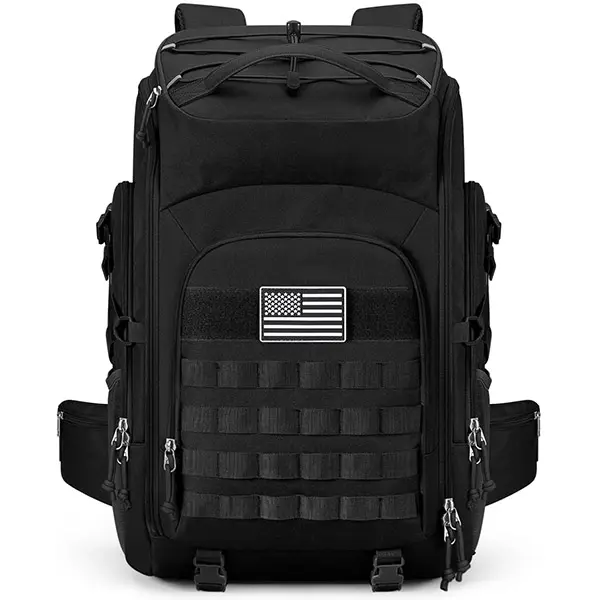
A litre rating tells you how much space is available, but not how that space is arranged. Two 40-litre backpacks can behave very differently depending on pocket layout, padding thickness, frame design and whether the main compartment opens like a suitcase or from the top. When you browse a travel bag manufacturer catalogue, you will usually find products grouped into the same broad capacity bands, which makes comparison easier:
| Capacity | Best For | Typical Trip Length |
| Under 20L | Daily carry, day trips, everyday use | A few hours |
| 20–30L | Weekend breaks, light packers | 1–3 days |
| 30–40L | Carry-on travel, most holidays | Up to 2 weeks |
| 40–50L | Extended trips, mixed climates | 2–4 weeks |
| 50–65L | Gear-heavy travel, camping | Weeks to months |
| 65L+ | Expeditions, remote trekking | Month or longer |
Keep in mind that volume is only half the story. Airlines regulate carry-on luggage by external dimensions and weight rather than litres, so a nominally small backpack with a bulky frame can still fail the sizer at the gate.
What Is the Ideal Backpack Size for Travel?
A 30 to 40 litre backpack suits the majority of travellers because it balances packing capacity, portability and airline compliance. It is big enough for a serious trip yet small enough to discourage the overpacking that makes long travel days miserable.
The ideal size also depends on how you travel, and three broad styles cover most situations.
City Travel and Hostel Stays
Travellers who move between cities by train or bus, sleep in hotels or hostels, and do laundry every few days rarely need more than 40 litres. A bag in the 30 to 40 litre range fits overhead racks on regional trains, keeps weight manageable on stairs and uneven pavements, and still swallows a fortnight of clothing when packed sensibly. Features such as lockable zippers, a quick-access pocket for documents and a luggage pass-through add more practical value than extra volume.
Digital Nomads and Business Travel
Remote workers and business travellers carry laptops, chargers, adapters and sometimes a change of presentable clothing. A 35 to 45 litre backpack with a dedicated, lie-flat laptop compartment is usually the sweet spot: it protects electronics, keeps cables organised, and still qualifies as carry-on luggage on most carriers. If you are unsure how travel capacities compare with everyday bags, understanding what counts as a standard backpack size provides a useful reference point before you size up.
Outdoor and Adventure Travel
Trips that involve multi-day trekking, camping or bulky technical gear sit outside the carry-on conversation entirely. Capacities of 50 to 65 litres, an internal frame and a padded hip belt become relevant once you carry a sleeping system, cooking equipment or insulation for cold nights. For these itineraries, a detailed hiking backpack size guide is a better starting point than general travel advice.
What Size Backpack Is Allowed on a Plane?
Most airlines accept a carry-on backpack of roughly 40 to 45 litres, provided its dimensions do not exceed about 22 x 14 x 9 inches, and budget carriers often enforce stricter limits of 40 litres or less.
Carry-on rules are set by each individual airline, and they are defined by dimensions and weight rather than by litre ratings. The International Air Transport Association recommends an optimum cabin bag size of 55 x 35 x 20 cm so that every passenger on a typical narrow-body aircraft can stow one bag, but this figure is a guideline rather than a legal maximum. Because hand luggage policies differ from carrier to carrier, the safe strategy is to pack for the strictest airline on your itinerary, especially if budget carriers are involved.
The table below summarises the typical limits you will encounter:
| Limit Type | Full-Service Carriers | Budget Carriers |
| Volume | Up to 45L | 40L or less |
| Dimensions | 22 x 14 x 9 in (56 x 36 x 23 cm) | 55 x 35 x 20 cm or smaller |
| Weight | Often unchecked | Commonly 7–10 kg, strictly enforced |
| Oversized bag | Gate check, usually free | Gate-check or excess fees at boarding |
Weight deserves more attention than most travellers give it. A fully loaded 40-litre backpack commonly weighs 9 to 11 kilograms, which sits at or above the threshold several low-cost carriers apply. If your route includes such an airline, choose a lightweight bag and plan to wear your heaviest items on the plane.
Can I Take a 40L Backpack as a Carry-On?
Yes, in most cases. A 40-litre backpack fits the carry-on allowance of the large majority of airlines as long as its packed dimensions stay within the airline’s linear limits, which usually means no more than 22 x 14 x 9 inches. Three practical cautions apply. First, budget carriers in Europe and Asia often measure bags at the gate, so a 40-litre pack stuffed to its absolute maximum may still fail the sizer. Second, external pockets, dangling straps and attached water bottles count toward the dimensions, so compress the bag before boarding. Third, a bag marketed as 45 or 50 litres is frequently too large for cabin travel even when the product page claims otherwise; always verify the packed dimensions rather than trusting the litre number.
Matching Backpack Size to Your Trip Length
Trip length sets a reliable baseline for capacity: 20 to 30 litres for weekends, 30 to 40 litres for trips up to two weeks, 40 to 50 litres for three to four weeks, and 55 litres or more only when you carry camping or technical gear.
| Trip Length | Recommended Capacity | Key Assumption |
| 1–3 days | 20–30L | Everyday clothing, no laundry needed |
| 4–7 days | 30–40L | One week of clothing |
| 1–2 weeks | 35–40L | Laundry every 5–7 days |
| 3–4 weeks | 40–50L | Regular laundry, mixed climates |
| 1 month or longer | 45–55L | Laundry en route, versatile layers |
| Camping or expedition | 55L+ | Sleeping and cooking gear carried |
The logic behind these numbers is simple: after roughly one week, the amount of clothing you need stops growing. Long trips do not require proportionally larger backpacks; they require a washing routine. Travellers who plan to do laundry every five to seven days can comfortably stretch a 40-litre bag across a month-long journey.
What Size Bag for 3 Weeks Travelling?
For a three-week trip, a 40 to 50 litre backpack is the practical answer for most travellers, paired with access to laundry every week or so. This capacity holds about a week’s worth of clothing, a light jacket and a pair of spare shoes with room left for souvenirs. Resist the temptation to buy a 65-litre pack for three weeks of city or hostel travel. Larger bags tend to fill themselves, and hauling 15 kilograms of rarely worn clothing through train stations and up apartment stairs costs far more energy than the extra space saves. If your itinerary includes cold-weather destinations or specialised equipment, move toward the upper end of the range; in warm climates with easy laundry, the lower end is enough.
Factors Beyond Capacity That Affect Backpack Size
Climate, laundry access, planned activities and your own body measurements can each shift the capacity you actually need by 5 to 10 litres in either direction.
Climate and Season
Cold-weather destinations demand bulky insulation, which occupies far more volume than the equivalent summer wardrobe. A down jacket, a fleece mid-layer and long trousers can consume 10 to 15 litres on their own, so winter travellers should add capacity, choose compressible fabrics and plan outfits that layer interchangeably. Warm-climate travellers enjoy the opposite effect: lightweight, fast-drying clothing packs down small and can be washed in a hostel sink overnight.
Activities and Equipment
Photography gear, sports equipment, medical supplies or a drone kit can consume a surprising share of your capacity before clothing enters the equation. Make a realistic inventory of non-clothing items first, assign them a volume estimate, and only then choose the bag size that leaves enough room for garments. If your trip blends city travel with day hikes, a moderate capacity paired with good organisation usually beats a single enormous bag.
Fit and Comfort
Two backpacks of identical capacity can feel completely different on your back. Torso length, hip belt position and strap padding determine how weight transfers from shoulders to hips, which matters far more on hour three of a transit day than on minute one in the shop. As a rule of thumb, a comfortably loaded travel backpack should weigh no more than about 15 percent of your body weight, so a smaller capacity that enforces discipline often produces a better travel experience than a roomy bag that invites excess.
Tips to Make a Smaller Backpack Work
Disciplined packing easily saves 10 to 15 litres of capacity, which means most travellers can carry a smaller and lighter backpack than they first assume.
The following techniques reliably compress a packing list without sacrificing essentials:
- Use packing cubes to compress clothing, keep categories visible and prevent the main compartment from turning into a bottomless void.
- Roll clothes instead of folding them. Rolling saves roughly 20 to 30 percent of the space folded items occupy and reduces creasing.
- Build a mix-and-match wardrobe in two or three colours so every top pairs with every bottom, cutting the number of garments you need by a third.
- Choose fast-drying, lightweight fabrics you can wash in the evening and wear again the next morning.
- Wear your bulkiest items, typically shoes and the outer jacket, on the plane instead of packing them.
- Leave 10 to 20 percent of the bag empty at departure. Spare space costs nothing on day one and absorbs souvenirs, gifts and the inevitable extras acquired en route.
- Pack for one week regardless of trip length, then rely on laundry. This single habit removes the most common reason travellers overestimate the backpack size they need.
Applied together, these habits let a 35 or 40 litre bag serve journeys that many travellers assume require 55 litres or more, and a smaller carry-on-compliant backpack repays you at every flight with saved fees, skipped baggage claim and lighter steps through the terminal.
Frequently Asked Questions
Is a 25L backpack big enough for travel?
A 25-litre backpack is enough for overnight trips, weekend breaks and minimalist city travel, especially for travellers who pack only clothing, toiletries and a tablet. It is generally too small for trips longer than about three days or for travellers who carry a laptop, a second pair of shoes or camera equipment. Its advantage is that virtually every airline, including the strictest budget carriers, accepts it as a carry-on or even a personal item.
Should I choose a top-loading or front-loading travel backpack?
Front-loading, clamshell-style backpacks open like a suitcase, which makes it easy to reach anything without unpacking the whole bag. Top-loading designs are typically lighter, more weather-resistant and better suited to hiking, but extracting an item packed at the bottom requires digging. For city-based travel with frequent hotel changes, front-loading designs are usually the more practical choice.
How heavy should a loaded travel backpack be?
Aim for a total packed weight of no more than 15 percent of your body weight, and ideally closer to 10 percent for warm-climate trips. A 70-kilogram traveller should therefore target a load of roughly 7 to 10 kilograms. Staying within this range protects your shoulders and lower back across long transit days and keeps the bag within the weight limits enforced by budget airlines.