A backpack looks simple until you start shopping for one. Sizes appear as liters, inches, and centimeters, and the same 30-liter label can feel roomy on one pack and cramped on another. For students, commuters, and travelers, the wrong size means sore shoulders or gear that will not fit. Online filters sort by liters and inches, yet the numbers rarely explain what they mean for your back. This guide explains what people actually mean by a standard backpack size and how dimensions break down by use.
A standard backpack size for everyday use is about 20 to 30 liters, with external dimensions near 45 to 50 cm tall, 30 to 35 cm wide, and 15 to 20 cm deep. That range carries a laptop, books, and daily essentials without becoming bulky, which is why most adults picture a pack in this zone when they say backpack.
Use the sections below to match a backpack size to your situation, from school and commuting to travel and outdoor use.
What counts as a standard backpack size
A standard backpack size is the everyday adult daypack format of roughly 20 to 30 liters, measuring about 45 to 50 cm by 30 to 35 cm by 15 to 20 cm, because that capacity fits the widest range of daily needs.
Backpacks are measured two ways, and both matter. Capacity is expressed in liters, which tells you how much the pack holds. External dimensions in centimeters or inches tell you how the pack sits on your body and whether it fits under a seat or inside a locker. A liter rating alone can mislead, because padding, pockets, and shape change how much a pack really fits. That is why backpack size should mean both numbers together, not just the liter label.
Most retailers and manufacturers treat 20 to 30 liters as the normal everyday band. Below that, you have light daypacks and kids’ packs. Above it, you move into travel and hiking territory. Regional habits differ slightly: in some markets a 25-liter pack is called standard, while others treat 30 liters as the everyday norm. The 20- to 30-liter band covers both views, which is why it became the reference point most people mean by a standard backpack size.
Backpack size chart by liters
A practical backpack size chart by liters groups packs as 10 to 20 L for kids and light carry, 20 to 30 L for school and daily use, 30 to 40 L for short travel, and 40 L and above for multi-day trips.
The clearest way to compare packs is by capacity. The table below shows typical liter bands, the external size you can expect, and the job each band does best.
| Capacity | Typical dimensions (H x W x D) | Best use |
|---|---|---|
| 10 to 20 L | 35 to 41 cm x 25 to 28 cm x 12 to 15 cm | Preschool to elementary school, light errands, minimal carry |
| 20 to 30 L | 43 to 48 cm x 30 to 33 cm x 15 to 20 cm | Middle school through college, commuting, general everyday use |
| 30 to 40 L | 48 to 53 cm x 33 to 36 cm x 18 to 23 cm | One- to three-night trips, carry-on travel, work plus travel |
| 40 L and above | 53 cm plus x 36 cm plus x 23 cm plus | Weekend and multi-day travel, gear-heavy outdoor use |
A simple way to picture liters is that one liter is close to one standard water bottle. A 30-liter pack holds about 30 of them, though the exact fit depends on shape. When you read a product page, always check both the liter number and the listed external dimensions, because two packs with the same liter rating can feel different once loaded.
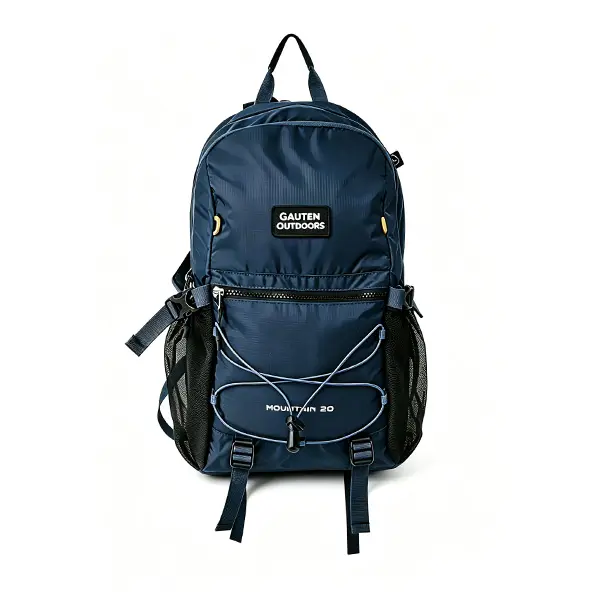
Average backpack size in cm
The average backpack size in cm for an adult daypack is about 45 to 50 cm tall, 30 to 35 cm wide, and 15 to 20 cm deep, which lines up with the common 20 to 30 liter capacity.
Average backpack size in cm matters because height, width, and depth decide how the pack wears and where it fits. A pack that is too tall can push weight above the shoulders; one that is too deep can bump against your lower back. The external measurements also decide whether a pack clears airline personal item limits or slides into a school locker. Tall and narrow packs ride differently from short and wide ones, so read all three numbers before you judge the size.
Dimensions scale with purpose. The table below shows the average external size you can expect within each category.
| Category | Average height | Average width | Average depth | Typical liters |
|---|---|---|---|---|
| Kids and light daypack | 35 to 41 cm | 25 to 28 cm | 12 to 15 cm | 10 to 20 L |
| Standard school and everyday | 43 to 48 cm | 30 to 33 cm | 15 to 20 cm | 20 to 30 L |
| Commuter laptop pack | 46 to 50 cm | 33 to 35 cm | 18 to 23 cm | 25 to 35 L |
| Hiking daypack | 46 to 51 cm | 30 to 33 cm | 20 to 25 cm | 20 to 40 L |
| Weekend travel pack | 51 to 56 cm | 33 to 36 cm | 23 to 28 cm | 35 to 50 L |
Two packs can share a liter number yet feel different in centimeters. Thick padding, a rigid frame, and internal dividers eat space, while a soft panel loader uses every centimeter. Always read the stated dimensions, not just the liter rating, before you buy.
Standard school backpack size in cm
A standard school backpack size in cm runs about 43 to 46 cm tall, 30 to 33 cm wide, and 18 to 20 cm deep for middle and high school students, equal to roughly 22 to 35 liters, because that capacity holds textbooks, a laptop, and lunch without overloading a growing body.
What is a normal size backpack for school depends on the student’s age and height, not a single fixed number. A pack that fits a high schooler will overwhelm a first grader. The safest approach is to size the bag to the child, then keep the loaded weight low. The American Academy of Pediatrics notes a loaded backpack should stay under about 10 to 15 percent of the student body weight, a point covered in their backpack safety guidance at HealthyChildren.org. For ready-made options built to these proportions, browse the school bag category and the large-capacity student backpack design.
Sizing a school backpack by student age
Age is the easiest starting point. Younger children need smaller, lighter packs, while older students carry more books and a larger laptop.
| Age group | Grade | Recommended capacity | Bag dimensions (H x W x D) | Max loaded weight |
|---|---|---|---|---|
| 3 to 5 | Pre-K and kindergarten | 6 to 10 L | 28 x 23 x 10 cm | 1.5 to 2.5 kg |
| 6 to 8 | Grades 1 to 3 | 10 to 15 L | 36 x 25 x 13 cm | 2.5 to 4 kg |
| 9 to 11 | Grades 4 to 6 | 15 to 22 L | 41 x 28 x 15 cm | 4 to 6 kg |
| 12 to 14 | Middle school | 22 to 28 L | 43 x 30 x 18 cm | 6 to 8 kg |
| 15 to 18 | High school | 25 to 35 L | 46 x 33 x 20 cm | 7 to 10 kg |
| 18 plus | College | 25 to 40 L | 46 x 33 x 20 cm | 8 to 12 kg |
Sizing a school backpack by student height
Health standards also size school bags to height, so the pack matches the torso instead of hanging past the hips. A commonly cited set of dimensions pairs student height with bag size.
| Student height | Bag length | Bag width | Bag height |
|---|---|---|---|
| Up to 128 cm | 28 cm | 10 cm | 30 cm |
| 128 to 144 cm | 30 cm | 12 cm | 33 cm |
| 144 to 166 cm | 30 cm | 14 cm | 38 cm |
| 166 cm and above | 32 cm | 16 cm | 42 cm |
Whatever the exact numbers, the fit rules stay the same. The top of the pack should sit near the base of the skull, the bottom should rest at or just above the waist, and the width should not exceed the student torso. Both straps must be worn, and wider padded straps spread the load better than thin ones.
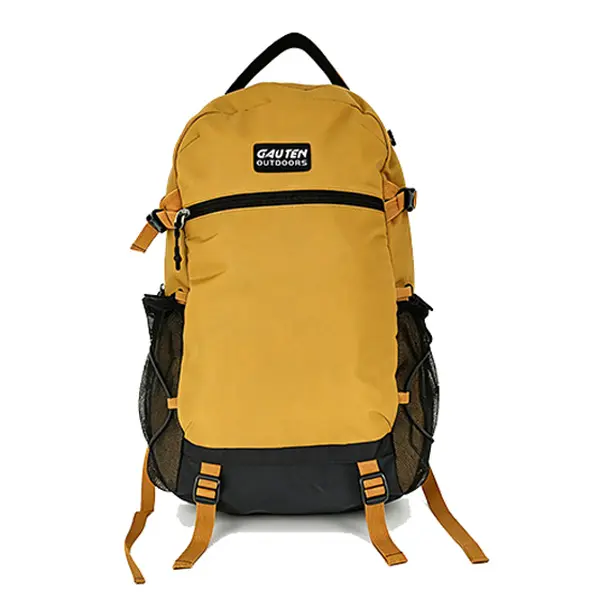
What size backpack do you need for daily use and commuting?
For daily use and commuting, a 20- to 30-liter daypack is the right size for most people, since it fits a laptop, notebook, water bottle, and small personal items while staying compact on a bus or train.
A daypack in the 20- to 30-liter range is the everyday workhorse. If you carry a laptop, check the sleeve size: most daily packs fit a 13- to 15-inch laptop, and some accept a 16-inch model. Commuter-focused packs often run 25 to 35 liters and add a padded 15- to 17-inch sleeve, a water bottle pocket, and a front pocket for small gear. If your load is just a tablet, a book, and lunch, a 15- to 22-liter pack is enough and easier to keep tidy.
Think about how you move, not just what you carry. A slim profile rides better in a crowded subway, while a wider pack holds more but takes more space on a seat. Match the size to your real routine, and the pack will disappear into your day instead of fighting it.
How to choose the right backpack size
Choose the right backpack size by starting with your purpose, then matching liters and fit to your body, because a well-fitted smaller pack beats an oversized one that sits wrong.
Start with purpose before liters. Ask how long you travel, how often you move, and whether you need a carry-on-friendly pack. A one- to three-night trip fits a 26- to 40-liter pack; a full multi-day hike needs 40 liters and up. For air travel, most airlines allow carry-on bags up to about 45 liters and roughly 22 x 14 x 9 inches, so packs below that threshold spare you the checked bag line.
Fit matters more than capacity. Load a pack with weight, adjust the straps, and feel how the load sits across your shoulders and back. A 25-liter pack that fits will always feel better than a 35-liter pack that sags. Look for adjustable padded straps, a breathable back panel, stable weight distribution, and easy access through the top, front, or back. When in doubt, pack the items you actually carry and try the bag on, because a pack that feels balanced and empty can shift once full. For a deeper look at matching a pack to activity, see the guide on the Perfect Outdoor Backpack for All Activities.
Quick answers to common backpack size questions
Shoppers often ask about backpack size in inches, so here are direct answers to the most common ones.
Is a 16-inch backpack a full-size backpack?
A 16-inch-tall backpack is on the small side of standard, not a full-size pack. Most adult everyday and school backpacks run 17 to 19 inches tall, so 16 inches lands closer to a compact daypack. It works for light daily carry and younger students, but it is not the roomy 20- to 30-liter full-size format most people mean.
Is a 15-inch backpack big?
A 15-inch backpack is small to medium, not big. At that height it usually holds 10 to 18 liters, enough for a tablet, a book, and a few essentials. It suits minimalist commuters and elementary-age children, but it will feel tight once you add a 15-inch laptop, textbooks, and a lunch box.
Is a 16-inch backpack big enough?
For light school days or daily commuting, a 16-inch backpack is big enough if your load is modest. It can carry a small laptop, a notebook, and personal items. For heavy textbook loads or a 15- to 16-inch laptop plus binders, step up to a 17- to 19-inch, 22- to 30-liter pack so the weight sits on your hips instead of your shoulders.
Is a 15.6-inch backpack good for school?
If 15.6 inches refers to the laptop sleeve, then yes, a pack built for a 15.6-inch laptop is good for school and is a common high school and college choice. If 15.6 inches is the pack height, it is on the small side for school and best for lighter loads. Check whether the number describes the laptop or the bag before you buy.
Frequently asked questions
How is a backpack’s true capacity measured?
Capacity is measured by filling the pack with small uniform objects, such as plastic spheres, and calculating the volume, a method based on standards from groups like ASTM. This gives a real number that accounts for shape, unlike guessing from external dimensions. Two packs with the same liter label can still fit differently because padding and dividers reduce usable space.
What is the largest backpack allowed as a carry-on?
Most airlines allow carry-on bags up to about 45 liters and roughly 22 x 14 x 9 inches, though limits vary by carrier and aircraft. Packs in the 30 to 40 liter range are the safest sweet spot for one-bag travel. Always check the airline’s posted size before you fly, since regional jets can be stricter.
Can two backpacks with the same liter rating fit different amounts?
Yes. Shape, padding, frame, and internal organization change real-world capacity even when the liter number matches. A structured panel pack loses space to its frame, while a soft roll top uses more of its volume. Read both the liter rating and the external dimensions, then test pack the way you actually use it.