Choosing the right outdoor backpack can make a major difference in comfort, organization, and overall travel experience.
Whether you are planning a short day hike, a weekend camping trip, an outdoor adventure, or simply need a versatile backpack for daily commuting, the best choice is not always the one that looks the most stylish.
A good outdoor backpack should match how you plan to use it, how much you need to carry, and the environment you expect to face.
Instead of focusing only on appearance, consider the following factors before choosing your next outdoor backpack.
1. Choose the Right Backpack Capacity
Capacity is one of the first things to consider.
A backpack that is too small may force you to leave important items behind, while an oversized backpack adds unnecessary weight and often encourages overpacking.
As a general guide:
- 10–20L: Short walks, cycling, everyday commuting, and light day trips
- 20–30L: Day hiking, outdoor activities, gym use, and city travel
- 30–45L: Weekend travel, longer hikes, and light camping
- 45L and above: Multi-day trekking, camping, and equipment-heavy outdoor activities
The ideal size depends on your activity rather than simply choosing the largest capacity available.
For example, a compact 20–30L hiking backpack may be ideal for a day trip, while travelers carrying clothing, electronics, and personal items may prefer a larger 35–45L design.
2. Pay Attention to Fabric and Durability
Start with the fabric.
Outdoor backpacks regularly come into contact with rocks, branches, rain, dirt, and rough surfaces, so material durability is especially important.
Common outdoor backpack materials include:
- Nylon
- Ripstop nylon
- Polyester
- Oxford fabric
- TPU-coated fabrics
- PU-coated fabrics
Premium-grade nylon or polyester with a water-resistant coating and tear-resistant construction can provide a good balance between durability, weight, and weather protection.
Reinforcement is also important.
Pay particular attention to high-stress areas such as:
- Backpack bottom
- Shoulder strap connections
- Carry handles
- Zipper ends
- Compression strap attachment points
A well-designed backpack does not necessarily use the thickest fabric everywhere. Instead, stronger materials and additional reinforcement should be placed where wear and stress are greatest.
3. Understand Water Resistance and Waterproofing
Outdoor conditions can change quickly, so weather protection should be considered when choosing a backpack.
However, water-resistant and waterproof are not exactly the same thing.
A water-resistant backpack may protect your belongings from light rain or splashes, while a more waterproof design may use coated materials, protected zippers, sealed seams, or welded construction to provide greater protection.
Features to look for include:
- PU or TPU-coated fabric
- Water-resistant zippers
- Covered zipper flaps
- Roll-top closures
- Reinforced waterproof bottom panels
- Sealed or welded seams
- Optional rain covers
The level of waterproofing you need depends on the activity.
For casual hiking and commuting, water-resistant construction may be enough. For fishing, kayaking, boating, or long-term exposure to heavy rain, a more protective waterproof structure may be worth considering.
4. Check the Suspension and Carrying System
Next, examine the suspension system.
Even a well-designed backpack can become uncomfortable if the shoulder straps and back panel do not distribute weight properly.
Look for features such as:
- Wide padded shoulder straps
- Anatomically contoured shoulder straps
- Breathable mesh back panels
- Ventilation channels
- Adjustable sternum straps
- Padded waist belts
- Load-lifter straps
- Adjustable torso systems
A well-designed carrying system helps distribute weight more evenly across the shoulders, back, chest, and hips.
This becomes especially important when carrying heavier loads or wearing the backpack for several hours.
Breathability Matters Too
Outdoor activities often involve long periods of walking in warm conditions.
A breathable mesh back panel or raised ventilation channel can improve airflow between the backpack and your back, helping reduce heat and moisture buildup.
For hiking, trekking, cycling, and summer travel, this can significantly improve carrying comfort.
5. Look for Practical Internal Organization
Equally important is the internal organization.
A backpack with one large compartment may offer plenty of space, but it can quickly become difficult to use if smaller items are mixed together.
Well-designed outdoor backpacks often include separate storage areas for:
- Clothing
- Water bottles
- Electronics
- Snacks
- Travel documents
- Tools
- Hydration systems
- Small accessories
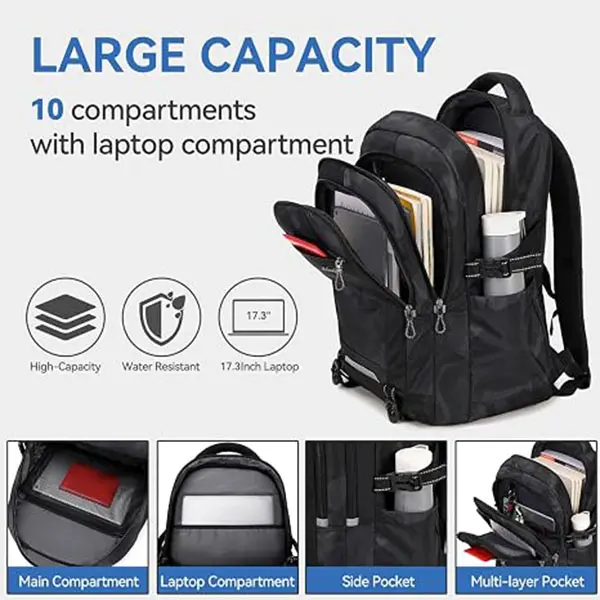
A dedicated laptop compartment can be especially useful if the backpack will also be used for commuting or travel.
Small front pockets are useful for quick-access items such as keys, sunglasses, wallets, or chargers, while internal mesh pockets help prevent small items from disappearing into the bottom of the bag.
6. Match the Backpack to Your Activity
There is no single outdoor backpack that is perfect for every situation.
The best backpack should be selected according to its primary use.
Hiking Backpack
A hiking backpack should prioritize:
- Breathable back panels
- Comfortable shoulder straps
- Hydration compatibility
- Trekking pole attachments
- Side bottle pockets
- Compression straps
- Lightweight construction
For longer hikes, hip belts and load-lifter straps become more important.
Camping Backpack
Camping backpacks usually require more capacity and stronger load support.
Useful features include:
- Larger main compartments
- Sleeping bag attachment points
- External gear straps
- Strong hip belts
- Reinforced bottoms
- Multiple compression straps
Travel Backpack
For travel, organization and accessibility become more important.
Look for:
- Clamshell openings
- Laptop compartments
- Quick-access pockets
- Luggage straps
- Internal organizers
- Carry-on-friendly dimensions
- Lockable zipper options
Fishing Backpack
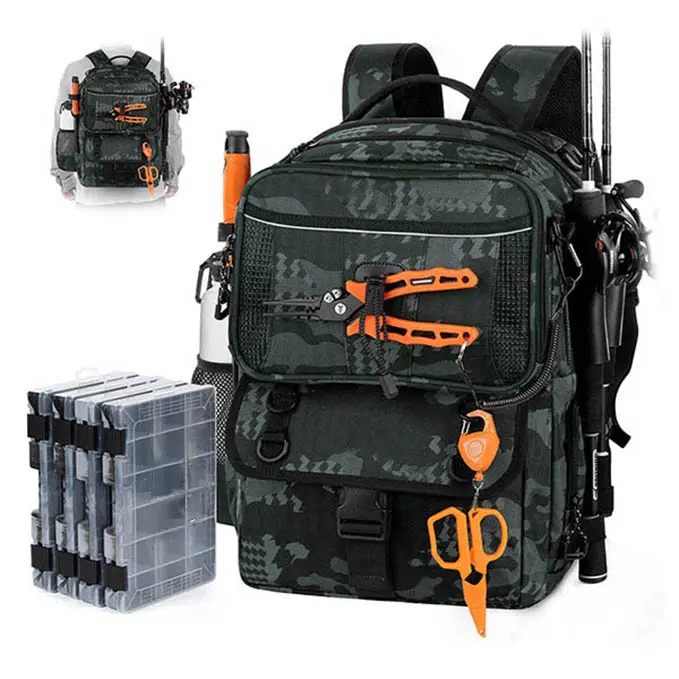
Fishing backpacks may require:
- Tackle storage
- Rod attachment points
- Water-resistant fabric
- Tool loops
- Easy-clean compartments
- Insulated sections
Hunting and Tactical Backpack
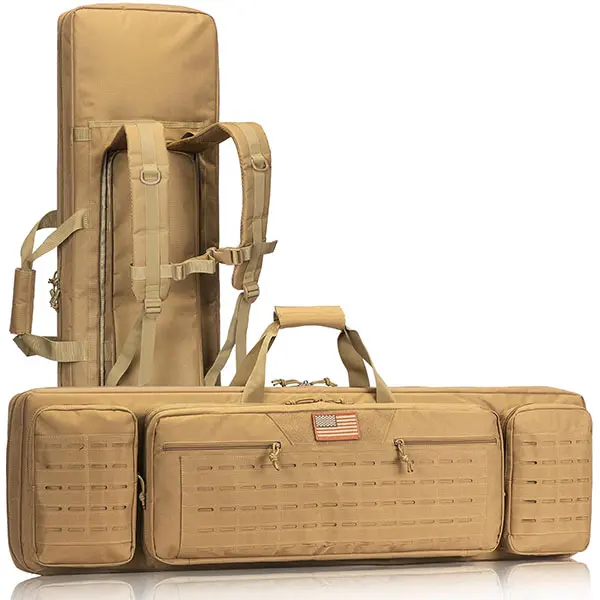
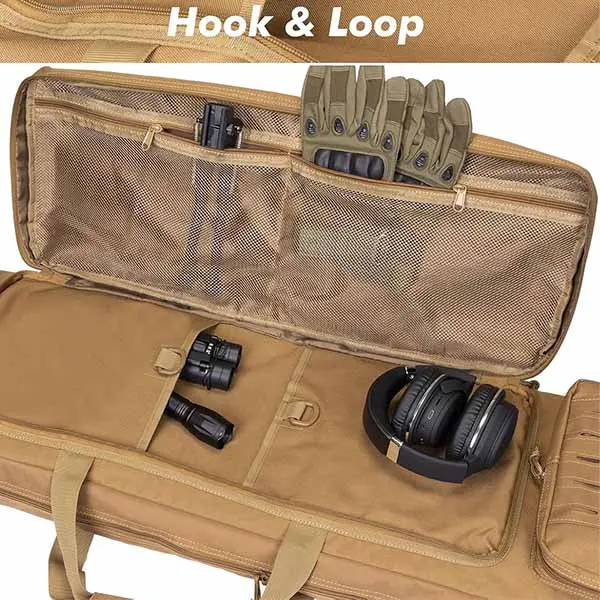
For hunting or tactical applications, useful features may include:
- MOLLE webbing
- Modular attachment points
- Reinforced straps
- Hydration compatibility
- Equipment loops
- Quiet or abrasion-resistant materials
Understanding the intended activity makes it much easier to prioritize the right features.
7. Consider Easy-Access Storage
Not every item should be stored in the main compartment.
Frequently used items should be accessible without completely unpacking the backpack.
Useful quick-access storage may include:
- Side bottle pockets
- Front zipper pockets
- Top pockets
- Waist-belt pockets
- Hidden security pockets
- Stretch mesh compartments
For travel, a hidden pocket close to the back panel can be useful for passports, cards, and valuables.
For hiking, waist pockets can provide easy access to snacks, a phone, or small tools while walking.
8. Check Zippers, Buckles, and Hardware
Small components can make a major difference in long-term durability.
Before choosing a backpack, inspect:
- Zipper smoothness
- Zipper pull strength
- Buckle quality
- Strap adjusters
- Stitching
- Handle reinforcement
- Webbing thickness
Outdoor backpacks are frequently opened, closed, adjusted, and loaded, so these parts experience repeated stress.
Reliable hardware and reinforced stitching are therefore just as important as the main fabric.
9. Consider Backpack Weight
A common mistake is choosing a backpack that is already heavy before anything is packed inside.
For hiking, travel, and everyday outdoor use, a lighter backpack can reduce fatigue.
However, the lightest option is not always the best.
Extremely lightweight designs may reduce padding, structure, reinforcement, or organizational features.
The goal should be to find a balance between:
Weight + Comfort + Durability + Functionality
For most users, a slightly heavier backpack with better shoulder support and organization may be more comfortable than an ultralight pack with minimal structure.
10. Make Sure the Backpack Fits Your Body
Capacity alone does not determine comfort.
A backpack should also fit the user’s body shape and torso length.
When possible, check:
- Shoulder strap adjustment range
- Sternum strap position
- Hip-belt placement
- Back-panel length
- Overall backpack width
Once loaded, the backpack should sit close to the body rather than pulling backward.
For heavier loads, the hip belt should help transfer part of the weight away from the shoulders.
11. Look for Versatility If You Need One Backpack for Multiple Activities
Many users today want one backpack that works across several scenarios.
For example, the same bag might be used for:
- Hiking
- Weekend travel
- Commuting
- Cycling
- Camping
- Gym visits
- Outdoor events
If versatility is important, choose a relatively clean design with adaptable features such as:
- Removable straps
- Modular attachment points
- Laptop storage
- Compression straps
- Expandable compartments
- Multiple carrying options
A well-designed multipurpose backpack can provide outdoor functionality without looking overly specialized for everyday use.
A Quick Outdoor Backpack Checklist
Before making your final choice, ask yourself:
- What activity will I use the backpack for most often?
- How much capacity do I actually need?
- Is the material durable enough for the environment?
- Do I need water resistance or full waterproofing?
- Is the back panel breathable?
- Are the shoulder straps properly padded?
- Do I need a hip belt or sternum strap?
- Does the internal organization match what I carry?
- Are frequently used items easy to access?
- Is the backpack itself reasonably lightweight?
- Are the zippers, buckles, and stitching durable?
If a backpack performs well across these areas, it is much more likely to remain comfortable and practical over long-term use.
Find the Right Outdoor Backpack with Gauten Outdoors
At Gauten Outdoors, we design and manufacture outdoor bags that combine comfort, durability, organization, and practical styling.
Our product range can support different applications, including:
- Hiking
- Camping
- Fishing
- Hunting
- Travel
- Sports
- Daily commuting
Various capacities, materials, colors, structures, and functional features are available to meet different market requirements.
For brands, distributors, retailers, and private-label projects, Gauten Outdoors also supports OEM and ODM customization, including fabric selection, backpack dimensions, internal layouts, shoulder strap structures, MOLLE systems, logo applications, and packaging.
Whether you are developing a specialized outdoor backpack or a versatile bag that works across multiple activities, choosing the right combination of capacity, material, comfort, organization, and functionality is the key to creating a product users will want to carry again and again.