Packing for an international trip can feel like a high-stakes game. Overpack, and you may find yourself struggling to lift your backpack into an overhead bin or carrying unnecessary weight through airports and train stations. Underpack, and you could spend valuable travel time searching for basic items you forgot to bring.
When you are traveling with only a backpack, every inch of space matters.
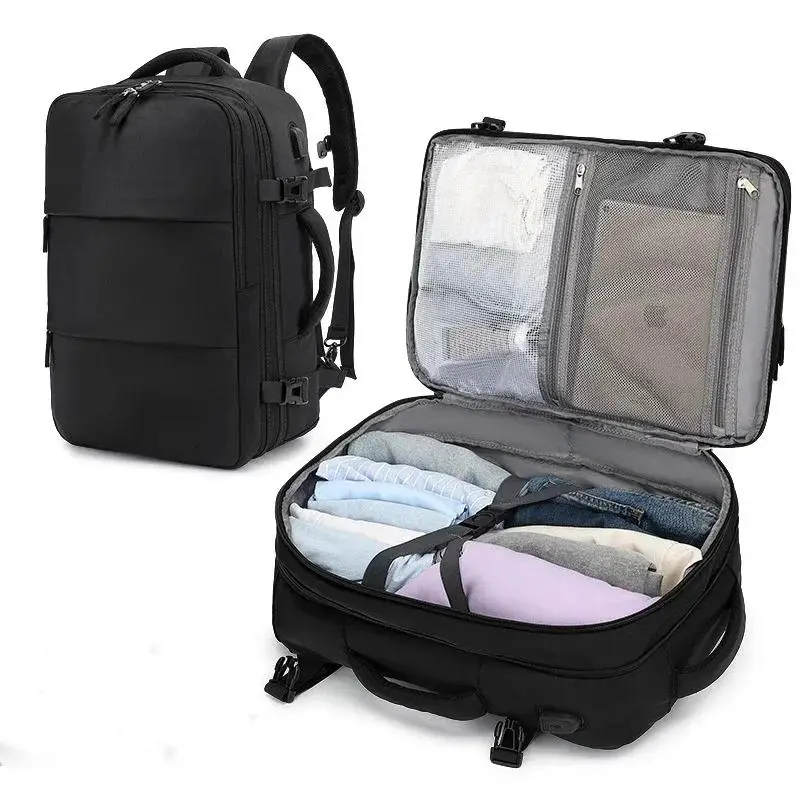
Step 1. Start with the Right Backpack and Packing List
Before deciding what to pack, start with the backpack itself.
For most international trips, a 35L–45L travel backpack offers a practical balance between storage capacity and portability. If you plan to use it as carry-on luggage, always check your airline’s latest cabin baggage size requirements before departure.
A good international travel backpack should ideally include:
- Carry-on-friendly dimensions
- Water-resistant or waterproof materials
- A dedicated laptop compartment
- Multiple internal and external pockets
- Comfortable padded shoulder straps
- Compression straps for stabilizing the load
- Easy-access pockets for travel essentials
Once you have the right backpack, create a packing list based on:
- Destination climate: hot, cold, rainy, dry, or humid
- Length of the trip
- Planned activities such as city sightseeing, hiking, beach trips, or business meetings
- Access to laundry facilities
- Airline baggage and liquid restrictions
Before putting anything into your backpack, lay everything out on a bed or floor first.
Seeing all your items together makes it much easier to spot duplicates, unnecessary clothing, and things you are unlikely to use.
A simple rule is to remove at least one or two “just in case” items before you start packing.
Step 2. Get the Weight Distribution Right
How you position items inside your backpack can make a major difference in carrying comfort.
The most important rule is:
Keep heavier items close to your back and around the shoulder-blade area.
This helps keep the backpack’s center of gravity closer to your body, reducing unnecessary pulling on your shoulders and helping the pack remain stable when walking.
A practical packing layout looks like this:
Close to the Back Panel
Place relatively heavy and dense items here, such as:
- Laptop
- Tablet
- Power bank
- Packed shoes
- Dense toiletry bags
Middle of the Backpack
Use the center area for medium-weight items, including:
- Jeans
- Jackets
- Sweaters
- Packing cubes
- Travel accessories
Soft clothing can also be used to fill gaps around harder objects.
Top and Front Pockets
Keep lightweight or frequently used items here:
- Socks
- Underwear
- Light clothing
- Snacks
- Passport
- Phone
- Wallet
- Travel documents
Side Pockets
These are ideal for quick-access items such as:
- Water bottle
- Umbrella
- Sunglasses
- Small travel accessories
Avoid placing all of your heaviest items at the very bottom of the backpack. This can make the bag feel bottom-heavy and may cause it to swing more while walking.
Step 3. Organize Your Backpack with Packing Cubes
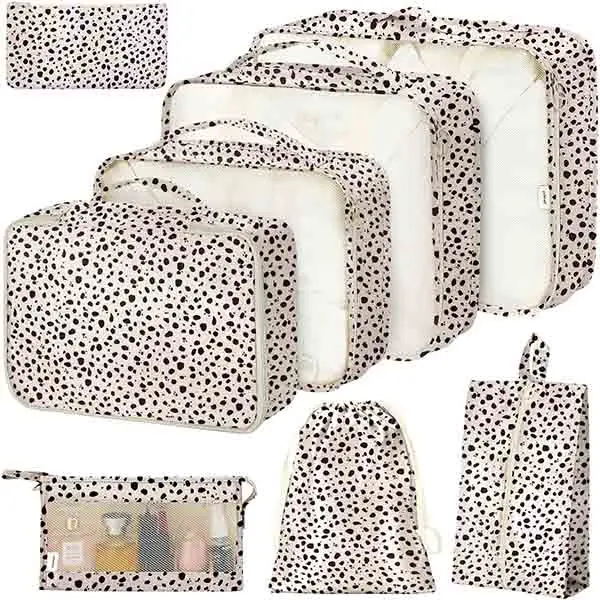
Packing cubes are one of the easiest ways to keep an international travel backpack organized.
Instead of filling the backpack with loose clothing, you can divide different categories into separate storage bags. This makes it easier to find what you need without unpacking your entire backpack.
A simple packing cube system could include:
- 1 medium packing cube: T-shirts and tops
- 1 small packing cube: Underwear and socks
- 1 medium packing cube: Pants and bottoms
- 1 small organizer pouch: Chargers, cables, adapters, and electronics
- 1 waterproof storage bag: Toiletries, wet items, or liquids
For multi-destination trips, you can also organize packing cubes by day, activity, or destination.
For example, one cube can hold your city clothes while another contains hiking or outdoor clothing.
Use Storage Bags to Separate Different Travel Essentials
Travel storage bags also help prevent small items from disappearing into the bottom of your backpack. They are particularly useful for underwear, accessories, toiletries, electronics, cosmetics, and other small travel essentials.
You can also add descriptive image alt text such as:
Travel Packing Organizer Bag for Backpack Storage
This helps both accessibility and image SEO.
Roll or Fold?
Rolling lightweight clothing such as T-shirts, underwear, and thin pants can help reduce empty gaps inside packing cubes.
However, thicker garments such as structured jackets or formal shirts may be better folded.
Rather than focusing on one packing method, the goal is simply to reduce unused space while keeping clothing easy to access.
Step 4. Pack Versatile, Lightweight Clothing
International travel becomes much easier when your clothes can be worn in multiple combinations.
Whenever possible, choose lightweight, breathable, and quick-drying fabrics.
A practical clothing list for a typical trip may include:
- 3–5 quick-dry T-shirts
- 2–3 lightweight long-sleeve tops
- 1 lightweight fleece, sweater, or compressible down jacket
- 1 waterproof or water-resistant rain jacket
- 2 pairs of pants
- 7 pairs of underwear
- 5–7 pairs of socks
- 1 set of sleepwear
- 1 pair of comfortable walking shoes
- 1 pair of lightweight sandals or slippers
The exact number should depend on your trip length and whether laundry facilities are available.
Choose Clothes That Work Together
Neutral and complementary colors make it easier to create different outfits from fewer pieces.
For example, black, grey, navy, beige, and white are easy to mix and match.
Instead of packing a completely different outfit for every day, think in terms of layers.
A T-shirt, lightweight mid-layer, and waterproof shell can adapt to a much wider range of temperatures than one bulky jacket.
Step 5. Follow a Simple Liquid and Tech Protocol
International airport security becomes much easier when liquids and electronics are organized before you arrive at the checkpoint.
Toiletries
Keep travel-size toiletries together in a transparent, resealable bag.
Common items include:
- Toothpaste
- Shampoo
- Face wash
- Sunscreen
- Moisturizer
- Contact lens solution
Check the latest security requirements for the airports and countries you are traveling through, especially regarding liquids and container sizes.
Keeping toiletries together also makes it easier to remove them quickly during airport screening.
Electronics
Store smaller electronics in one dedicated organizer pouch:
- Charging cables
- Wall charger
- Travel adapter
- Earphones
- USB cables
- Memory cards
- Portable drives
This prevents cables from becoming tangled with clothes and makes them much easier to find.
Power Banks
Power banks and spare lithium batteries are generally subject to specific airline safety requirements and usually need to remain in carry-on baggage rather than checked luggage.
Always confirm the latest requirements with your airline before traveling, particularly when carrying high-capacity power banks.
Step 6. Keep In-Flight Essentials Easy to Access
You should not need to unpack your entire backpack once you are on the plane.
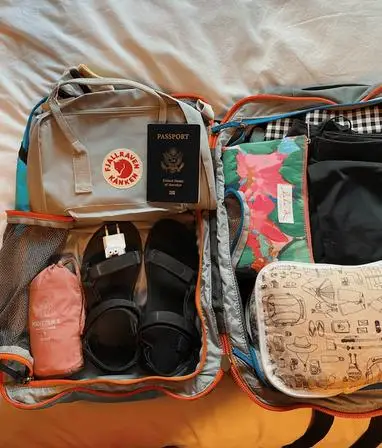
Keep your most frequently used items in a top compartment or front pocket.
Useful in-flight essentials may include:
- Passport and boarding documents
- Phone
- Earphones
- Neck pillow
- Eye mask
- Earplugs
- Book, tablet, or e-reader
- Snacks
- Empty reusable water bottle
- Charging cable
- Pen
- Lightweight jacket
An empty water bottle is particularly useful because you can refill it after passing through airport security.
For longer flights, you may also want to keep a small personal-care pouch nearby with items such as lip balm, tissues, hand sanitizer, and a toothbrush.
Step 7. Complete a Final Packing Check
Before leaving for the airport, spend a few minutes checking your backpack.
Make sure:
- Heavy items are positioned close to your back
- Frequently used items are easy to access
- Clothing and accessories are divided into packing cubes or organizers
- Toiletries are properly sealed
- Electronics and cables are organized
- Power banks are packed according to airline requirements
- Compression straps are tightened
- All zippers are completely closed
- Important documents are secure
- Your backpack remains within airline size and weight limits
It is also a good idea to leave around 10–15% of your backpack capacity unused.
That extra space gives you room for souvenirs, snacks, clothing purchased during the trip, or simply makes repacking easier when moving between hotels.
Final Thoughts
Learning how to pack a backpack for international travel is not about fitting as many things as possible into your bag.
It is about creating a packing system that makes travel easier.
Choose a suitable backpack, keep heavier items close to your body, organize smaller belongings with packing cubes and storage bags, pack versatile clothing, and keep important items within easy reach.
A well-organized backpack can help you move through airports, train stations, hotels, and city streets with less stress and less unnecessary weight.