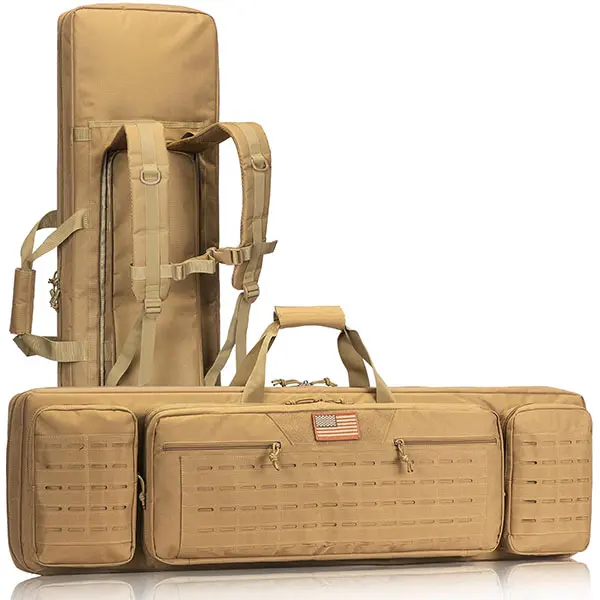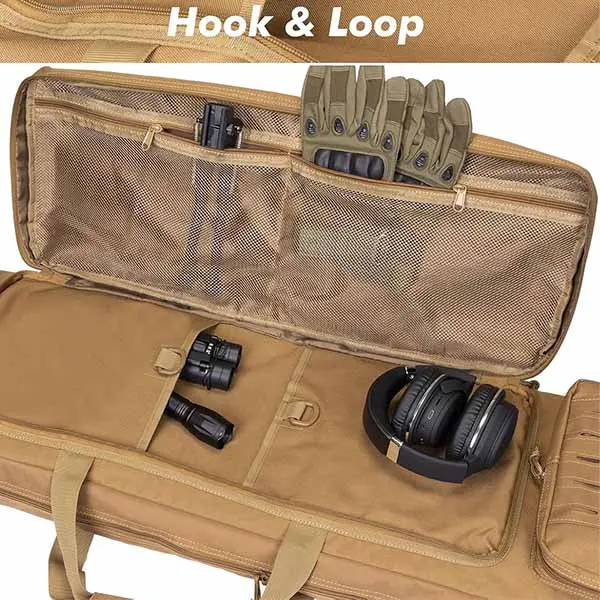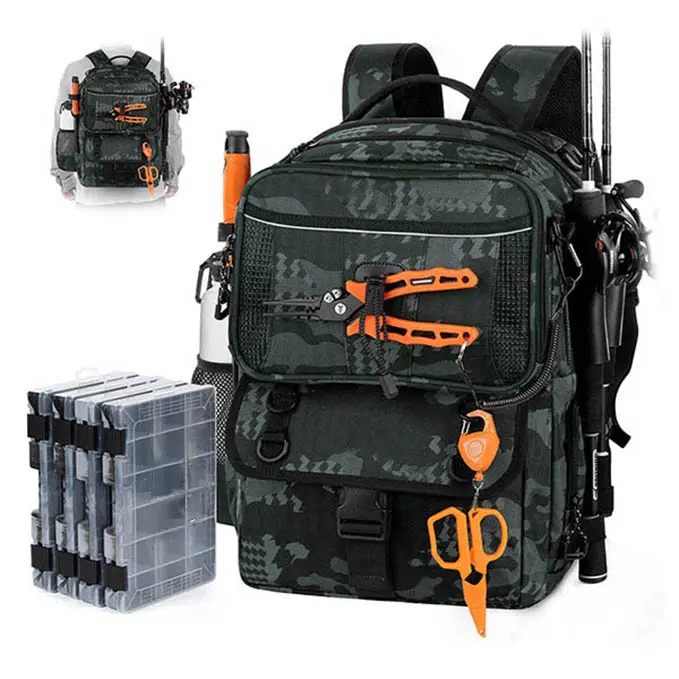
Choosing the right hunting pack is one of the most consequential gear decisions a hunter makes, yet it is also one of the most misunderstood. A pack that is too small forces you to leave essential safety equipment behind, while an oversized pack adds dead weight, throws off your balance in steep terrain, and turns a long stalk into an endurance test. Across the hunting community, the same questions come up every season: how many liters do I actually need, how heavy is too heavy, and what happens on the day I have to pack out a deer or an elk. Retailers and Hunting Bag Manufacturer Supplier catalogs list dozens of capacity options, which only makes the decision harder for buyers who have not mapped capacity to their specific hunt.
For most hunters, the answer comes down to trip length: a 15-30L pack covers day hunts, a 30-55L pack handles one to four nights out, a 55-75L pack supports 5-7 day backcountry hunts, and 75L or more is reserved for 10-14 day expeditions or heavy meat packing. On top of capacity, your total loaded pack weight should stay at or below 20 percent of your body weight, and any hunt where you expect to pack out game requires a framed pack with a dedicated load-hauling system rather than extra volume alone.
The sections below break down how pack capacity is measured, size recommendations for every trip length, weight targets, meat-packing considerations, and the features that matter as much as liters.
How Hunting Pack Size Is Measured
Hunting pack size is measured by total internal volume, expressed in liters in most of the world and in cubic inches in North America, where one liter equals roughly 61 cubic inches. A pack’s usable capacity, not its external dimensions, determines how much gear it holds.
Manufacturers measure capacity differently, and this is where buyers often get confused. Some brands list total volume including every external pocket and expandable collar, while others list main compartment capacity only. A listed 40L pack from one factory can swallow as much gear as a 45L pack from another. When comparing products across suppliers, check whether the stated volume includes external pockets, lid space, and expandable compartments.
Use this quick reference to translate between the two measurement systems:
| Liters | Cubic Inches | Typical Use |
| 15-30L | 900-1,800 ci | Day hunts, driven hunts |
| 30-55L | 1,800-3,400 ci | Overnight to 4-day hunts |
| 55-75L | 3,400-4,600 ci | 5-7 day backcountry hunts |
| 75L+ | 4,600 ci+ | Expedition hunts, full meat loads |
Capacity is only the starting point. Two packs with identical volume can behave completely differently once loaded, depending on frame design, compression straps, and how the weight sits against your body.
Hunting Pack Size by Trip Length
Trip length is the single most reliable basis for choosing pack size: match your capacity to the number of days you will be away from your vehicle or camp, then adjust upward for cold weather, bulky gear, or planned meat packing.
Every capacity recommendation below assumes a self-sufficient hunter carrying food, water, clothing layers, safety equipment, and hunting tools. Hunts based from a truck or a fully equipped base camp allow you to downsize significantly.
Day Hunts (15-30L)
For morning-to-dusk hunts, driven hunts, and short stalking sessions, mobility matters more than capacity. A compact 15-30L pack carries water or a hydration bladder, ammunition or arrows, field-dressing tools, rain gear, food for the day, and a basic first-aid kit without bulging or snagging on brush. Hunters who run short, fast pursues often prefer an even smaller chest rig or military tactical backpack in the 20L range, because a low profile keeps the shoulders free for shouldering a rifle or drawing a bow. Resist the temptation to size up “just in case” on day hunts: an underfilled large pack shifts when you move quickly and fatigue you faster than a snug, full small one.
Overnight and Multi-Day Hunts (30-55L)
Once you add a night in the field, capacity requirements jump. A 30-55L pack accommodates a shelter or bivy system, an insulated sleeping layer, a stove and food for one to four days, spare clothing, and optics. This is the most versatile capacity band and the best single-pack choice for hunters who split their season between day trips and occasional overnight sits. If your multi-day hunts stretch toward four days in cold weather, choose the upper end of the range, since insulation layers and bulkier sleep systems consume volume quickly. Hunts planned around a mid-trip resupply point allow you to stay at the lower end.
5-7 Day Backcountry Hunts (55-75L)
Backcountry hunts for elk, mule deer, and mountain game are where pack choice starts to shape the hunt itself. A 55-75L pack carries a complete camp: tent or tipi, sleeping bag rated for mountain nights, seven days of food at roughly one kilogram per day, cooking system, water filtration, and a full clothing layering system. Critically, this class of hunt also demands a pack that can convert into a meat hauler at a moment’s notice, so capacity should be paired with a load-bearing frame rather than chosen in isolation. Underfilled capacity also has a place here: compression straps let a 70L pack ride tight on scouting days and expand when quarters go in on pack-out day.
Expedition Hunts (75L+)
True expedition hunts of ten to fourteen days, fly-in hunts without resupply, and late-season camps in severe weather call for 75L and above. At this size, pack design quality matters more than raw volume: an internal frame rated for heavy loads, a wide hip belt that locks the weight onto your hips, and a modular layout that keeps food and fuel accessible without unpacking the whole system. Packs this large are genuinely uncomfortable for shorter hunts, so treat them as specialized tools rather than aspirational purchases. If your expedition plans are occasional, a 65-75L pack paired with disciplined packing often covers the same trips with better balance.
How Much Should a Hunting Pack Weigh?
Your fully loaded hunting pack should weigh no more than 20 percent of your body weight, and for most adult hunters that means keeping the total between 35 and 55 pounds before any game meat is added.
Weight discipline matters as much as size discipline. The concept of a base weight, borrowed from the long-distance backpacking world and defined extensively by the wilderness backpacking community, applies here: your base weight is everything in the pack except food, water, and fuel, and keeping it low is what keeps you mobile on day five. Every kilogram of unnecessary base weight multiplies across thousands of steps and vertical meters.
Pack Weight Targets for a 5-Day Elk Hunt
For a five-day backcountry elk hunt, most experienced hunters target a total pack weight of 40-55 pounds walking in. A realistic weight budget looks like this:
| Load Component | Typical Weight |
| Shelter and sleep system | 8-10 lbs |
| Food and cooking | 8-12 lbs |
| Clothing and rain gear | 8-10 lbs |
| Optics, tools, and accessories | 6-8 lbs |
| Water and filtration | 4-8 lbs |
| Emergency and navigation gear | 2-3 lbs |
Two principles govern this budget. First, pack for the hunt you are on, not the hunt you imagine: early-season elk hunts need far less insulation than November deer hunts at the same elevation. Second, remember the pack-out: a boned-out bull elk yields 150-250 pounds of meat, and a hunter walking in at 55 pounds has already spent much of their load-carrying margin before the real work begins.
Meat Packing: Capacity, Frame, and the 7 Day Deer Rule
If you plan to pack out game, the pack’s load-hauling structure matters more than its volume: you need a framed pack with a meat shelf or load shelf, heavy compression straps, and a hip belt designed to transfer 50-100 pounds to your hips.
This is the area where standard recreational backpacks fail hunters. A soft, frameless pack cannot keep a boned-out elk quarter stable against your spine, and loose meat loads shift with every step, wrecking balance on downed timber and side slopes. Dedicated load-hauling packs place meat between the bag and the frame, or on an expandable rear shelf, keeping dense weight high and tight against the body where it belongs.
What Is the 7 Day Deer Rule?
The 7 day deer rule is a widely followed meat-care guideline: cool, process, or preserve a deer within seven days of harvest to keep the venison safe and high quality. The rule exists because bacteria multiply rapidly while carcass temperature sits in the danger zone above 40 degrees Fahrenheit, and food safety authorities, including the United States Department of Agriculture, advise keeping meat below 40 degrees Fahrenheit to slow bacterial growth to a crawl. The rule is a sensible planning benchmark rather than a hard cutoff, because temperature, humidity, and field-dressing quality change the real window. In warm early-season weather, the safe window shrinks to hours and requires ice or immediate refrigeration, while in consistently cold conditions the full week holds. For pack planning, the rule translates directly into capacity decisions: warm-season hunts need room for ice packs, game bags, and a rapid one-trip pack-out strategy, while late-season hunters have more scheduling flexibility.
Meat-Carrying Features That Matter More Than Volume
When comparing packs for game packing, prioritize these structural features over liters:
- A full or external frame rated for loads of 50-100 pounds
- A meat shelf or load-hauling shelf between the bag and frame
- Load-lifter straps that pull the weight off your shoulders onto your hips
- Breathable, washable game-bag compatibility so meat stays clean and cooled
- Compression straps that stabilize irregular loads close to your spine
A well-designed 55L pack with a proper load shelf will outperform a poorly designed 80L pack on every meat haul.
What Does Every Deer Hunting Pack Need?
Every deer hunting pack, regardless of size, needs to carry the safety and processing essentials: a first-aid kit, navigation tools, field-dressing equipment, water, emergency warmth, and a light source.
Capacity debates often distract from the non-negotiables. A minimum viable loadout for deer hunting includes:
- Field-dressing kit: sharp knife with spare blades, game bags, and disposable gloves
- License, tags, and a pen, sealed against weather
- First-aid kit sized for the party, not just one person
- Navigation: GPS unit or phone with offline maps, plus a paper map and compass
- Headlamp with spare batteries, critical for tracking and pack-outs after dark
- Water and filtration or purification backup
- Emergency warmth: space blanket, fire starter, and a spare insulation layer
- Paracord or rope for dragging, hanging, and securing loads
- Rain gear, even in a favorable forecast
Hunters who consistently fill their tag carry these basics in a 20L day pack; the same list simply gains a camping layer in a 55L multi-day pack.
Beyond Size: Fit, Frame, and Fabric
A hunting pack that fits your torso and carries weight correctly will outperform a better-specced pack that fits poorly: match the pack’s frame type, torso length range, and fabric to your terrain and season.
Fit comes first. A pack sized to the wrong torso length transfers weight to the shoulders instead of the hips, and no capacity number fixes that. Frame choice follows the hunt: frameless packs suit fast day hunts where silence and low weight dominate, internal frames balance multi-day comfort with a slim profile, and external or modular frames rule heavy pack-out country.
Fabric choice is a quiet trade-off between durability, weather protection, and noise:
| Fabric Type | Strengths | Weaknesses |
| Coated nylon packcloth | Lightweight, quiet, affordable | Moderate abrasion resistance |
| High-denier Cordura nylon | Extremely durable, resists brush | Heavier, noisier when dry |
| Laminate fabrics | Fully waterproof, stiff structure | Loudest, pricier, less supple |
| Soft-shell fleece-face fabrics | Nearly silent in cold weather | Lower durability, absorbs water |
Late-season still hunters prioritize quiet fabrics; backpack hunters crossing miles of timber prioritize abrasion resistance and load carriage. For a broader treatment of capacity logic across outdoor use cases, our hiking backpack size guide covers the same measurement principles in a hiking context.
One Hunting Pack or Several?
Most hunters are best served by one versatile 30-55L framed pack plus a compact 15-25L day pack, rather than a single oversized pack forced into every situation.
A single do-everything pack always involves compromise: too much pack on quick hunts, not enough structure for heavy pack-outs. A practical two-pack quiver covers the majority of hunting calendars, with a dedicated 65L+ expedition or load-hauling pack added only when the season actually demands it. If you are starting from zero and still asking what size backpack do I need for the hunts you actually take, follow this sequence:
- List your real hunts from last season by length and game species.
- Identify the capacity band that covers 80 percent of those trips.
- Buy the best-framed pack in that band first.
- Add a small day pack second, and an expedition pack only if a long hunt is booked.
Choose based on how you hunt, not on the largest hunt you can imagine, and the pack on your back will feel like equipment rather than cargo.
FAQ
Is a 70L backpack too big for hunting?
A 70L pack is too big for day hunts and most overnight sits, where it will ride underfilled and unbalanced, but it is well matched to 5-7 day backcountry hunts and heavy meat packing. Size is only excessive relative to trip length: if your hunts regularly run five days or include packing out elk or moose quarters, 70L is a practical middle ground rather than an oversized choice.
Can I use a regular hiking backpack for hunting?
A hiking backpack can work for short hunts in mild terrain without game packing, but it usually lacks the features hunting demands: quiet fabrics, weapon-carry attachments, blaze-orange compatibility, and a load shelf for carrying quarters. For any hunt where you might pack out meat, a hunting-specific framed pack is strongly preferable.
How do I know if a hunting pack fits my torso?
Measure from your C7 vertebra, the bony bump at the base of your neck, down to the top of your hip bones, and compare that length to the pack manufacturer’s torso range. When fitted correctly, the hip belt should rest on the top of your hips with the shoulder straps following your back without gaps, and roughly 80 percent of the load should sit on your hips rather than your shoulders.
Meta Description: Not sure what size hunting pack you need? This guide breaks down hunting bag capacity by trip length, pack weight limits, and meat-packing features.