Choosing a new pack usually starts with a number, but liters alone do not tell the whole story. Shoppers face a wall of capacity labels, conflicting brand charts, and advice that assumes everyone carries the same load. The result is a bag that is either too small to close or so large it becomes a burden on a short walk.
The size you need depends almost entirely on how much gear you carry and for how long. A 20- to 30-liter pack handles daily commuting and short outings, whereas a larger travel bag in the 30- to 45-liter range covers a weekend trip or a carry-on flight. For anything beyond a few days outdoors, you will usually need 50 liters or more.
Once you match capacity to your typical trip, the next step is checking how that pack fits your frame, because volume and fit work together to make a bag feel right.
What Backpack Size Actually Means
A backpack’s listed size in liters measures interior volume, not external bulk, so two packs with the same liter rating can feel very different on your back.
Backpack capacity is the total usable space inside the main compartment and any closed pockets. Manufacturers express it in liters because volume predicts how much you can carry better than outer dimensions do. A tall, narrow pack and a short, wide pack can list the same liters yet hold entirely different shapes of gear. That is why comparing liters across brands only works as a rough guide. Some makers fill every external mesh pocket and sleeve when they calculate capacity, while others count only the sealed interior. The outdoor industry references a fill-standard method, ASTM F2153, that measures volume by pouring calibrated spheres into the pack, but not every brand follows it. Treat the liter number as a starting point, then check the actual pocket layout.
The table below groups common capacities into practical bands so you can translate a number into a use case.
| Capacity band | Liters | Best for |
|---|---|---|
| Small daypack | 15 to 24 L | Commuting, school, gym, short city trips |
| Medium pack | 24 to 35 L | Laptop commute, overnight trips, hybrid work, and travel |
| Large travel or hiking pack | 30 to 45 L | Multi-day travel, carry-on flights, weekend hikes |
| Expedition pack | 50 to 70+ L | Multi-day treks, backpacking trips, group gear |
How to Measure Your Torso and Know Your Size
You know your backpack size by measuring torso length and matching it to a pack’s fit range, not by guessing from your height alone.
The single most useful measurement is torso length: the distance from the top of your shoulders, the C7 vertebra at the base of your neck, down to the top of your hip bones. A pack sized to your torso places the hip belt on your iliac crest, where your body can carry most of the weight through the pelvis instead of the shoulders. To find it, tilt your head forward, feel for the bony bump at the base of your neck, then measure with a soft tape to the line of your hip bones at the small of your back. Most adult packs come in small, medium, and large torso ranges, often around 15 to 19 inches for small, 18 to 21 for medium, and 20 to 23 for large, though the cut varies by design.
Load weight matters as much as fit. Specialists at the North American Spine Society recommend keeping a fully loaded pack at no more than 10 to 15 percent of your body weight and always using both straps so the load stays centered. When you try a pack on, load it with weight, fasten the hip belt, then tighten the shoulder straps until the pack sits close to your back. If the belt rides on your stomach or the shoulder straps dig in, the torso size is wrong.
Pick the Right Size by How You Will Use It
The fastest way to choose is to start with your main activity, because commuting, hiking, and travel each pull capacity in a different direction.
For Daily Commute and School
Most commuters and students do well with 15 to 24 liters. That band fits a laptop, a notebook, a lunchbox, and a layer without turning into a bulky shell. A pack at the low end stays slim on a crowded train, while 22 to 24 liters leaves room for a pair of shoes or a water bottle. If your daily load includes a 16-inch laptop and a few books, stay near the top of this range so the compartment closes without strain.
For Hiking and Outdoor Trips
Day hikes usually need 20 to 30 liters, enough for water, food, a first aid kit, and a shell layer. Overnight trips on foot push you to 30 to 50 liters once you add a sleep system and cooking gear. When you move into this range, frame and ventilation matter more than they do on a city pack, and a well-shaped hiking bag with a supportive hip belt keeps the load stable on uneven ground.
For Travel
Travel is where capacity gets tricky because airlines set limits. Most carriers accept a carry-on backpack up to about 40 to 45 liters, with 30 to 35 liters being the most comfortable personal-item or overhead size. A 40-liter pack typically holds a week of clothing if you pack tight and use cubes, while 45 to 50 liters suits longer trips that still avoid checked baggage. If you check a bag anyway, 50 to 70 liters gives room for bulkier gear and a shared load.
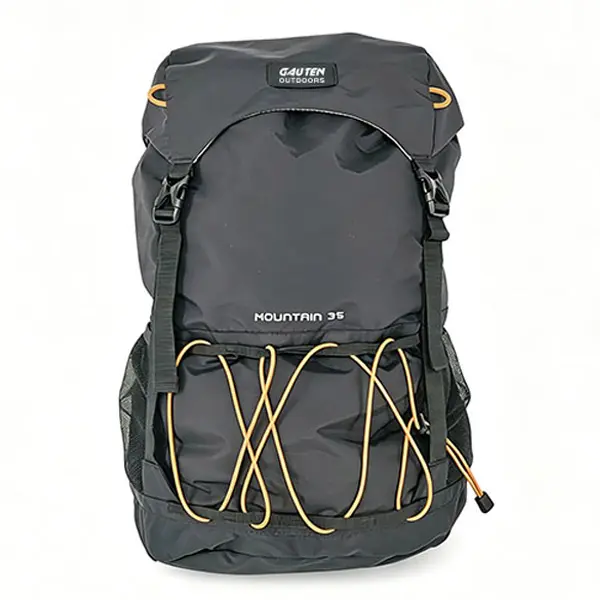
Backpack Size by Trip Length
A reliable rule of thumb is one to two liters per day of travel, adjusted up for cold weather gear and down for minimalist packing.
Trip length is the clearest signal for capacity. A single day out needs 15 to 30 liters. A weekend of two to three nights usually fits in 30 to 50 liters. Four to seven days on the move calls for 50 to 70 liters, and anything longer or involving shared camp equipment pushes past 70 liters. The table below maps days to liters so you can plan from the trip out, not the label in.
| Trip length | Suggested liters | What fits |
|---|---|---|
| Day trip | 15 to 30 L | Water, food, layers, small essentials |
| 2 to 3 nights | 30 to 50 L | Clothing, sleep system, compact cookset |
| 4 to 7 days | 50 to 70 L | Multi-day clothing, larger sleep system, shared gear |
| Expedition or group | 70 L and up | Bulky loads, group shelter, extended supplies |
Remember that liter ratings assume efficient packing. A 40-liter pack stuffed with rigid boxes will carry less usable gear than a 40-liter pack with soft, compressible loads, so leave a small margin when you are between sizes.
Backpack Size for Women and Men
Capacity does not change with gender, but torso shape and harness design do, so the right pack is sized to the body, not the marketing label.
Many brands offer women’s specific packs, and the difference is mostly in fit, not volume. On average, women have a shorter torso and narrower shoulders relative to hip width, so these packs use shorter torso ranges, closer set shoulder straps, and a hip belt angled to sit on the hips. Men’s cuts tend to run longer in the torso with a wider strap spread. A backpack for women and a backpack for men in the same liter size hold the same amount; what changes is how the weight routes through the frame. Anyone should choose by measured torso length first, then fine-tune with the harness that feels stable when loaded. Ignoring fit in favor of a color or a label leads to sore shoulders regardless of capacity.
How to Wash a Backpack Without Damaging It
You can clean most packs by hand with mild soap and cold water, and machine washing should be a last resort reserved for sturdy, non-structured bags.
A backpack picks up sweat, dust, and spills, and cleaning it extends the life of the fabric and zippers. The safest method is gentle hand washing, but many people wonder whether a machine is acceptable. The answer depends on the construction.
Can You Wash a Backpack in the Washing Machine?
Most manufacturers advise against it. Agitation and heat can weaken coated fabrics, warp a rigid frame sheet, and break bonded seams. If the care label allows machine washing, use a front loader on a cold, gentle cycle with the pack zipped closed and no detergent pods, then air dry away from direct heat. Structured hiking or travel packs with internal frames should never go in a machine. When in doubt, hand washing protects the bag.
How to Clean a Backpack Without Washing
For light dirt, you do not need a full wash. Empty the pack, shake out debris, and spot clean with a damp cloth and a little mild soap. A soft brush reaches into mesh and zipper tracks. Pay attention to the back panel and straps, where sweat builds up, and let the pack dry fully open before you store it. This approach removes most odor and grime without stressing the materials.
Step-by-Step Hand Washing
Start by emptying every pocket and brushing out loose dirt. Mix cold water with a small amount of mild detergent in a basin. Wipe the interior and exterior with a sponge, focusing on stained areas, then rinse with a clean damp cloth. Never soak the pack or wring it out. Hang it upside down in shade to dry, and close zippers only after they are fully dry to prevent corrosion.
Common Sizing Mistakes to Avoid
The two errors that hurt most are buying too large for the sake of options and ignoring torso fit while chasing a liter number.
A bigger pack tempts you to carry more, which adds weight you then haul on every trip. If your real load fits a 30-liter pack, a 50-liter shell just becomes dead space and strain. The opposite mistake is cramming a multi-day trip into a daypack, which stresses zippers and leaves gear unprotected. The third common miss is treating liters as the only spec: a pack that matches your liter need but not your torso will never feel right. Always confirm fit with a loaded test, check the airline or activity limit you care about, and leave a small buffer above your true load rather than a large one.
Frequently Asked Questions
How many liters is a normal school backpack?
A standard school or commute backpack runs 15 to 24 liters. That size carries books, a laptop, lunch, and a layer without becoming heavy. Students with many hardcover texts may prefer 24 to 30 liters, but anything larger usually encourages overloading beyond the recommended 10 to 15 percent of body weight.
Is a 40-liter backpack too big for a carry-on?
No. A 40-liter backpack is generally within carry-on limits on most airlines, and 30 to 35 liters is the safest overhead or personal-item size. Always check your specific carrier’s linear and liter rules, because low-cost airlines can be stricter than full-service ones.
Should I size up when buying a backpack for backpacking?
Only slightly. Size to your measured torso first, then pick the liter band that matches your trip length, leaving a small margin for bulky cold weather gear. Sizing up dramatically adds empty volume and weight without improving comfort, so stay close to your actual load.