Picking the right travel backpack is one of those decisions that quietly shapes the whole trip. Too small and you are rationing outfits by day three; too big and it will not fit the overhead bin, forcing you to check it or pay a gate fee on a budget carrier. The answer is not a single-liter value because it depends on trip length, packing style, climate, and airline rules.
For most travellers, a 30- to 45-litre backpack is the right size: it covers weekend breaks through two-week trips and still qualifies as cabin luggage on nearly every major airline. Trips of three to six months need 50 to 70 liters, or a disciplined one-bag setup with regular laundry stops along the way.
The sections below break the choice down by trip length, airline carry-on rules, and how a backpack actually carries weight on your body, so you can match a pack to your trip instead of guessing.
What Is the Ideal Backpack Size for Travel?
There is no single ideal size, but 30 to 45 liters is the most versatile range for travel because it balances packing room with carry-on compliance; choose the lower end for short trips and the upper end if you pack bulky layers or cold-weather gear.
The ideal backpack is simply the smallest pack that holds your real essentials without forcing you to sit on it to zip it shut. A 20-liter daypack is perfect for a city break but frustrating for a week away. A 65-liter trekking pack swallows a month of clothes yet becomes a liability the moment you step into an airport and face a sizing cage. Most travellers land between 30 and 45 litres because that window does both jobs: enough room for a fortnight, small enough to stay with you in the cabin.
Bigger is not automatically better, because a larger pack invites overpacking, weighs more on your hips, and almost always has to be checked.
The 30- to 45-liter one-bag sweet spot
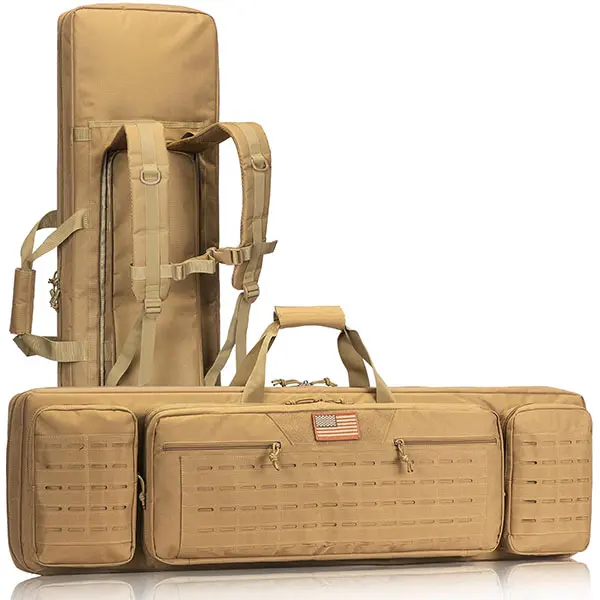
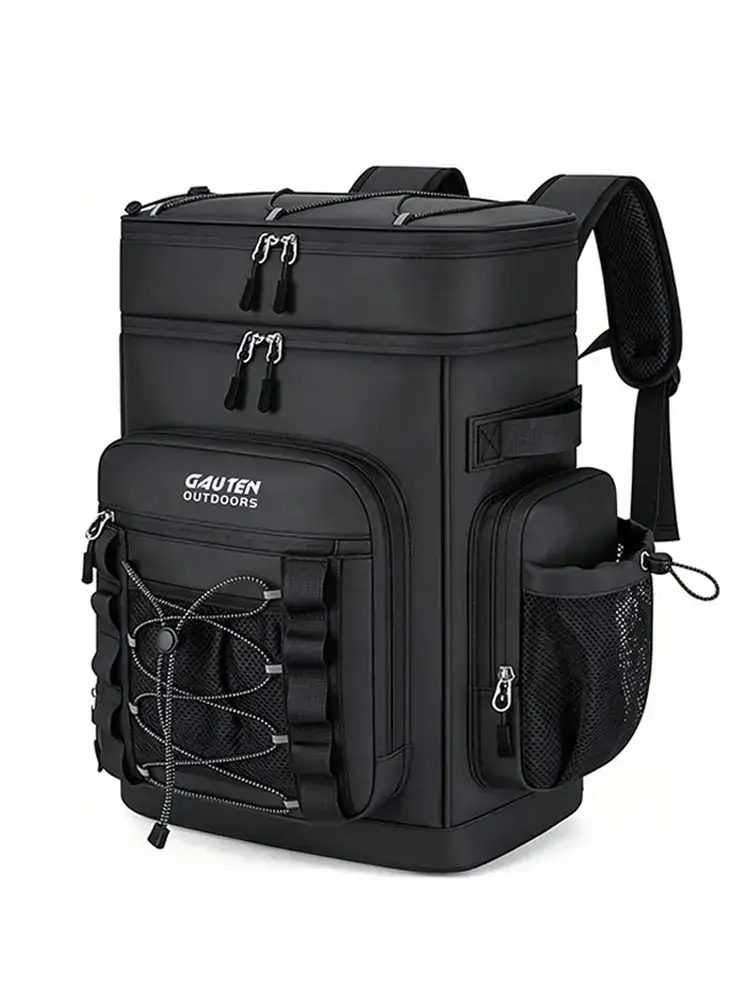
A pack in this range is the foundation of one-bag travel, where everything you own for the trip rides on your back and nothing goes in the hold. At 30 liters you carry a tight capsule wardrobe and a laptop; at 40 to 45 liters you add a pair of shoes, a layer for cold evenings, and a toiletry kit without tipping into checked-bag territory. If you want a pack built for this role, a custom logo tactical travel backpack shows the features that matter: a suitcase-style opening, a padded laptop sleeve, and compression straps that keep the load narrow so it clears cabin limits.
Backpack Size by Trip Length
Match litres to nights: 20 to 30 litres for a weekend or four-day trip, 30 to 45 litres for one to two weeks, 40 to 60 litres for a three-month trip, and 50 to 70 litres or a one-bag-plus-laundry plan for six months abroad.
Capacity scales with time away, but packing discipline bends the curve. A minimalist can cross a continent for months with 40 liters and a washing routine; a heavy packer needs 70 liters for a two-week ski trip. Use the guide below as a starting point, then adjust for climate and the gear you cannot live without.
Weekend and 4-day trips
A 20- to 30-liter backpack is the right call for a weekend or a four-day trip, holding two to four outfits, a toiletry bag, electronics, and a light layer without exceeding personal-item limits on stricter airlines.
For a four-day city trip you rarely need more than 25 liters. This size doubles as a personal item on most carriers, sliding under the seat so you skip the overhead bin entirely. It is also the easiest pack to carry all day because the weight stays low and the profile stays compact in crowded trains and buses.
One to two weeks of travel
Plan on 30 to 45 liters for one to two weeks, which fits roughly a week of clothing plus a laptop and a spare pair of shoes while still meeting carry-on dimensions on most airlines.
This is where the 40-liter pack earns its reputation. With packing cubes you can fit seven to ten days of clothes and keep them organized, and the bag still clears the standard cabin-size cage. If your trip mixes warm days and cool nights, lean toward 45 liters for the extra layer.
What size backpack for 3 months of travelling
For three months of travel, a 40- to 60-liter backpack works if you commit to doing laundry every few days; otherwise, a 50- to 70-liter checked pack is more realistic for bulkier wardrobes and varied climates.
Three months is long enough that no one packs three months of clothes. The smart approach is a 40- to 45-liter carry-on supplemented by washing essentials every three to five days. Travellers who change climates or need formal wear usually step up to 55 to 60 litres and check the bag, trading cabin convenience for breathing room.
What size backpack for 6 months of travelling?
Six months abroad typically needs a 50- to 70-liter backpack, or a strict one-bag system around 40 liters paired with frequent laundry and a willingness to replace worn items on the road.
At this length, the calculus shifts from how much can I carry to how little can I manage. A 40-liter one-bagger can technically sustain six months, but only with discipline most people find exhausting. A 60-liter pack gives margin for seasons, souvenirs, and a bulkier setup and still sits within checked-bag limits on full-service carriers.
| Trip length | Recommended liters | Fits as carry-on? |
|---|---|---|
| Weekend / 4 days | 20 to 30 L | Usually yes (often personal item) |
| 1 to 2 weeks | 30 to 45 L | Yes, on most airlines. |
| 3 months | 40 to 60 L | 40 to 45 L yes; 50 L+ usually checked |
| 6 months | 50 to 70 L | Typically checked |
Carry-On Backpack Size Rules for Flying
A travel backpack qualifies as a carry-on when its outer dimensions fit the airline’s linear limit, typically about 55 x 40 x 20 cm (22 x 14 x 9 in), which corresponds to roughly 40 to 45 liters of actual packed volume rather than the bag’s stated capacity.
Airlines measure the outside of the bag, wheels and straps included, so a slim 40-litre pack clears the sizer, while a 45-litre bag with bulky pockets might not. For the official industry baseline on cabin dimensions, the carry-on luggage reference on Wikipedia summarizes the varying limits airlines apply. A travel bag built to cabin dimensions will save you gate-check fees on carriers that enforce sizing cages.
Carry-on backpack size limit
The most common carry-on limit is 55 x 40 x 20 cm or 22 x 14 x 9 inches, about 40 to 45 liters of usable space once bag shape is accounted for. Budget carriers often publish stricter cages, some as small as 40 x 30 x 20 cm for a free cabin bag, so check your airline before you fly. Weight limits matter too, typically 7 to 10 kg on many international routes, and a few carriers weigh at the gate without warning.
Carry on a backpack size for international travel.
International rules are not uniform. US mainline carriers generally allow the 22 x 14 x 9 inch box, while many Asian and European airlines use 55 x 40 x 20 cm or slightly tighter, and low-cost European carriers may restrict the free cabin bag to roughly 40 x 30 x 20 cm. If you connect across regions, pack to the strictest leg because the smallest size on your route decides whether the bag flies free.
What size backpack for carry-on under the seat?
A backpack for the under-seat personal item slot should be about 18 to 25 liters, fitting inside roughly 45 x 35 x 20 cm so it tucks under the seat in front of you.
Personal items are smaller than carry-ons and must sit under the seat, not in the bin. A 20- to 25-liter pack is the realistic maximum here; anything near 30 liters usually has to go overhead. This slot is ideal for a 4-day trip or as a companion to a small roller, and it keeps your passport, charger, and snacks within reach during the flight.
Can you take a 40L backpack as a carry-on?
Yes, a 40-liter backpack is accepted as a carry-on on virtually all major airlines, provided its packed dimensions stay inside the carrier’s linear limit, because the limiting factor is the bag’s depth and height, not the liter number.
A well-shaped 40L pack measures close to 22 x 14 x 9 inches and drops straight into the overhead bin. The exception is ultra-strict budget carriers, where even a 40L bag may need a priority boarding add-on to ride in the cabin. Always measure the pack fully loaded, because soft bags expand past their empty dimensions, and a packed depth of 10 inches can fail a cage built for 8.
What Backpack Liters Actually Mean and How They Pack
A litre rating measures internal volume, not outside shape; two 40-litre packs can pack very differently, and a bag’s depth matters more than its capacity once a gate agent pulls out the sizing frame.
Understanding liters prevents two mistakes: buying a number that looks right but will not fit the bin and assuming more liters always means more comfort. Because airlines care about the outer box, a tall, narrow 40L pack may beat a wide 45L pack through a sizer.
| Capacity | What typically fits | Best use |
|---|---|---|
| 20 L | Day essentials, light layer, tablet | Commute, day trips |
| 30 L | 3 to 4 outfits, laptop, toiletry kit | Long weekend, 4-day trip |
| 40 L | Week of clothes, shoes, laptop, layer | 1 to 2 weeks, one-bag travel |
| 50 L | Bulky layers, gear, longer wardrobe | 3+ weeks, checked travel |
A suitcase-style clamshell opening lets you pack flat like a roller and find items without unloading the top. Pair that with packing cubes and the usable space grows noticeably, which is why a 40L pack often does the work of a 50L duffel.
Backpack Fit for Women and Men
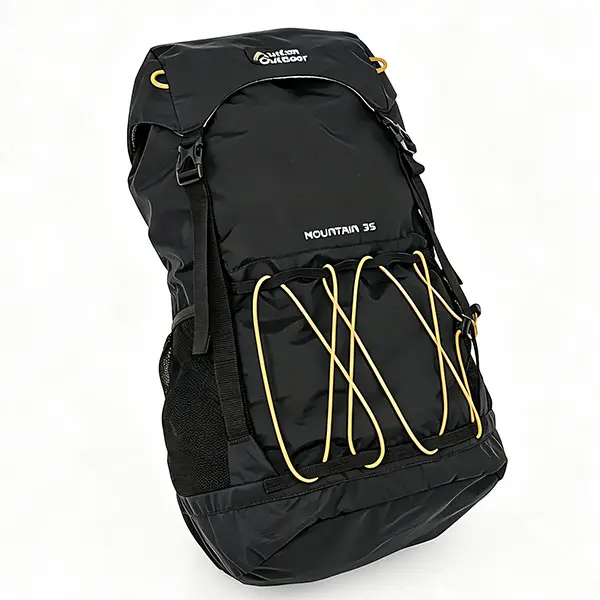
Fit depends on torso length and hip-belt geometry more than on gender labels, but packs built for women usually have a shorter torso, narrower shoulder straps, and a contoured hip belt, while men’s builds run longer and broader through the shoulders.
A backpack moves weight from your shoulders to your hips through the belt. If the belt sits on your waist instead of your hip bones, the pack will tire you within an hour. Torso measurement, taken from the base of the neck to the top of the hips, is the single number that decides the frame size, and adjustable harnesses let you fine-tune the fit after you load the bag.
Backpack for women
A backpack for women is shaped around a typically shorter torso and a narrower shoulder line, with shoulder straps set closer together and a hip belt that curves to sit comfortably without gaping. The result is a load that stays close to the back on smaller frames and reduces the sway that causes shoulder fatigue on long walking days.
Backpack for men
A backpack for men generally uses a longer torso range and broader, more heavily padded shoulder straps, with a wider hip belt. For travellers carrying laptops and camera gear, a business travel laptop backpack with a structured back panel keeps the weight stable during long terminal walks and protects electronics against knocks.
Carry-On vs. Checked: How to Travel With Less
You can usually shrink your required size by using packing cubes, a capsule wardrobe, and planning laundry every few days, which keeps most trips inside a single 40-liter carry-on instead of a checked bag.
The battle for a smaller pack is won at home, not in the shop. Every item you remove is space and weight you never carry, and a few habits make a 40L pack cover trips that otherwise demand 60L while speeding you through security.
Start with packing cubes to compress and separate clothing, then build a capsule wardrobe of items that pair with each other so you pack fewer pieces. Wash a small load every three to five days in a sink or launderette, and wear your bulkiest shoes and jacket on travel days. Weigh the packed bag at home against your airline’s limit, because an overweight cabin bag is just as likely to be checked as an oversized one.
How to Pick Your Travel Backpack Size in Three Steps
Decide in three steps: count your trip nights, choose carry-on or checked, then match the litre range and confirm the pack fits your torso before you buy.
First, be honest about nights away and laundry access, because a 4-day trip and a 14-day trip land in different litre bands. Second, decide if you want to stay in the cabin; if yes, cap your search near 40 liters and check the airline’s exact dimensions, not just the liter rating. Third, match the frame to your torso so the pack carries well, because the right size means little if the bag hurts your back after the first kilometer.
Frequently Asked Questions
Is a 40L backpack enough for a week of travel?
Yes. A 40-liter pack holds about a week of clothing plus a laptop and a spare pair of shoes when you use packing cubes and a tight wardrobe. Cold-weather layers or bulky gear eat into that, so winter trips may need 45 to 50 liters.
What is the difference between a carry-on and a personal item backpack?
A carry-on backpack goes in the overhead bin and typically measures up to about 55 x 40 x 20 cm, while a personal item fits under the seat in front of you at roughly 45 x 35 x 20 cm and is usually 18 to 25 liters. Most travellers may bring one of each.
Can the same backpack work for both women and men, or for a three-month trip?
Unisex packs fit a wide torso range with adjustable systems, though dedicated women’s and men’s builds improve comfort at the extremes. For three months, a 40- to 45-liter one-bag pack works only with regular laundry; a 50- to 60-liter checked pack suits those who prefer more clothes on the road.