Backpacks cover a wider spread of products than almost any other bag category. A 12-liter pack for a coffee run and a 70-liter pack you haul across a mountain pass share a name and two straps, and not much else. That gap is where most buying mistakes come from. People shop by looks or by liter count, then find out on the first long day that the straps dig in, the opening faces the wrong way, or the fabric wets through in an hour of rain.
The different types of backpacks fall into five working groups: everyday and work packs, travel packs, hiking and outdoor packs, technical and tactical packs, and specialty packs built around one piece of gear. Capacity runs from about 5 liters to over 100 liters, and the differences that matter sit in the back panel, the hip belt, and the opening, not in the pocket count. A 20-liter daypack for the commute and a 65-liter hiking bag for a five-day trip are different tools that happen to share a name.
Here is what separates each group and what to check before you buy.
| Type | Capacity | Best for | Care difficulty |
|---|---|---|---|
| Mini pack | 5–15 L | Essentials only, casual use | Easy |
| Daypack | 15–30 L | Commute, school, day trips | Easy |
| Laptop backpack | 20–35 L | Work, study, devices | Easy |
| Rucksack | 20–40 L | Casual carry, light travel | Moderate |
| Travel backpack | 35–55 L | Multi-stop trips, carry-on only | Moderate |
| Duffel backpack | 30–70 L | Gym, gear-heavy trips | Moderate |
| Day hiking pack | 20–35 L | Day hikes, fast outings | Moderate |
| Multi-day pack | 50–75 L | Overnight and multi-day treks | Hard |
| Expedition pack | 75 L and up | Long expeditions, winter loads | Hard |
| Hydration pack | 5–15 L | Running, cycling, short hikes | Moderate |
| Technical and tactical pack | 30–50 L | Load carriage, modular attachment | Hard |
How backpack types are grouped
Type names describe shape and capacity rather than the job a pack does, which is why one model gets listed as a daypack, a hiking pack, and a travel pack on different sites. Three axes sort it out.
By capacity
- Under 15 liters—mini packs and hydration packs. Phone, wallet, a light shell, a bottle.
- 15 to 30 liters—daypacks and most laptop packs. Commuting, school, and single-day outings.
- 30 to 50 liters—travel packs and technical packs. A couple of days of clothing plus gear.
- 50 liters and up—multi-day and expedition packs, built around a load-transferring hip belt.
Capacity counts total internal volume across all pockets, so two 40-liter packs carry differently depending on where the volume sits. A tall, narrow pack holds a sleeping bag well and swallows a laptop badly.
By carrying system
- Soft panel, no frame sheet—fine to roughly 8 to 10 kg, and it keeps the pack light.
- Padded panel with a frame sheet—standard on 20- to 35-liter packs, and it stops contents pressing into your back.
- Internal frame with a load-transfer hip belt—used above 50 liters, moving most of the weight off your shoulders.
- Suspended mesh panel—holds the body away from your back for airflow, slightly less stable under load.
By opening style
- Top loader—secure and weather resistant, slow to dig through.
- Panel or clamshell—zips flat like a suitcase, which is why travel packs use it.
- Roll-top—variable volume and good sealing.
- Drawstring—fastest access, least organization.
Everyday and work backpacks
For daily carry, the goal is boring: the pack should be comfortable enough that you stop noticing it. Fifteen to thirty liters covers nearly every version, and capacity beyond that mostly invites you to carry things you don’t need.
Daypacks
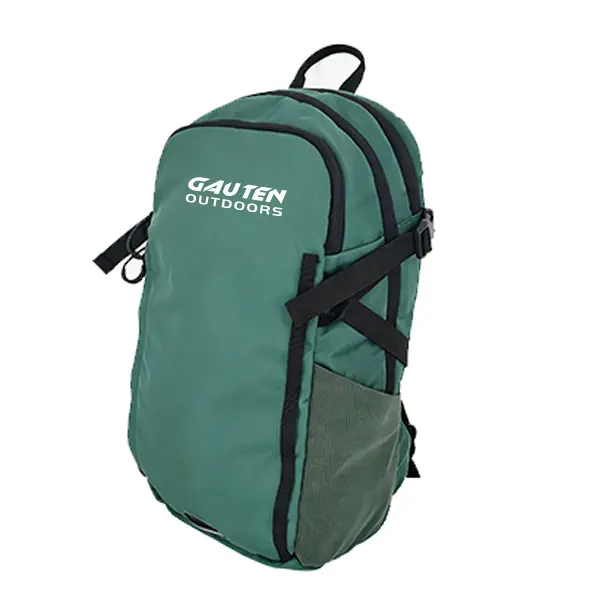
The plain daypack is the reference point for the whole category: padded shoulder straps, one main compartment, one or two external pockets, and a sleeve for a bottle or a device. Check that the back panel has enough structure to keep a laptop or a bottle from pressing into your spine.
Laptop backpacks
These add a suspended sleeve that holds the device off the bottom seam, where drops do the damage. Sizing matters more than padding thickness. A 16-inch machine in a 14-inch sleeve shifts the load outward and makes the pack feel heavier than it is. The sleeve should sit raised off the base, and the pack should stand up on its own when you set it down.
Rucksacks and roll tops
“Rucksack” usually means a flap-and-buckle closure over a drawstring body, and the modern version trades some access speed for weather resistance. Roll-tops do the same job with less hardware: roll the top down three times, clip it, and the opening is sealed. Capacity shifts by 5 liters or more depending on how many rolls you use.
Anti-theft backpacks
These put the main zipper against your back, use slash-resistant fabric in the panel, and add a shielded pocket for cards and passports. The trade-off is access, since a rear-facing opening is slow on a crowded train. Worth it for dense transit and large events, less useful for a car commute.
Which types of backpacks for travel work best?
Thirty-five to fifty liters with a clamshell opening and a stowable harness is the short answer. That range fits most airline carry-on rules while leaving room for a week of clothing, and the flat opening means you can find things without unpacking everything. Backpack travel also loads a pack differently than hiking does: similar weight, smoother ground, longer stretches, and far more opening and closing.
A well-built travel bag in this class adds internal compression straps, a separate compartment for shoes or laundry, and a sleeve that slides over a rolling suitcase handle.
Carry-on travel backpacks
Built around airline size limits rather than trail comfort. Expect a boxier shape, a full clamshell zip, internal compression, and a harness that zips behind a fabric panel so the straps don’t snag on conveyor belts. Most sit between 35 and 45 liters, the practical carry-on ceiling on many carriers. Loaded weight matters: a 45-liter pack stuffed to the gusset can pass the size check and still fail the weight check.
Convertible and wheeled backpacks
Convertible packs switch between backpack and duffel carry, with straps that stow into the back panel. Wheeled versions add a frame and a telescoping handle, which helps on airport floors and hurts on stairs, cobblestones, and gravel. They weigh more, and the frame eats 2 to 4 liters of usable space.
Duffel backpacks
A duffel with backpack straps. The wide opening is the point, since you can load boots or a week of gym kit without fighting a narrow zip. The downside is load control, because a full 60-liter duffel doesn’t sit against your spine and gets uncomfortable fast.
Outdoor and hiking backpacks
Pick by trip length first, then by the weight you’ll carry. Capacity follows from that, not the other way around.
Day hiking packs
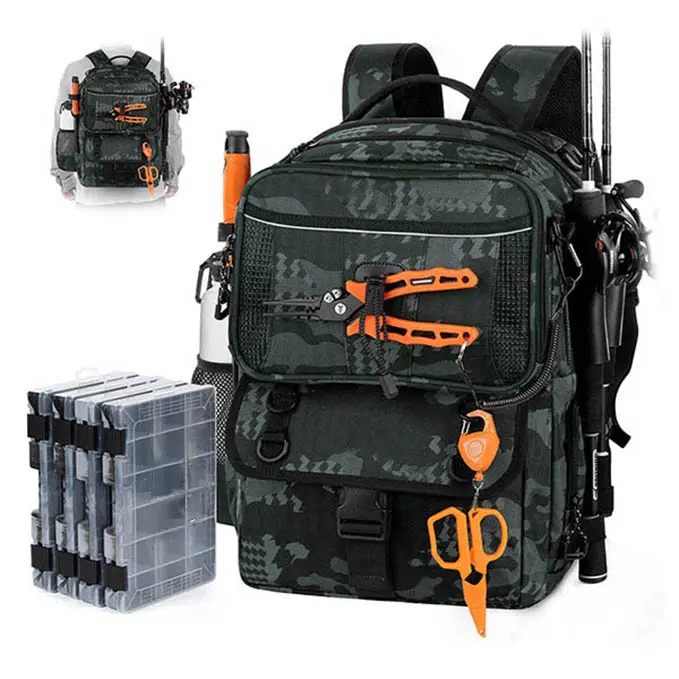
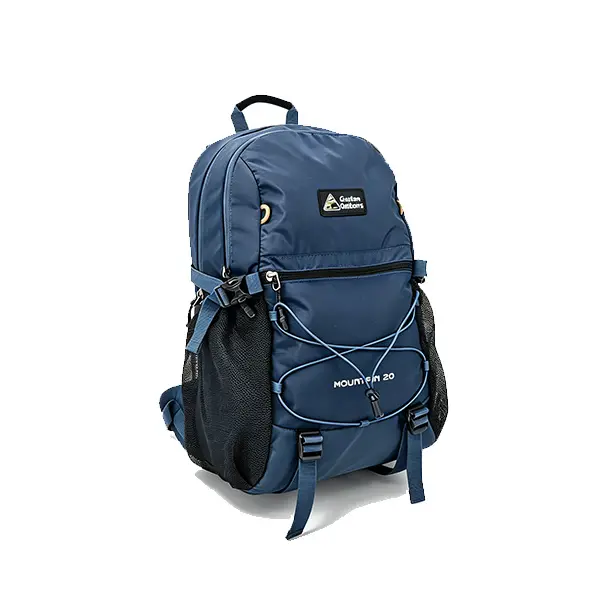
Twenty to thirty-five liters: water, food, a shell, a first-aid kit, and a map. Most have a hydration sleeve, hip belt pockets, and external lash points. Above about 7 kg, you want a real hip belt rather than a webbing strap.
Multi-day and expedition packs
Fifty to seventy-five liters covers two to five days; above that you’re in expedition territory for winter loads and long self-supported routes. An internal frame and a padded hip belt should carry roughly 60 to 80 percent of the weight, with the shoulders stabilizing the load. Fit starts with torso length, not height: measure from the bony bump at the base of your neck to the top of your hip bones, then match that number to the pack’s size range.
Hydration packs
Five to fifteen liters built around a reservoir and a drinking tube. The reservoir sits close to your back to keep the load stable, and the pack stays thin so it doesn’t bounce when you run. Once you need more than a phone, a snack, and a light layer, a day hiking pack with a hydration sleeve works better.
Technical and tactical packs
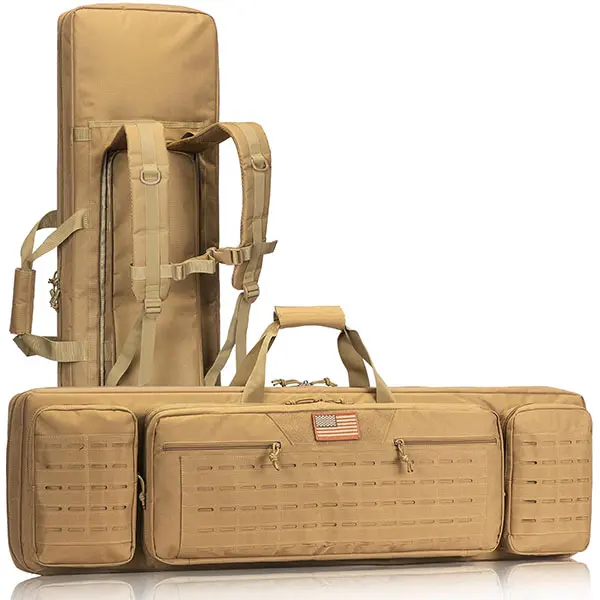
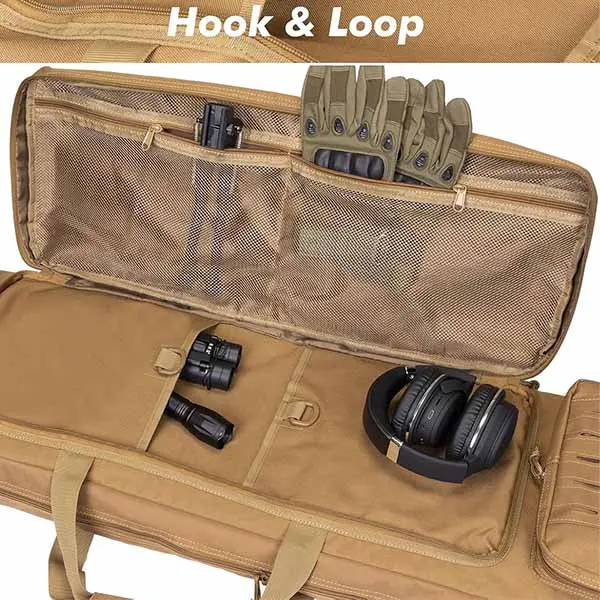
Reinforced fabric, webbing grids for attaching pouches, and a harness built to hold a shifting load. Designed for military use originally and now common for hunting, range work, and emergency kits. The grid is the draw, and it adds weight even when you leave it empty.
What types of backpack materials are used
Shell fabric, coating, and padding do three different jobs, and a pack can be strong at one and weak at another. The shell resists abrasion, the coating handles water, and the padding decides how the pack feels after four hours.
| Material | Where it’s used | Strengths | Watch out for |
|---|---|---|---|
| Nylon | Most shells, 210D to 1000D | High abrasion resistance per gram | Absorbs some water; warm wash only |
| Polyester | Linings, budget shells | Low water absorption, holds color | Weaker at equal weight |
| Cotton canvas | Lifestyle packs | Quiet, repairable, ages well | Heavy, slow to dry, shrinks in hot water |
| Ripstop weave | Lightweight shells | Tears stop at the grid | Thin versions puncture easily. |
| High-tenacity nylon | Bases and wear panels | Very high tear strength | Stiff, adds weight |
| TPU laminate | Waterproof panels, welded seams | Fully waterproof | Can delaminate; hard to repair |
| Spacer mesh | Back panels, strap faces | Airflow and drainage | Little cushioning alone |
| Closed-cell foam | Straps, hip belts | Cushions don’t hold water. | Adds bulk when overused |
Denier and fabric weight
Denier is the weight in grams of 9,000 meters of a single yarn. A 210D fabric uses a fine yarn and feels smooth; a 1000D fabric uses a thick yarn and feels stiff. Higher denier resists abrasion better and weighs more, which is why many packs put heavy fabric on the base and lighter fabric on the sides.
Coatings and water resistance
Most shells carry a polyurethane coating on the inside face and a durable water-repellent finish on the outside. The coating does the waterproofing; the finish makes water bead and roll off so the face fabric doesn’t soak up and get heavy. The finish wears off with use and needs reapplying. Water resistance is quoted as a hydrostatic head in millimeters, the height of a water column the fabric holds back before leaking, but seam construction usually matters more than the number.
Webbing, spacer mesh, and foam
Webbing takes the load, running through the shoulder straps, compression straps, and adjustment points, and it’s what fails first on a cheap pack. Spacer mesh is the open knit on strap faces and back panels: it moves air and drains water but adds almost no cushioning. Cushioning comes from the foam underneath, and closed-cell foam suits packs that get wet, since open-cell foam holds water for days.
How do backpacks for women and men differ?
The differences sit in harness geometry: torso-length range, strap shape, and hip belt angle. A backpack for women and a backpack for men built on the same model usually carry identical capacity, fabric, and features.
Torso length and back panel
A women’s pack is built around a shorter torso range and a narrower back panel; a men’s pack assumes a longer torso and a wider load-bearing area. When the panel length is wrong, no strap adjustment fixes it, because the hip belt lands in the wrong place on your pelvis.
Shoulder straps and hip belt shaping
Women’s straps are narrower, set closer together at the top, and curve around the chest. Men’s straps are wider and straighter, starting further apart. Hip belts follow the same logic: a women’s belt is angled to wrap a wider, more flared hip, while a men’s belt sits closer to perpendicular.
When fit matters more than the label
Under about 25 liters and under about 7 kg of load, these differences rarely matter, since a daypack doesn’t load the hips enough for belt shape to do anything. Above 50 liters, or on any pack you’ll wear for hours, torso length is the one measurement worth taking. The labels are averages too: plenty of men fit a woman’s harness better, and the reverse is true.
How to wash a backpack without wrecking it
Check the care label before anything gets wet, empty every pocket, and pull out metal frame stays and detachable straps. Hand washing is the safe default; machine washing works for simple nylon or polyester packs, and nothing here belongs in a tumble dryer.
Start with the care label.
Most packs carry a sewn-in label with cleaning instructions, usually inside the main compartment along a side seam. The symbols come from the care labeling system used on textile goods in the United States, set out in the FTC Care Labeling Rule at 16 CFR Part 423, which also recognizes the ASTM D5489 symbol set. Backpacks fall outside that rule’s definition of wearing apparel, so the label is the maker’s choice rather than a legal requirement, but most print the same symbols anyway. Follow it. Hand washing is the right call when the label says so or when the pack has an internal frame, a waterproof coating, bonded decoration, or leather trim.
How to hand wash a backpack
- Open every compartment and shake out loose dirt. A vacuum with a brush attachment clears the seam corners fastest.
- Remove detachable straps, hip belts, and frame stays, and wash them separately.
- Fill a tub or sink with lukewarm water and a small amount of mild, fragrance-free detergent.
- Scrub the outside, the inside, and the strap faces with a soft brush, paying attention to the back panel and strap undersides where sweat collects.
- Run an old toothbrush along the zipper tape, where grit makes sliders stick.
- Rinse until no suds come out, then press the pack against a towel rather than wringing it.
Can you wash a backpack in the washing machine?
Sometimes. A plain nylon or polyester daypack with no frame, coating, or leather trim can take a gentle cycle in cold or warm water, around 30 to 40 degrees Celsius. Hot water is the main risk, since it weakens coatings and shrinks canvas. The steps that matter:
- Close all zippers and fasten buckles so nothing catches on the drum.
- Put the pack in a mesh laundry bag or a pillowcase.
- Use a small amount of mild liquid detergent. Skip bleach and fabric softener, which strip water-repellent finishes and leave residue in the foam.
- Run a gentle cycle with cold or warm water, not hot.
- Wash it alone or with a few soft towels, since heavy items abrade the shell.
- Air dry completely before you store it.
Canvas shrinks, so wash it in cold water only. Don’t combine nylon or canvas with other fabrics, because dye transfer causes graying.
How to clean a backpack without washing it
The question most people actually ask is how to clean a backpack without washing the whole thing, and for coated packs, that instinct is right. Full washing is a once-or-twice-a-year job. Between washes:
- Spot cleaning—mix a teaspoon of mild detergent with lukewarm water, dab with a cloth, and work from the outside of the stain inward. Blot rather than rub.
- Dry brushing—let mud dry completely, then brush it off. Washing wet mud pushes it deeper into the weave.
- Baking soda for odor—sprinkle a little inside the dry pack, leave it several hours, then vacuum it out.
- Vinegar solution—equal parts white vinegar and water handle light mildew on the shell. Test a hidden seam first.
- Zipper care—brush out the teeth, then run a little zipper lubricant along the track.
Drying and reproofing
Hang the pack upside down with every compartment open so water drains instead of pooling in the base. Dry it in shade rather than direct sun, since UV fades fabric and degrades coatings. Give a thickly padded pack two or three days, because trapped water in the foam is what causes mildew. Once it’s bone dry, reapply a water-repellent spray if the shell no longer beads water.
How to choose the right backpack type
| Scenario | Type | Capacity | Check first. |
|---|---|---|---|
| Daily commute | Daypack | 15–25 L | Back panel structure |
| Commute with a laptop. | Laptop backpack | 20–30 L | Sleeve size, raised base |
| Wet-weather city carry | Roll-top | 20–30 L | Coated fabric |
| One-bag travel | Travel backpack | 35–50 L | Clamshell opening, airline limits |
| Mixed-surface trips | Convertible | 40–55 L | Stowable harness quality |
| Gym and gear-heavy loads | Duffel backpack | 30–60 L | Strap comfort when full |
| Day hikes | Day hiking pack | 20–35 L | Hip belt, hydration sleeve |
| Two- to five-day treks | Multi-day pack | 50–75 L | Torso length, belt fit |
| Running and cycling | Hydration pack | 5–15 L | Reservoir size, bounce |
Three checks apply across all of them. Load the pack to the weight you’ll actually carry before judging the fit, since one that feels fine empty can be miserable at 12 kg. Set the hip belt on top of your hip bones so it carries the load rather than hanging off your waist. And buy for the thing you do most weeks, not the trip you take once a year.
Frequently asked questions
How long does a backpack last?
Use matters more than price. A pack carried daily usually shows wear at the strap attachment points, the base corners, and the zipper tape after three to five years. Webbing and foam degrade faster than shell fabric, so the harness often goes before the body does. Retire a pack when the frame sheet cracks, the hip belt stops transferring load, or the coating flakes enough to let water through.
What size backpack counts as a carry-on?
Most airlines publish a limit close to 55 by 40 by 20 centimeters, but the number varies by carrier, and some fares allow less. Check your airline before you fly, and measure the pack loaded rather than empty, since compression straps change the shape. Weight limits are separate from size limits, and they’re often the tighter constraint.
Should you own more than one backpack?
Two covers for most people: a 20- to 30-liter everyday pack and a 40- to 55-liter travel or hiking pack. Sharing one pack between both jobs forces compromises in both directions, because a travel pack is too bulky for a commute and a daypack can’t hold a week of clothing. Add a third only when a specific activity needs it, like running with water or carrying camera gear.