The outdoor bag market in 2026 is increasingly driven by function, versatility, durability, and customization rather than appearance alone.
As hiking, camping, tactical activities, outdoor travel, and everyday commuting continue to overlap, consumers expect one bag to perform across multiple situations. For retailers, distributors, and private-label brands, this shift is changing the way outdoor bag collections are planned and sourced.
Market research continues to point toward long-term growth in the global backpack category, supported by outdoor recreation, travel, urban mobility, and changing consumer preferences. For B2B buyers, however, the opportunity is not simply to stock more backpacks. The greater opportunity lies in identifying the features consumers are willing to pay for.
In 2026, that increasingly means modular organization, improved weather protection, ergonomic carrying systems, lightweight construction, multifunctional design, and greater customization.
Here are some of the most important outdoor bag trends brands and buyers should consider when developing their next collection.
1. Modularity Is Moving Beyond Tactical Backpacks
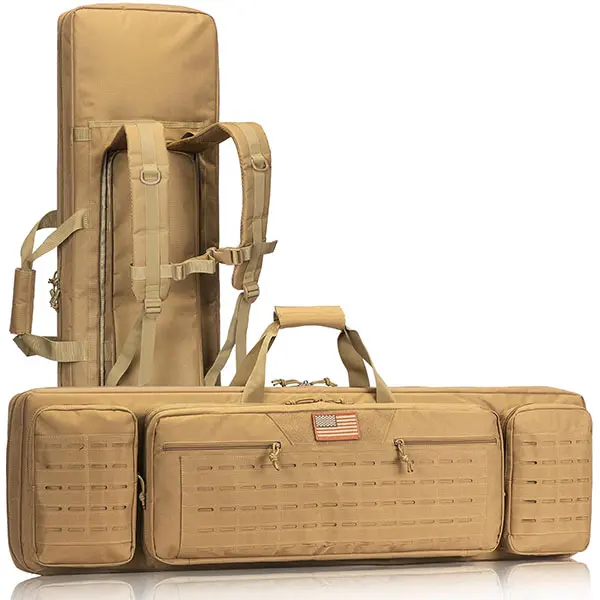
MOLLE systems were once strongly associated with military and tactical equipment. Today, modular organization is increasingly appearing across hiking backpacks, outdoor daypacks, hunting bags, fishing bags, and even urban travel backpacks.
Features such as:
- MOLLE webbing
- Laser-cut attachment panels
- Detachable accessory pouches
- Removable bottle holders
- External tool loops
- Adjustable compression straps
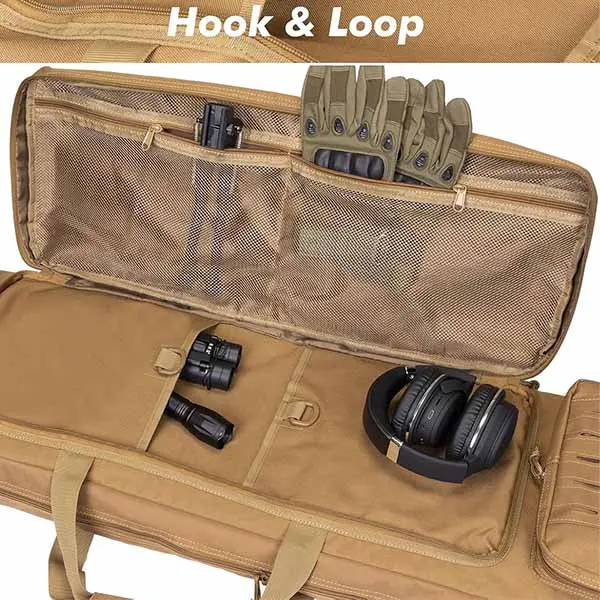
- Modular internal organizers
allow users to adapt one backpack to different activities.
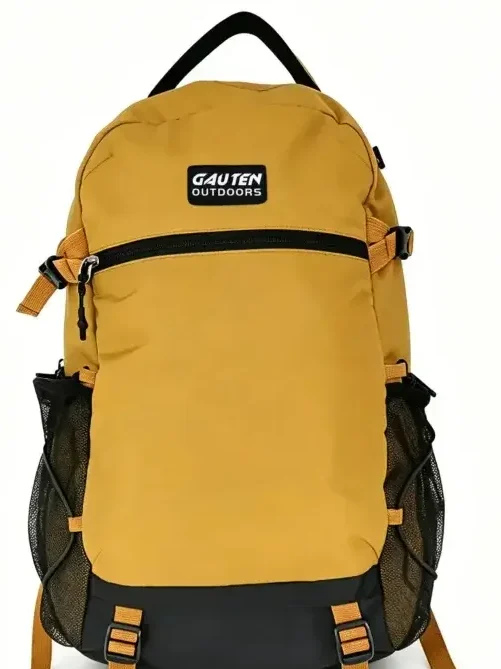
A 30–35L backpack, for example, can function as a relatively streamlined hiking pack on one trip and carry additional first-aid, hydration, or equipment pouches on another.
What This Means for B2B Buyers
For brands and distributors, modularity can create opportunities to develop a broader product ecosystem around a single core backpack.
Instead of creating completely separate bags for every use case, buyers can consider a base backpack plus optional accessories.
This approach can help expand a product line with:
- First-aid pouches
- Bottle holders
- Waist packs
- Tool organizers
- Utility pouches
- Detachable front bags
It also gives private-label brands more flexibility to build different product packages for hiking, hunting, tactical, travel, and everyday outdoor markets.
2. Waterproofing Is Becoming a Construction Issue, Not Just a Fabric Claim
Outdoor customers increasingly understand the difference between a bag made from water-resistant material and a genuinely weather-protective bag.
Simply applying a waterproof coating to the fabric is no longer enough for products intended for rain-heavy environments, water sports, fishing, or demanding outdoor use.
More advanced outdoor bags increasingly combine features such as:
- TPU or PU-coated fabrics
- Waterproof or water-resistant zippers
- Welded or sealed seams
- Roll-top closures
- Reinforced bottom panels
- Water-resistant internal linings
- Covered zipper structures
Fully waterproof backpacks may use welded construction to reduce water penetration through stitched seams, while conventional hiking backpacks may combine coated fabric with rain-resistant zipper designs and separate seam protection.
Different Markets Need Different Levels of Waterproofing
Not every outdoor backpack needs dry-bag-level construction.
A lightweight hiking daypack may only require protection against occasional rain, while fishing, kayaking, boating, and expedition products may require much more comprehensive waterproof construction.
For B2B buyers, the key is to define the real use environment first rather than simply asking a supplier for a “waterproof backpack.”
When developing a product, consider:
- Expected rainfall and climate
- Duration of outdoor exposure
- Whether the bag may be placed on wet surfaces
- Whether electronics will be carried
- Required level of water resistance
- Target retail price
Matching the construction to the actual application helps avoid unnecessary manufacturing costs while still delivering the level of protection customers expect.
3. Ergonomics and Load Distribution Are Becoming Major Selling Points
Outdoor consumers are paying more attention to carrying comfort, particularly when choosing hiking, trekking, hunting, and travel backpacks.
As carrying time and load increase, small structural differences become much more noticeable.
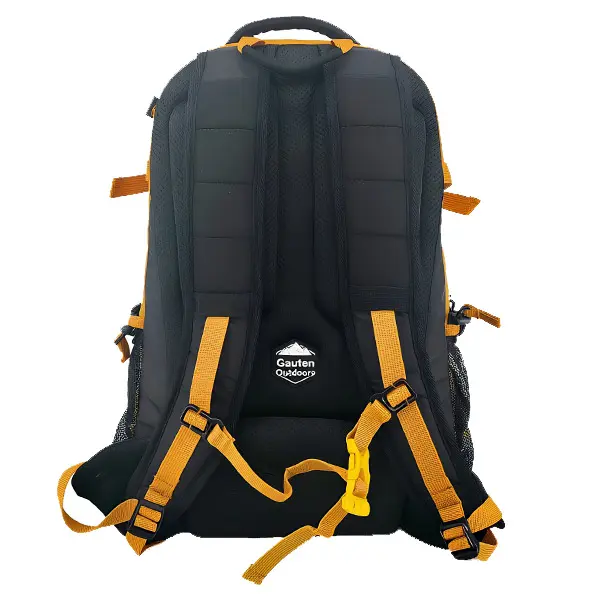
Important ergonomic features include:
- Padded shoulder straps
- Contoured or S-shaped shoulder straps
- Breathable mesh back panels
- Ventilation channels
- Adjustable sternum straps
- Padded hip belts
- Load-lifter straps
- Adjustable torso systems
- Internal support structures
A good carrying system does more than make the shoulder straps feel softer. It helps distribute weight across the shoulders, back, chest, and hips.
Why This Matters for Private-Label Brands
Comfort-related complaints often emerge only after customers have used a backpack for several hours.
For this reason, B2B buyers should evaluate more than appearance during sampling.
Useful sample tests can include:
- Loading the backpack at its intended capacity
- Walking with the pack for an extended period
- Checking shoulder pressure
- Evaluating strap slippage
- Testing back-panel ventilation
- Assessing balance during movement
For manufacturers, the ability to modify strap width, padding density, back-panel construction, torso length, and hip-belt structure can therefore become an important OEM/ODM advantage.
4. Lightweight Without Looking Fragile
Another important trend is the continuing demand for lighter outdoor equipment.
Consumers want backpacks that reduce unnecessary weight but still feel strong enough for demanding use.
This is pushing manufacturers to optimize materials rather than simply using thicker fabric everywhere.
Common approaches include:
- High-strength lightweight nylon
- Ripstop fabric
- Reinforcement only in high-wear areas
- Lightweight buckles and hardware
- Optimized internal frames
- Reduced unnecessary layers
- Strategic use of mesh
The result is a more efficient construction in which durability is concentrated where the backpack experiences the most stress.
Lightweight Does Not Always Mean Ultralight
There is also an important distinction between lightweight and ultralight.
Ultralight backpacks may sacrifice structure, padding, or accessory features to achieve the lowest possible weight.
Mainstream outdoor consumers often want something different: a backpack that feels noticeably lighter while still offering organization, comfort, and durability.
For many B2B collections, this middle ground offers a larger commercial opportunity.
5. One Backpack, Multiple Scenarios
Outdoor and urban lifestyles are becoming increasingly connected.
A consumer may use the same backpack for:
- Weekend hiking
- Daily commuting
- Air travel
- Cycling
- Short camping trips
- Gym visits
- Photography
- Outdoor events
As a result, highly specialized-looking products may have a narrower audience than bags that combine outdoor functionality with a cleaner everyday appearance.
This is encouraging more crossover designs.
Examples include:
Hiking + Commuting
A breathable hiking-style back system combined with a padded laptop compartment.
Travel + Outdoor
A clamshell opening, luggage strap, compression system, and outdoor-resistant fabric.
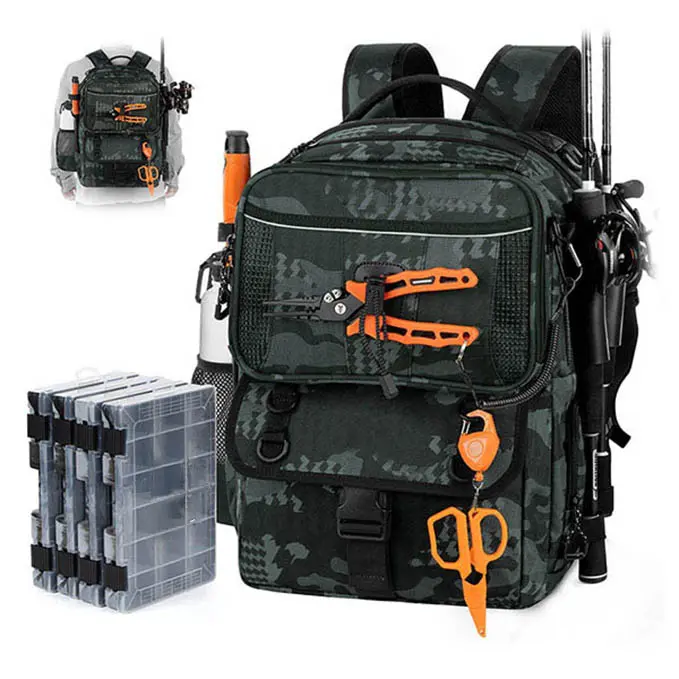
Fishing + Daypack
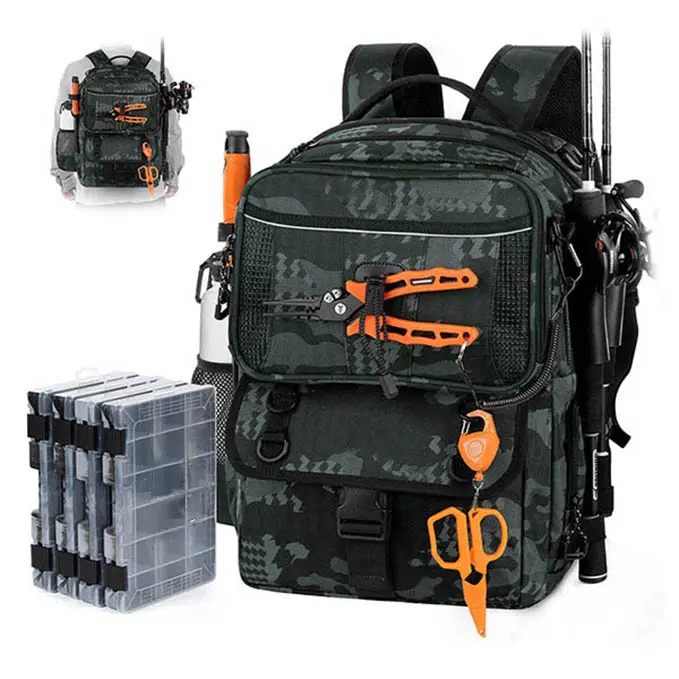
Rod attachment points, organized tackle storage, water-resistant materials, and a conventional backpack carrying system.
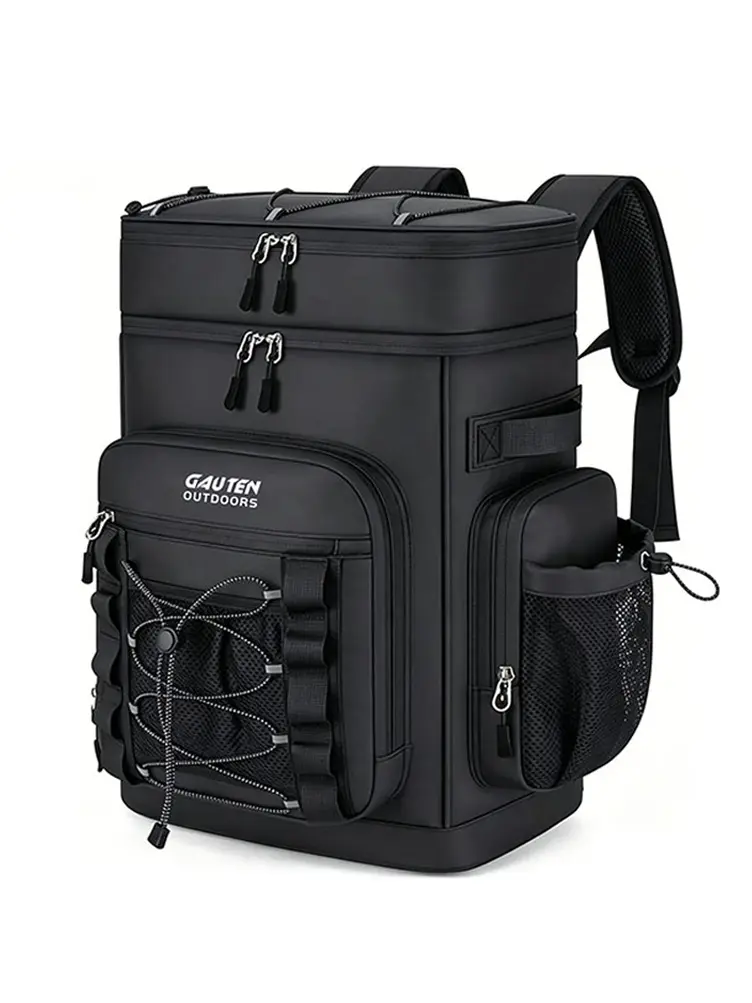
Cooler + Backpack
Insulated compartments integrated into a backpack that can still carry personal belongings and outdoor equipment.
For B2B buyers, multifunctionality can help one product reach several customer groups instead of depending on a single niche.
6. Organization Is Becoming More Purpose-Specific
Consumers are no longer satisfied with a large main compartment and one front pocket.
Outdoor bags are increasingly designed around the equipment users actually carry.
For example, a hiking backpack may include:
- Hydration bladder compatibility
- Trekking pole attachments
- Quick-access waist pockets
- Wet-clothing separation
A fishing backpack may require:
- Tackle-box compartments
- Fishing rod holders
- Tool attachment points
- Water-resistant storage
A hunting backpack may emphasize:
- Quiet fabrics
- MOLLE attachment points
- Hydration compatibility
- Reinforced equipment straps
A travel backpack may instead prioritize:
- Laptop protection
- Packing organization
- Quick-access passport pockets
- Expandable compartments
For private-label development, this means internal structure is becoming just as important as exterior styling.
The most competitive products are often those designed around a specific user workflow.
7. Sustainable Materials Are Becoming Easier to Integrate
Sustainability continues to influence sourcing decisions, particularly among brands selling into Europe and North America.
Instead of treating sustainability as a completely separate product category, more brands are integrating environmentally conscious materials into conventional backpack designs.
Options may include:
- Recycled polyester
- Recycled nylon
- Recycled webbing
- Recycled lining fabrics
- Reduced-plastic packaging
- More durable components intended to extend product life
For B2B buyers, documentation is increasingly important.
If recycled or environmentally responsible materials are part of the marketing strategy, suppliers should be able to provide relevant material information and certifications where applicable.
The goal should be to make sustainability verifiable rather than simply promotional.
8. Customization Is Moving Beyond Adding a Logo
Private-label buyers increasingly expect customization to extend much further than screen printing or embroidery.
Depending on the project, OEM and ODM outdoor bag development may involve customization of:
- Bag dimensions
- Capacity
- Fabric
- Fabric coating
- Color
- Webbing
- Buckles
- Zippers
- Shoulder straps
- Back panels
- Internal compartments
- MOLLE systems
- Logo applications
- Packaging
This gives brands more opportunity to create products that are visually and functionally distinct from generic catalog backpacks.
Structural Customization Matters More Than Cosmetic Customization
Changing a logo or fabric color can differentiate appearance.
Changing the compartment arrangement, carrying system, attachment points, or overall structure can differentiate the product itself.
For brands trying to build a recognizable outdoor product line, structural customization is therefore becoming increasingly valuable.
9. Buyers Are Paying More Attention to Manufacturing Capability
Price remains important, but sourcing decisions increasingly involve much more than the quotation.
For outdoor bags, buyers should also evaluate whether a supplier can consistently manage:
- Material sourcing
- Pattern development
- Prototype sampling
- Structural modifications
- Logo application
- Waterproof construction
- Reinforcement
- Sewing quality
- In-line inspection
- Final quality control
- Packaging
- Production scheduling
A manufacturer with stronger development capabilities can often help identify potential construction problems before mass production.
This is especially important for products with complicated structures such as tactical backpacks, hiking backpacks, waterproof bags, fishing backpacks, and hunting packs.
10. ODM Development Is Becoming More Valuable
Some buyers arrive at a factory with complete drawings, specifications, and BOMs.
Others have only:
- A reference product
- A sketch
- A target market
- A required capacity
- A feature list
- A price target
This is where ODM capability becomes particularly valuable.
An experienced bag manufacturer can help turn the initial concept into a manufacturable product through:
Concept → Material Selection → Structure Development → Sampling → Testing → Revision → Production
For emerging brands, this can reduce the amount of internal product-development work required.
For established distributors, it can make it easier to develop exclusive products instead of competing with identical catalog items sold by multiple companies.
Strategic Sourcing Considerations for 2026
The trends above suggest that B2B buyers should approach outdoor bag sourcing differently from a simple price comparison.
When evaluating a new product or supplier, consider four questions.
1. Who Is the Product Designed For?
A backpack for casual weekend hiking requires a different structure from a tactical pack, hunting backpack, or multi-day trekking bag.
Define the user first.
2. Which Features Actually Support That Use?
Avoid adding features simply because competitors have them.
Every additional zipper, strap, pocket, buckle, and reinforcement adds material, weight, labor, and cost.
Focus on features that solve real user problems.
3. Which Features Can Create Product Differentiation?
Identify the characteristics customers will immediately notice or experience:
- Better organization
- Lower weight
- More comfortable suspension
- Improved weather protection
- Modular expansion
- Unique compartment design
These features are often more meaningful than purely decorative changes.
4. Can the Supplier Support Future Expansion?
A good outdoor bag collection rarely ends with one SKU.
A successful hiking backpack may later lead to:
- Different capacities
- Hydration versions
- Lightweight editions
- Waterproof editions
- Matching waist packs
- Organizer pouches
- Travel accessories
Working with a manufacturer capable of supporting this expansion can make future product development more efficient.
What Should Outdoor Brands Focus on in 2026?
The outdoor bag market is becoming increasingly segmented, but several themes connect the strongest product opportunities.
Consumers want products that are:
- More versatile
- Better organized
- Comfortable under load
- Lighter without sacrificing durability
- Better protected against weather
- Adaptable to different activities
- Available in more distinctive designs
For B2B buyers, this means the next successful outdoor bag may not come from simply adding more features.
Instead, the opportunity lies in combining the right features for a clearly defined user.
Build Your 2026 Outdoor Bag Collection with Gauten Outdoors
At Gauten Outdoors, we support brands, retailers, distributors, and outdoor gear companies with OEM and ODM bag development.
Our customization capabilities can cover different outdoor categories, including:
- Hiking backpacks
- Fishing backpacks
- Hunting backpacks
- Tactical backpacks
- Travel backpacks
- Cooler bags
- Gym and sports bags
- Outdoor accessories
From fabric and color selection to compartment layouts, carrying systems, MOLLE structures, logo applications, and packaging, we can help adapt outdoor bags to different markets and brand positioning.
Whether you are expanding an existing collection or developing a new private-label outdoor bag, the most important starting point is understanding how your customers will actually use it.
That is what turns an ordinary backpack into a product worth choosing.