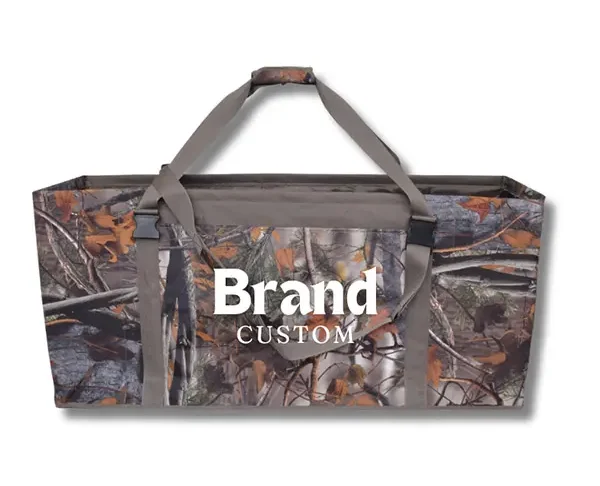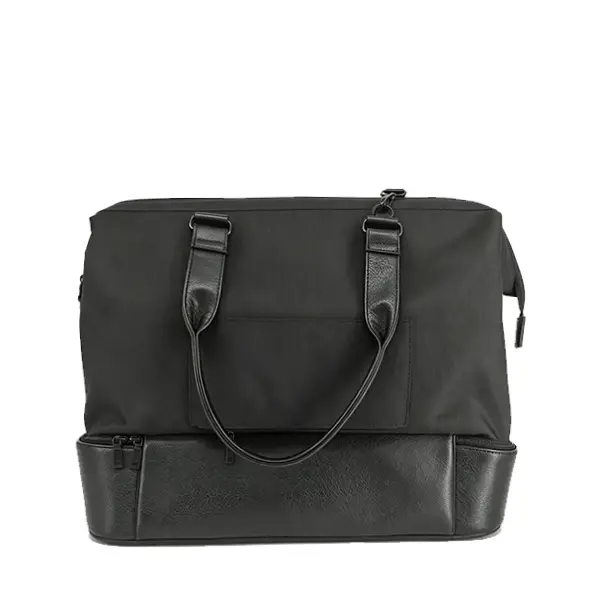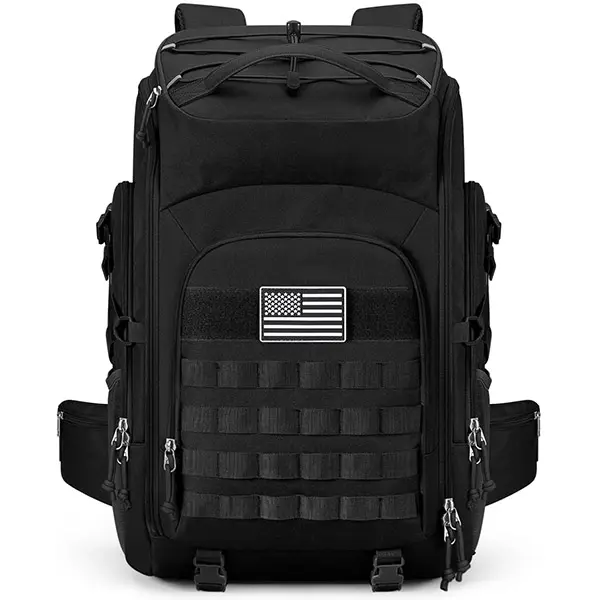
Fishing remains one of the most accessible outdoor sports in the world. In the United States alone, the American Sportfishing Association reports that 57 million Americans went fishing in 2025, generating more than 918 million fishing outings. Every one of those anglers, from weekend bank fishermen to tournament competitors, runs into the same first purchase question: tackle bag vs tackle box. The rigid box versus the soft-sided bag debate has shaped gear storage for decades, and it is still the starting point for anyone deciding how to organize and carry tackle.
Neither a tackle bag nor a tackle box is universally better. A tackle box is the stronger choice when maximum crush protection, fixed compartment organization and all-weather durability are the priority. A tackle bag is better when lightweight portability, expandable capacity and comfortable carrying over long distances matter more. The right pick depends entirely on where you fish, how much gear you carry and how you travel to the water.
The detailed comparison below breaks down both storage systems factor by factor so you can match the right one to your fishing style.
What Is a Tackle Box?
A tackle box is a rigid, hard-sided storage case, typically made of high-impact plastic or lightweight aluminum, that uses fixed trays, molded dividers and latching compartments to organize fishing gear in a structured layout.
Tackle boxes trace their lineage back to the wooden chests and metal cantilever trays of the early twentieth century, and the core concept has changed very little: stacked trays that fan open to reveal rows of divided slots. Modern versions are injection-molded from high-density polyethylene or polypropylene, materials chosen for impact resistance and low weight, while premium models use anodized aluminum for corrosion resistance in saltwater environments. In fishing terminology, the gear a box holds is collectively called tackle, and the hardware attached to the end of the fishing line, such as hooks, sinkers, swivels and snaps, is known as terminal tackle. The defining traits of a tackle box are rigidity and predictability: compartments stay exactly where the manufacturer placed them, contents are protected from crushing, and a clear lid allows a visual inventory check without opening a single tray.
What Is a Tackle Bag?
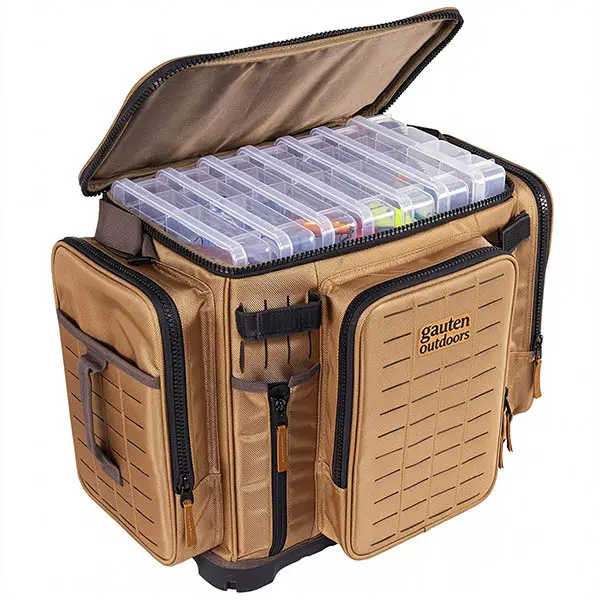
A tackle bag is a soft-sided storage bag, usually built from water-resistant fabrics such as 600D polyester or ballistic nylon, that holds removable plastic trays, hook-and-loop dividers and zippered pockets in a flexible, reconfigurable layout.
Instead of a fixed shell, a tackle bag relies on a padded fabric exterior structured around removable utility trays, the same shallow divided trays used inside hard boxes. This hybrid design gives anglers the organization of trays plus the adaptability of fabric: dividers can be repositioned in seconds, trays can be swapped to match the day’s technique, and exterior pockets keep tools and personal items separate from wet tackle. Carry systems are where bags diverge most sharply from boxes. A full-featured model may offer padded shoulder straps, a backpack harness or a single-strap layout like a tactical fishing sling bag that keeps gear accessible on one hip during wading. Because the sides are soft, a bag can compress into irregular spaces such as kayak hatches, canoe packs or the footwell of a small boat, something a rigid box can never do.
Tackle Bag vs. Tackle Box: Key Differences at a Glance
The core difference between a tackle box and a tackle bag is structure: a box is a rigid shell with fixed compartments built for protection, while a bag is a flexible fabric carrier built around removable trays and adjustable dividers for portability and capacity.
That single design difference drives every practical trade-off between the two systems:
| Feature | Tackle Box | Tackle Bag |
| Construction | Rigid plastic or aluminum shell | Water-resistant fabric over padded panels |
| Gear protection | Excellent crush and impact resistance | Moderate; relies on trays for structure |
| Organization | Fixed, non-shifting compartments | Adjustable dividers and removable trays |
| Empty weight | 2.5 to 4 lb | 1 to 1.5 lb |
| Typical capacity | 100 to 200 lures | 150 to 300 lures plus exterior pockets |
| Weather resistance | Sealed lids block rain and spray | Water-resistant coating; zippers can admit water |
| Carrying | Molded hard handle | Padded shoulder straps or backpack harness |
| Price range | Low to high depending on tray count | Mid to high for padded, multi-pocket designs |
The table makes the pattern easy to see: boxes trade weight and flexibility for protection, bags trade protection for comfort and capacity. The sections that follow examine each factor in detail.
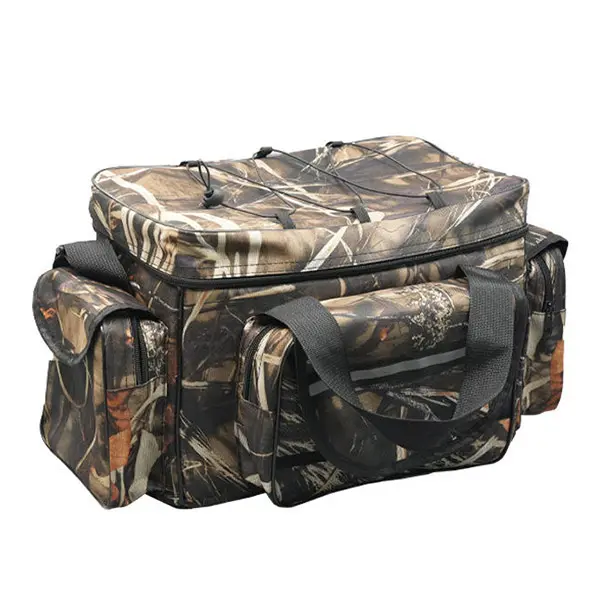
Which Offers Better Organization?
Tackle boxes offer more predictable organization because rigid walls and fixed dividers keep every item locked in place, while tackle bags offer more adaptive organization that anglers can reconfigure mid-trip to match changing techniques.
Rigid, Predictable Layouts
The strength of a hard box is consistency. Factory-molded dividers never shift, so a jig head, a spoon and a soft plastic each stay in their assigned slot even when the box is dropped on a boat deck. Stackable trays open one layer at a time, exposing only the tackle you need while the trays below stay undisturbed, and clear lids let you take stock of your inventory at a glance. For anglers who fish fast, such as tournament competitors switching lures every few minutes, that predictability saves real time on the water.
Modular, Adaptable Layouts
A soft bag approaches organization from the opposite direction. Hook-and-loop dividers on the floor and walls can carve narrow slots for sinkers or wide bays for swimbaits in seconds, and removable trays mean the main cavity can double as storage for a rain jacket, a line spool or a compact tackle setup like an OEM fishing tackle backpack configured for a single technique. Zippered side pockets segregate pliers, line clippers and electronics away from hooks and wet lures. The trade-off is discipline: without snug packing, soft-sided compartments let small items migrate, so a bag rewards anglers who tidy their gear after every trip.
Portability and Durability Compared
Tackle bags win on portability because they weigh roughly half as much empty and distribute load through padded straps, while tackle boxes win on durability because rigid shells shrug off impacts, crushing and sustained weather exposure that would ruin fabric over time.
Portability
Weight is the deciding factor for shore-bound and hike-in anglers. An empty two-tray plastic box starts at about 2.5 lb and reaches 8 to 10 lb fully loaded, carried by a hard molded handle. An empty bag starts near 1.2 lb, and even a four-tray load typically stays between 5 and 7 lb spread across a shoulder strap or backpack harness. Soft sides also let a bag conform to tight storage: under a truck seat, inside a kayak hatch or compressed beside a cooler. If your fishing involves long walks, wading or public transport, the bag advantage is decisive.
Durability and Weather Protection
Rigid shells are built for abuse. A hard box can be stepped on, dropped from a tailgate or slammed by sliding gear without transferring force to the tackle inside, and sealed lids keep rain, spray and dust out of the trays entirely. Fabric bags protect differently: abrasion-resistant weave and reinforced stitching handle scrapes and daily wear well, but a bag depends on its internal trays for crush resistance, and zippers are a known weak point for water intrusion. Saltwater anglers in particular find that boxes resist corrosion better over years of use, while bags require regular rinsing, drying and zipper care to prevent mildew and salt buildup.
Capacity and Storage: Which Holds More?
Tackle bags hold more overall because removable trays stack efficiently inside the main cavity and exterior pockets add storage for tools and accessories, while tackle boxes offer a smaller but more securely organized capacity of roughly 100 to 200 lures across two to four trays.
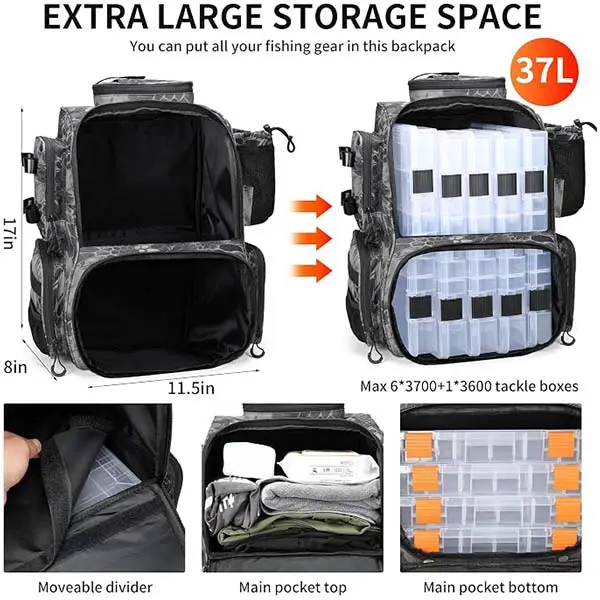
A typical two-tray box dedicates most of its internal volume to fixed compartments, with a single deep bottom bay for bulkier items. Bags scale differently: a weekend-capable model swallows four to five trays holding 200 or more lures, and mesh sleeves, side pockets and D-ring attachment points extend capacity beyond tackle into categories a box simply cannot accommodate, such as a water bottle, a headlamp or a spare reel spool.
Bait storage follows the same logic. Yes, you can and should put bait in your tackle storage, with one qualification: artificial lures, soft plastics and terminal tackle belong in sealed trays or original packaging to prevent odor transfer and color bleeding, while live or cut bait should ride in a separate insulated container rather than sharing a compartment with hooks and line. Trays inside both boxes and bags handle artificial bait well, but a bag’s exterior pockets make it easier to isolate scent-bearing items from the rest of your gear.
What Should Every Fishing Tackle Box Have?
Every well-equipped tackle box, regardless of its form, should carry a organized selection of terminal tackle, a classified lure assortment, essential tools and a small safety and maintenance kit.
A complete setup covers four layers of gear:
- Terminal tackle: assorted hooks in multiple sizes, split shot and sinkers, swivels, snaps and spare line.
- Lure assortment: a few proven patterns per water column, including a topwater option, a mid-depth crankbait or spinner, and a soft plastic rig.
- Tools: line clippers, needle-nose pliers for hook removal, a hook sharpener and a small multitool.
- Contingency items: sun protection, a headlamp, dry cloth for gear and a first aid compact.
Anglers evaluating a soft-sided system should apply the same checklist, because the qualities that define a good fishing bag, such as tray retention, pocket layout and drain design, determine whether the bag can actually keep this essential kit organized rather than merely carrying it.
Which Should You Choose for Your Fishing Style?
Choose a tackle box if you fish from a boat or vehicle and value protection above all; choose a tackle bag if you walk, hike or wade to your spots and need to carry gear on your body.
The best storage choice maps cleanly onto how you reach the water:
| Fishing Style | Recommended Storage | Why |
| Boat or charter fishing | Tackle box | Rigid protection survives deck slamming; no long carries |
| Bank and pier fishing | Either, by walk distance | Short walks favor a box; long approaches favor a bag |
| Hike-in or remote fishing | Tackle bag | Padded straps and low weight pay off over distance |
| Kayak and canoe fishing | Tackle bag | Soft sides fit hatches and compress in tight hulls |
| Ice fishing | Tackle box or small bag | Compact trays keep jigs and tip-up rigs sorted |
There is no single best tackle box or bag for fishing in the abstract; the right answer is the model whose size, tray count and carry system match your dominant scenario. Retail buyers and brand owners should apply the same logic at the assortment level: a product line that pairs hard trays with soft carry systems, including tailored options such as custom fishing bags built to a target angler’s specifications, covers both storage philosophies with one coherent program.
Frequently Asked Questions
Beyond the core comparison, these answers cover the practical follow-up questions anglers most often weigh before committing to one storage system.
How long does a tackle bag typically last?
A quality soft-sided bag used weekly lasts roughly three to five years. Fabric failure is rarely the first problem; zippers, stitching at strap anchors and hook-and-loop dividers wear out first. Rinsing after saltwater exposure, full air drying before storage and occasional zipper lubrication can extend service life well beyond that range.
Can I use a regular backpack as a tackle bag?
You can, but only as a stopgap. A standard backpack lacks removable trays, so loose tackle tangles, and its fabric is usually not water-resistant enough for repeated wet-gear use. It also offers no tool retention or drain capability. Anglers who fish more than a few times a season will recover the cost of a proper purpose-built bag quickly in saved gear and frustration.
Do I need both a tackle box and a tackle bag?
Many experienced anglers own both and deploy them by scenario: the box stays in the vehicle or boat as a mobile base station, while the bag carries a curated tray selection for the walk to the spot. Because most bags are built around the same standard utility trays the boxes use, one lure inventory can serve both systems without duplicating gear.