Fishing is one of the most popular outdoor activities in the world, with roughly 40 million anglers in the United States alone, according to the American Sportfishing Association. Yet many of those anglers still head to the water with gear stuffed into whatever bag happens to be in the trunk. Hooks tangle, lures rust, and tackle boxes slide around while valuable time on the water is wasted searching for the right lure. A purpose-built fishing bag solves these problems, but only if you pick the style that matches how you actually fish.
The seven main types of fishing bags are tackle backpacks, sling packs, waist and hip packs, chest packs, fishing vests and vest packs, boat bags and tackle duffels, and cooler or dry bags. The right one for you depends on three factors: where you fish, how much tackle you carry, and how quickly you need to reach it. Shore anglers who hike to remote spots generally need a backpack, fly fishers favor chest packs and vests, and boat anglers get the most value from duffels and cooler bags.
Below is a detailed breakdown of each type, the situations where it performs best, and a practical framework for choosing the right bag for your gear and style.
The 7 Most Common Types of Fishing Bags
Fishing bags fall into seven categories, each defined by how it is carried and how it organizes tackle: tackle backpacks, sling packs, waist and hip packs, chest packs, fishing vests and vest packs, boat bags and tackle duffels, and cooler or dry bags. Most anglers eventually settle on one primary style plus one smaller backup for different situations.
Here is a quick comparison before the detailed look at each type:
| Type | Best For | Typical Capacity |
| Tackle backpack | All-day shore and hike-in fishing | 20 to 40 liters |
| Sling pack | Kayak and mobile fishing | 8 to 15 liters |
| Waist or hip pack | Short sessions, minimal gear | 4 to 10 liters |
| Chest pack | Fly fishing, frequent lure changes | 3 to 8 liters |
| Fishing vest or vest pack | Stream fishing, small tools | 5 to 10 liters |
| Boat bag or duffel | Boat fishing, gear transport | 30 to 80 liters |
| Cooler or dry bag | Bait storage, electronics protection | 10 to 50 liters |
Tackle Backpacks
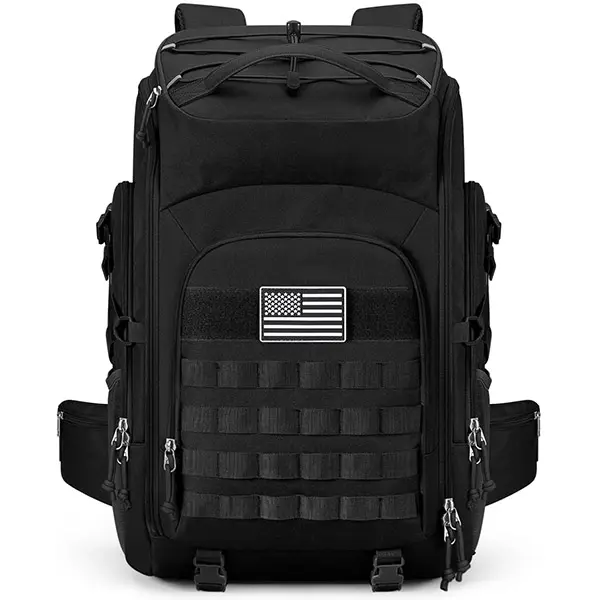
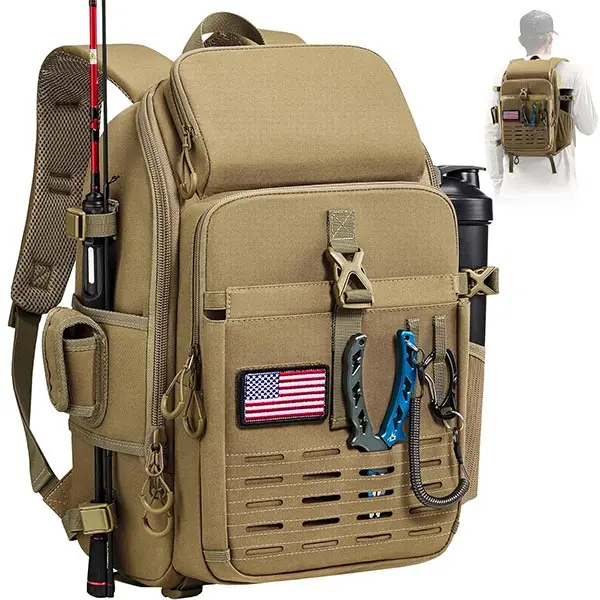
The tackle backpack is the most versatile option and the best choice for anglers who walk to their spots. It distributes weight evenly across both shoulders, holds multiple utility trays in dedicated sleeves, and usually includes external pockets for pliers, line spools, and a rain jacket. Most models accept four to six standard tackle trays. The main trade-off is access: you have to slide the pack off one shoulder to reach anything inside. For anglers shopping at the OEM level, a well-designed fishing tackle backpack typically pairs a reinforced base with water-resistant zippers to handle wet banks and boat decks.
Sling Packs
A sling pack wears over one shoulder and rotates to the front of your body without being removed, which makes it the fastest style for one-handed access. Capacity is smaller than a backpack, but the swing-around design is ideal for kayak fishing, where cockpit space is limited and every movement matters. Sling packs also suit anglers who move frequently along a bank and only need a few trays of tackle plus essential tools. The single strap can cause fatigue on very long hikes, so a padded, wide strap is a feature worth insisting on. A purpose-built fishing sling bag usually includes a quick-release buckle so the pack can be repositioned in seconds.
Waist and Hip Packs
Waist packs, sometimes called hip or lumbar packs, sit on a belt around your waist and keep both hands completely free while casting. They typically hold 4 to 10 liters, which fits a couple of small tackle trays, terminal tackle, and a few tools. Their strength is minimal weight and instant access, which is why they remain popular for short after-work sessions and for anglers who fish within a short walk of the car. Their limitation is capacity: anything beyond the essentials has to stay behind. Many anglers pair a waist pack with a larger bag left in the vehicle.
Chest Packs
A chest pack straps high on the torso, keeping tackle at eye level where you can see every compartment without looking down. That visibility, combined with instant access, makes chest packs a favorite among fly fishers who change flies and leaders dozens of times per day. Capacity is modest, enough for fly boxes, tippet spools, floatant, and nippers. Chest packs also avoid the back-sweat problem of backpacks in warm weather. On the downside, they can bounce slightly while walking long distances and are uncomfortable for anglers who prefer minimal front-of-body carry.
Fishing Vests and Vest Packs
The fishing vest is the traditional answer to on-body tackle storage, with dozens of pockets distributed across the front and sides of a wearable garment. Vests keep every small item within immediate reach and layer easily over light clothing in summer. Their weakness is total capacity: bulky fly boxes, rain gear, and lunch simply do not fit. Modern vest packs combine a mesh vest with a removable backpack or chest pack, offering a hybrid that distributes weight better while preserving front access.
Boat Bags and Tackle Duffels
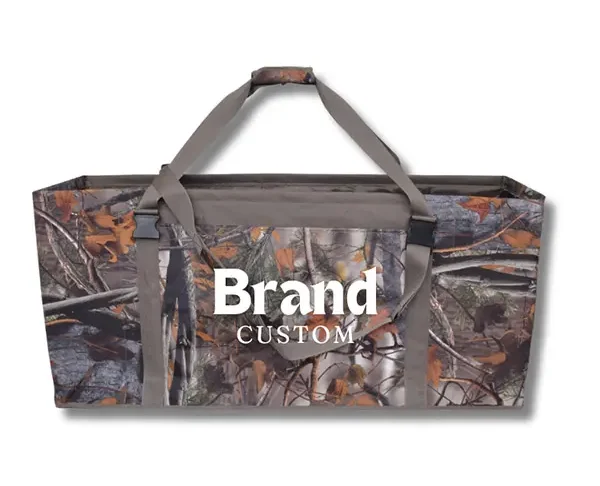
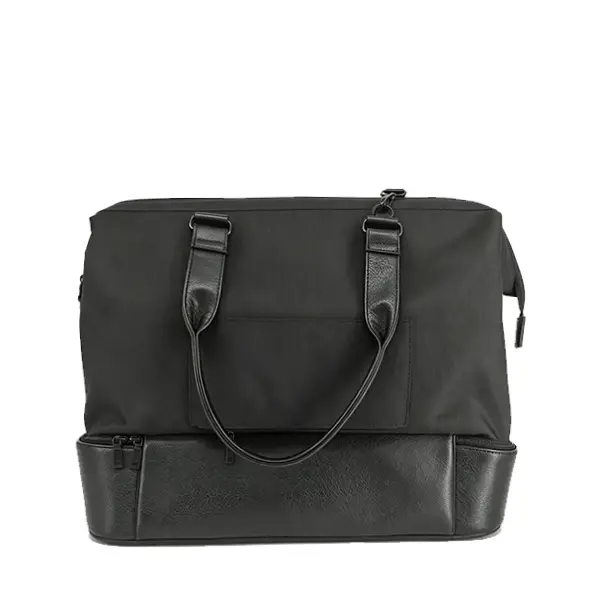
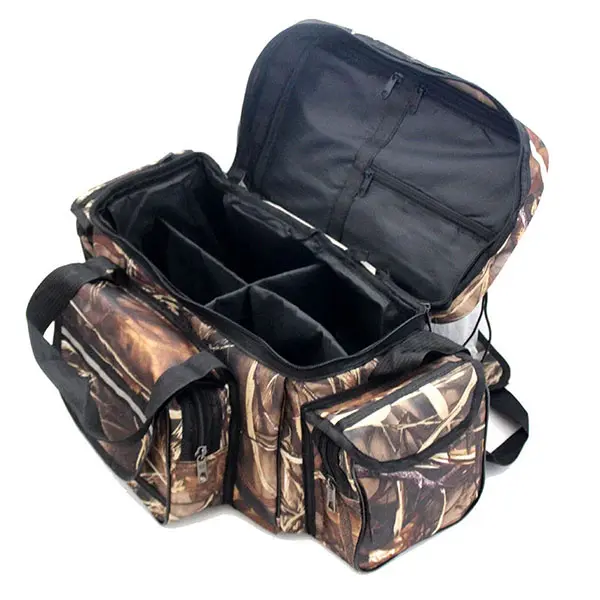
Boat bags and tackle duffels are the workhorses of boat fishing and gear transport. These bags prioritize raw capacity over portability, and most anglers carry them from the vehicle to the deck rather than on their backs. A quality boat bag features a wide zippered opening for visibility, a molded waterproof base that stands up to wet decks, and corrosion-resistant hardware that survives salt spray. Duffels are also the standard choice for group trips, tournaments, and travel, where the priority is moving a complete tackle collection in one lift.
Cooler Bags and Dry Bags
Cooler bags and dry bags serve specialized storage roles that other fishing bags cannot. A cooler bag insulates bait, drinks, and your catch, with sealed liners that contain odor and moisture. A dry bag uses rolled closures and waterproof fabric to keep electronics, spare clothing, and documents completely dry, which matters for kayak anglers and anyone fishing from open boats in rough conditions. Neither replaces a primary tackle bag, but both solve problems that no amount of pockets can.
How to Choose the Right Fishing Bag
To choose the right fishing bag, evaluate four factors in order: the way and place you fish, the amount of gear you carry, the materials and waterproofing the environment demands, and the comfort of the carry system. Anglers who work through these four questions rarely end up with the wrong bag, because each factor quickly eliminates unsuitable styles.
Match the Bag to How and Where You Fish
Your fishing method is the single biggest decision factor. Use this mapping as a starting point:
- Shore and hike-in fishing: a tackle backpack, because weight sits on both shoulders during long walks.
- Kayak and paddle fishing: a sling pack or small dry bag, because cockpit space is limited.
- Boat and offshore fishing: a boat bag or duffel, because capacity matters and walking is minimal.
- Fly fishing and small streams: a chest pack, vest, or waist pack, because fast access to small items dominates.
- Short sessions near the car: a waist pack, because anything larger is unnecessary weight.
Anglers who fish several styles should build around the one they do most often, then add a smaller secondary bag later.
Capacity and Organization
Count the tackle trays, tools, and personal items you actually carry on a typical trip, then add roughly 20 percent of headroom. A bag that is packed to the zipper is slower to use and harder to organize. Look for dedicated tray sleeves that hold utility boxes flat, external tool holders for pliers and line cutters, and at least one waterproof pocket for licenses and phones. Modular dividers extend the useful life of a bag, because the interior layout can change as your tackle collection grows.
Materials and Waterproofing
Fishing bags live in one of the harshest environments in the gear world: standing water, UV exposure, sharp hooks, and abrasive surfaces. Standard choices include ripstop nylon and polyester, typically between 420D and 1680D fabric weights, often with a PVC or polyurethane coating for water resistance. Saltwater anglers should prioritize sealed or water-resistant zippers, corrosion-resistant hardware, and a wipe-clean base. For a broader discussion of how tackle and related equipment is defined and classified, the Wikipedia entry on fishing tackle is a useful reference.
Comfort and Accessibility
Comfort determines whether a bag gets used. Padded shoulder straps, an adjustable sternum strap, and a ventilated back panel matter far more on a six-hour session than they do in the store. Accessibility is the other half of the equation: a bag you must fully remove to reach a pair of pliers costs you fishing time on every use. Sling and chest designs win on access, backpacks and duffels win on capacity, and the best choice is the one whose weakness you will notice least.

What Makes a Good Fishing Bag?
A good fishing bag combines durable, water-resistant materials, sensible compartment layout, comfortable load-carrying hardware, and reinforcements at every high-wear point such as the base, seams, and zippers. Organization matters as much as toughness, because a bag that keeps every item reachable lets you fish instead of fumbling.
The specific quality markers to check are:
- A reinforced or molded base that resists water soak from wet ground and decks.
- Water-resistant or sealed zippers, plus storm flaps over main compartments.
- Bartack or box-stitch reinforcement at strap attachment points.
- Corrosion-resistant buckles, D-rings, and hardware for saltwater use.
- External tool attachment points for pliers, cutters, and line spools.
- Modular or removable dividers so the interior adapts over time.
Buyers evaluating bags from a manufacturing or sourcing perspective can find a deeper feature-by-feature analysis of a good fishing bag that covers materials, construction details, and specification standards.
Which Type of Fishing Bag Is Right for You?
There is no single best fishing bag for every angler; the right type is the one that matches your dominant fishing scenario, your typical gear load, and the access speed your technique demands. The decision matrix below condenses everything above into one reference:
| Fishing Scenario | Recommended Type |
| All-day shore fishing with lots of tackle | Tackle backpack |
| Kayak or paddle craft fishing | Sling pack plus dry bag |
| Boat, pier, or offshore fishing | Boat bag or tackle duffel |
| Fly fishing on rivers and streams | Chest pack, vest, or waist pack |
| Short sessions close to the vehicle | Waist or hip pack |
| Keeping bait and catch fresh | Cooler bag |
| Multi-day and travel fishing | Tackle duffel |
If your checklist points in two directions, remember that many anglers solve the problem with two bags rather than one compromise. Retailers and sourcing teams should also note that demand increasingly splits along these scenario lines, which is why many buyers now specify custom fishing bags tailored to a single fishing style rather than accepting generic designs.
FAQs
These frequently asked questions address common follow-up concerns about fishing bags that go beyond the core selection criteria covered above.
Can I use a regular backpack as a fishing bag?
You can, but you will give up the features that make fishing bags worth owning. A regular backpack lacks tray sleeves, water-resistant zippers, a reinforced base, and external tool attachment points, so tackle ends up loose and wet gear soaks the interior. Occasional anglers can start with a standard pack, but anyone fishing regularly will notice the difference within a few trips.
What size fishing bag do I need for a day trip?
For a single-day trip, 15 to 25 liters is enough for most freshwater anglers, which translates to two to four utility trays plus tools, snacks, and a rain shell. All-day sessions or kayak trips that require extra safety gear push the requirement toward 25 to 40 liters. Measure by the trays you actually carry rather than by liter count alone, since tray dimensions vary.
How do I maintain a fishing bag in saltwater conditions?
Rinse the entire bag in fresh water after every saltwater outing, including zippers and hardware, then dry it fully open and out of direct sunlight. Apply zipper lubricant monthly, inspect strap stitching for early wear, and wipe the interior with mild soap rather than detergents, which can degrade water-resistant coatings. A consistent rinse routine can double the service life of a bag used in saltwater.