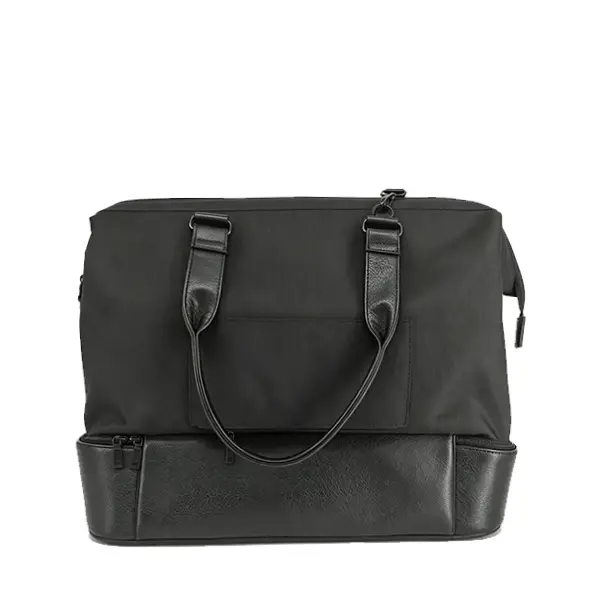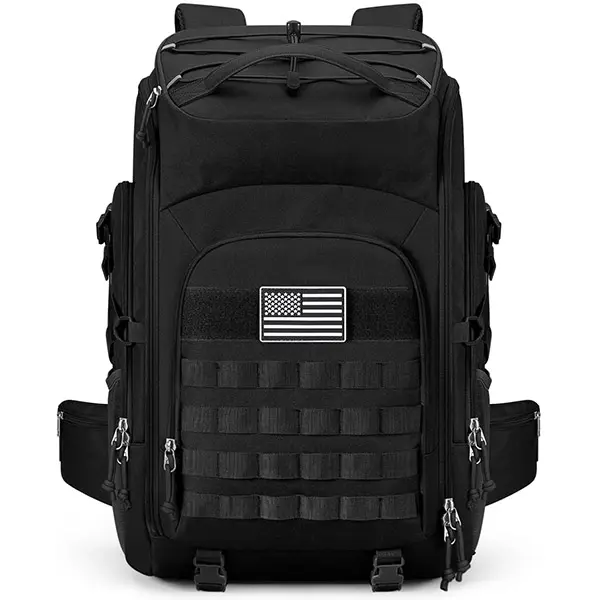
Most business travellers board with one bag and a laptop inside it, a combination that laptop backpack ranges are built around, and then discover at the gate that the airline counts that bag against two separate allowances. The confusion is rarely about the bag itself. It is about which of the two cabin slots the bag is being charged to, and in 2026 that accounting has become noticeably stricter at both ends of the fare scale.
A laptop bag is hand luggage in the everyday sense, because it travels in the cabin with you, but airlines almost never use the phrase that way. In practice a laptop bag is treated as your personal item when it fits completely under the seat in front of you, and it is counted as your main cabin bag when it is too deep or too tall to stow there. The deciding factor is the measured, packed footprint of the bag and where it can be stored, not what the product is called.
The rest of this guide follows the order a traveller meets the problem, from the two cabin allowances to the numbers a gate agent will actually measure.
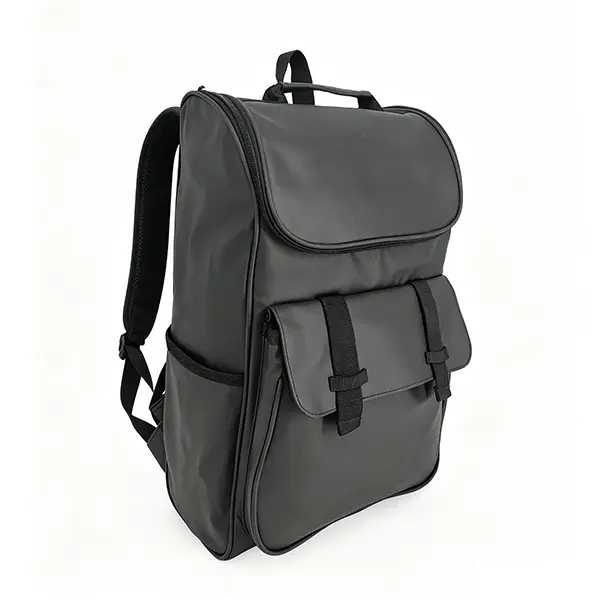
What Is the Difference Between Hand Luggage and a Personal Item?
Hand luggage is the umbrella term for everything you carry into the cabin, and airlines divide that allowance into two separate slots: one larger bag for the overhead bin and one smaller personal item for the space under the seat in front of you. A personal item is defined by where it goes, not by what it is.
That definition explains why a slim briefcase boards free while a slightly larger tote gets challenged. The overhead slot competes with every other passenger for bin space, so carriers enforce its external dimensions, while the under-seat slot belongs to your row alone, so carriers enforce its depth. Passenger guidance from the FAA carry-on guidelines puts the practical ceiling at roughly 45 linear inches for a cabin bag on most airlines and advises stowing heavy items under the seat rather than overhead, which is exactly where a loaded laptop bag belongs.
| Item | Personal item | Main cabin bag |
| Where it is stowed | Under the seat in front | Overhead bin |
| Typical published size | 40 x 30 x 15 cm to 45 x 35 x 20 cm | 55 x 40 x 20 cm to 56 x 45 x 25 cm |
| Critical dimension | Depth and height | Full external length, width and depth |
| Included in the base fare | Usually yes | Not on most low-cost fares |
| Typical examples | Laptop bag, handbag, small daypack | Roller case, 40 L travel pack, duffel |
When Does a Laptop Bag Count as a Personal Item?
A laptop bag counts as a personal item when its packed outer dimensions fit inside the carrier’s under-seat allowance and it carries work essentials only. Three conditions decide it: the bag slides under the seat without force, it is soft enough to give slightly, and it holds no clothing, shoes or toiletries beyond a single overnight change.
Shape matters as much as volume. A 20 L messenger bag, a structured briefcase, a slim daypack and a tote with a padded sleeve all behave like personal items because their depth stays close to a laptop plus a charger. A 40 L travel pack with a suspended laptop compartment usually does not, even when its litre rating looks modest, because the frame and the load push the depth past the under-seat gap. The trade-offs between types of backpacks read more clearly by structure than by volume, which is the useful axis here. Travellers also tend to overestimate the allowance: a bag holding a 16 inch laptop, a charger, a notebook and a folder of A4 paper is already close to the practical limit.
When Does a Laptop Bag Count as the Main Cabin Bag?
A laptop bag is counted as the main cabin bag once it can no longer be stowed under the seat. Five signals trigger that reclassification: a packed depth beyond about 20 cm, wheels or a rigid frame, a full set of clothing, outer pockets left bulging, and any capacity above roughly 40 L.
Wheels are the clearest signal. A trolley sleeve and handle housing add several centimetres of depth that the under-seat gap cannot absorb, so a rolling laptop bag is measured against the overhead allowance in almost every case. Overstuffing does the same more quietly, because a soft bag packed to its seams loses the compression that would let it slide into place.
Can You Bring a Laptop Bag and a Cabin Case Together?
On most full-service fares, yes. The allowance is one overhead bag plus one personal item, so a laptop bag under the seat and a roller in the bin is the intended configuration rather than a workaround. That structure collapses on three fare types: basic economy on some network carriers, ultra-low-cost tickets that include only an under-seat bag, and any fare where the overhead bag is a paid add-on. Before packing, confirm three things in the fare rules: whether an overhead bag is included, whether a personal item is included separately, and whether the personal item has a published size at all.
What Size Laptop Bag Can You Bring on a Plane?
Aim for 45 x 35 x 20 cm (18 x 14 x 8 in) or smaller to keep a laptop bag inside the personal-item category, and stay below 56 x 36 x 23 cm (22 x 14 x 9 in) if you intend to use the overhead bin. Both figures cover most network carriers worldwide.
The table groups published allowances by carrier type rather than by name, because the pattern repeats across regions and the numbers shift more between fare tiers than between carriers.
| Carrier category | Overhead bag | Under-seat bag |
| Large US network carriers | 56 x 36 x 23 cm | About 45 x 35 x 20 cm |
| One US carrier with a wider allowance | 61 x 41 x 25 cm | Must fit under the seat |
| US ultra-low-cost carriers | Paid add-on, 56 x 36 x 23 cm | 45 x 35 x 20 cm, free |
| European full-service carriers | 55 x 40 x 23 cm to 56 x 45 x 25 cm | 40 x 30 x 15 cm |
| European low-cost carriers | 55 x 40 x 20 cm, paid or higher fare | 40 x 30 x 20 cm to 45 x 36 x 20 cm, free |
| Regional jets on major networks | Often taken at the gate | 45 x 35 x 20 cm, both items may need to fit under the seat |
Why the Label Size Fails the Gate Sizer
Published dimensions describe the bag body. Sizers measure the widest external point, which includes wheels, feet, a protruding top handle and any pocket that bulges once packed. A case sold as 22 inches can therefore scan at 23, and a laptop bag advertised at 15 cm deep can reach 19 cm with a charger and a water bottle in the outer pocket. Measure the bag after packing it, across the widest points, and leave at least one centimetre of margin on each dimension. On a padded commuter model such as an anti-theft laptop backpack, the security panel and structured back are the likeliest sources of unlisted depth.
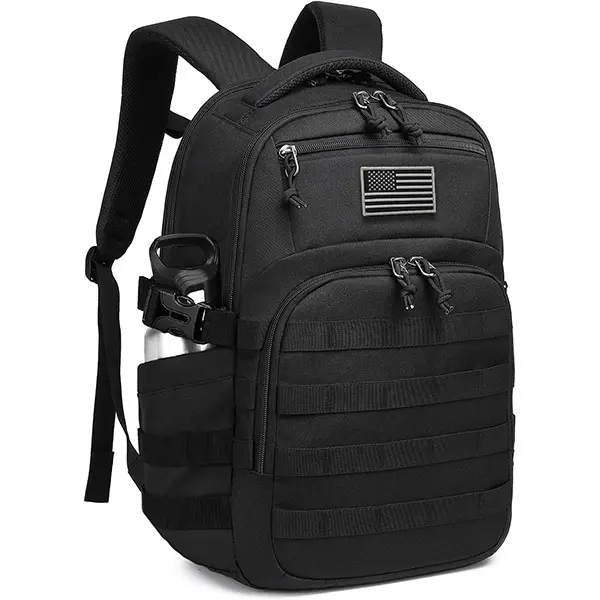
What Are the New Carry-On Rules for 2026?
No new global cabin size limit took effect in 2026. The published dimensions at every major carrier are the same as they were in 2025. What changed is enforcement and fare structure: more gate sizers, more automated measurement, more combined weighing, and a quieter removal of the large cabin bag from the cheapest European fares.
Several European low-cost carriers finished restructuring cabin allowances in early 2026, so a standard fare now includes only the under-seat bag, while the larger cabin bag is reserved for higher fare tiers or bought separately. Enforcement tightened in parallel. Physical sizers are back in routine use at the busiest bases, some carriers now weigh the cabin bag and the personal item together, and staff discretion has narrowed because carriers track how often oversized bags are waved through.
What It Costs to Get It Wrong
Penalties are not uniform, but the pattern is: the same bag costs several times more when the fee is collected at the gate.
| Situation | Typical cost in 2026 |
| Large cabin bag bought online in advance, European low-cost | About EUR 10 to 25 |
| Oversized bag charged at the gate, European low-cost | About EUR 69 |
| Carry-on bought online in advance, US ultra-low-cost | About USD 35 to 55 |
| Carry-on bought at the gate, US ultra-low-cost | About USD 79 |
| Bag gate-checked on a large US network carrier | About USD 45 to 50 |
Which Bags Do Not Count as Hand Luggage at All?
Two questions decide whether a bag travels as hand luggage at all: whether it fits the carrier’s cabin dimensions, and whether regulations allow its contents in the cabin. The second one is where travellers most often go wrong with a laptop.
Oversized luggage is straightforward. A 24 inch case, a 60 L duffel and a hard rolling laptop bag built on a suitcase chassis are all measured against the overhead allowance and, when they fail, gate-checked for a fee. The regulatory layer is less obvious. Spare lithium batteries and power banks fall under FAA battery rules, which require them in the cabin and forbid them in checked baggage, so a laptop and its spare battery belong with you in either slot, never in the hold. Screening adds a third consideration: the TSA asks passengers to remove laptops from the bag and place them in a separate bin at standard lanes, with enrolled trusted-traveller lanes exempt. That rule does not change whether the bag is a personal item, but it does change how the bag should be built, because a laptop compartment that opens flat and holds nothing metallic saves a minute at every checkpoint.
How Should You Pack and Specify a Compliant Laptop Bag?
Pack to the depth rule, not to the litre rating: laptop against the back panel, charger in a small internal pouch, documents in a flat sleeve, and nothing in the outer pockets that adds more than a centimetre. For buyers, specify the bag around a measured packed envelope rather than around a laptop screen size.
Order matters. Loading the laptop first and flat against the back keeps the rigid element away from the outer face and preserves the compression that lets a soft bag slide under the seat. Chargers and adapters belong in an internal pocket near the spine, where their bulk does not push the front panel outward.
Specification Checklist for Buyers
- Publish external dimensions at the widest point, hardware included, and state packed depth separately from empty depth.
- Keep the laptop compartment inside the under-seat allowance on any SKU sold as a personal item, and reserve deeper builds for overhead-bin SKUs.
- Design the laptop compartment to open flat to 180 degrees with no metal fittings on the inner face.
- Cap outer pocket protrusion, since a single bulging pocket can add 3 to 4 cm to the measured footprint.
- Choose a compressible shell and a light frame when the bag is meant to clear under-seat sizers rather than overhead ones.
Those five decisions determine whether a design sells as a personal item or must be presented as cabin baggage, and they cost far less to settle on the specification than at the gate. Programmes that handle design and production under one OEM bag manufacturer fix dimensions before tooling rather than after sampling, the cheaper sequence for anyone building a cabin-ready range.
FAQ
Three questions sit just outside the scope of the sections above.
Does a laptop sleeve count as a separate personal item?
A sleeve is a bag in the airline’s counting, so carrying one on its own uses up the personal-item allowance and leaves nothing for a handbag or daypack. A sleeve added to a full laptop bag is more likely to read as a second item. The workable arrangement is a sleeve inside one personal item, or a single bag with a padded compartment.
Can you carry two laptops in one laptop bag?
There is no rule against it, and screening does not limit the number of devices. The practical constraint is weight and depth: two laptops plus two chargers push a slim bag past the under-seat gap and past the personal-item footprint. Two devices justify a dual-device compartment and a reinforced base rather than a second sleeve.
What happens at the gate if your laptop bag is too big?
The usual outcome is a mandatory gate check rather than a warning, charged at the gate rate. Remove the laptop, any spare battery and any medication before handing it over, because they cannot travel in the hold. On a full flight the bag may be taken at the aircraft door regardless of size, which is the strongest argument for keeping the laptop in a bag small enough to stay with you.