A fishing tackle bag that is too small forces you to leave key gear at home, while one that is too large turns every walk from the truck to the bank into a weight-carrying workout. Size is the single most consequential decision in tackle storage, yet many anglers buy based on guesswork, sale prices, or simply the biggest bag on the shelf. Getting the fishing tackle bag size right means matching the bag to your real gear inventory, the length of your trips, and the environment where you fish.
For most anglers, a medium tackle bag in the 15 to 25 liter range is the right size, because it holds four to six standard utility trays plus tools and accessories without becoming heavy or awkward to carry. Bank anglers who move light can downsize to 5 to 15 liters, while boat anglers and anyone planning full-day or multi-technique sessions often need 30 liters or more. A well-sized fishing tackle backpack should carry what you actually use on a normal trip plus a small buffer, not your entire tackle collection.
The sections below explain the standard tray dimensions that drive bag sizing, the gear you genuinely need to carry, capacity recommendations by fishing style, and a practical method for testing a bag before you buy.
What Is the Standard Tackle Box Size?
There is no single universal tackle box size, but the industry has converged on two de facto standard utility tray formats: the 3600 tray at roughly 11 x 7.25 x 1.75 inches, and the larger 3700 tray at roughly 14 x 9 x 2 inches. Because most modern tackle bags are built around one or both of these formats, tray count is a more reliable starting point for sizing than raw liter figures.
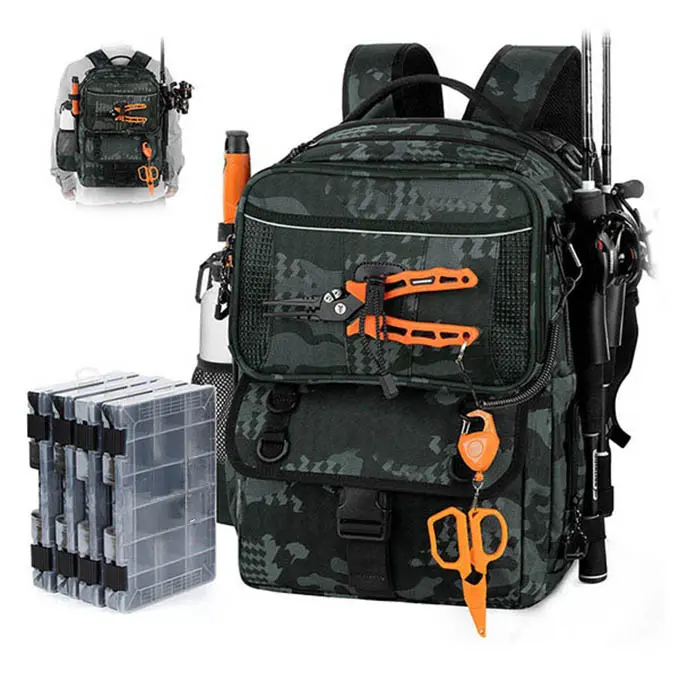
Utility trays are the clear plastic boxes with adjustable dividers that hold the terminal tackle and lure components of your fishing tackle. Nearly every soft tackle bag on the market is dimensioned so its main compartment accepts these trays in stacked rows, which means the tray system quietly dictates the bag’s internal width, depth, and height. Understanding the two formats makes bag specifications instantly comparable.
| Tray Format | Approximate Dimensions | Typical Contents | Typical Bag Fit |
| 3600 | 11 x 7.25 x 1.75 in | Terminal tackle, jig heads, small lures | 2 to 4 trays in compact bags |
| 3700 | 14 x 9 x 2 in | Crankbaits, swimbaits, bulkier rigs | 4 to 6 trays in medium and large bags |
How Utility Tray Sizes Affect Bag Dimensions
A bag that claims to hold four 3700 trays needs a main compartment at least 14 inches wide or long, roughly 18 inches of usable depth when trays are stacked two high, and enough structure to keep the trays from shifting. A bag built for 3600 trays can be noticeably narrower and shorter, which is why two bags with the same liter rating can fit completely different gear.
When comparing products, always check the manufacturer’s stated tray count and which format it refers to before looking at total capacity. A 20 liter bag designed around slim 3600 trays may hold your gear better than a 25 liter bag with a poorly divided single cavity. Tray compatibility also protects your investment: if you upgrade your bag later, standard trays move with you, and swapping trays by species or technique becomes a one-minute job instead of a full repack.
What Do I Need in My Tackle Bag for Fishing?
A functional tackle bag carries a core kit of terminal tackle, a small set of proven lures, hook-removal and cutting tools, spare line and leader material, and a few safety items such as sunscreen and a basic first-aid kit. Writing this list down before you shop converts an abstract size question into a concrete capacity number.
Most anglers who feel their bag is “too small” are actually carrying items they rarely use. A realistic gear list falls into four groups:
- Terminal tackle: hooks in two or three sizes, split shot and other sinkers, swivels, snaps, and floats or bobbers.
- Lures and baits: a handful of soft plastics, one or two hard baits per depth range, and spare jig heads. Focus on the patterns that produce in your local water.
- Tools: needle-nose pliers, line cutters or scissors, a hook file, a small measuring tape, and a towel.
- Line, leaders, and safety items: a spare spool of main line, leader material, sunscreen, insect repellent, and a compact first-aid kit.
Estimate Capacity from Your Gear List
Turn the list into a number with three quick steps. First, sort your tackle into the trays it actually fills and count them. Second, add volume for the loose items: tools, line spools, a rain jacket, water, and a small cooler or lunch if you carry them. Third, add a buffer of roughly 20 percent so zippers are never forced shut and you have room for an unexpected addition.
In practice, one filled 3700 tray occupies about 1.5 to 2 liters of bag space once you account for clearance and pocket walls. Four 3600 trays plus tools and accessories therefore point to a bag in the 15 to 20 liter class, while six 3700 trays, a rain layer, and food push you firmly toward 25 liters and beyond. If your count lands between two sizes, choose the larger one only if the extra space serves a defined purpose rather than vague future needs.
Fishing Tackle Bag Size Guide by Fishing Style
The right bag size depends on how and where you fish: mobile bank and wading anglers are best served by small bags, generalist anglers by medium bags, and boat or full-day anglers by large bags. No single size is best across all situations, which is why “what is the best tackle box bag for fishing” has no universal answer.
Small Tackle Bags: 5 to 15 Liters
Small bags suit anglers who prioritize mobility over capacity. Shore anglers who walk between spots, stream and wading fishermen, and fly anglers carrying a few boxes of flies all benefit from a light load that never has to be set down to re-rig. A small bag typically holds one to three 3600 trays or a couple of slim 3700 trays plus a tool pocket.
The trade-off is flexibility. If the bite changes and you did not pack the right tray, you are limited to what you brought. Small bags therefore work best for anglers who already know their local water and can predict which presentations will matter on a given day.
Medium Tackle Bags: 15 to 25 Liters
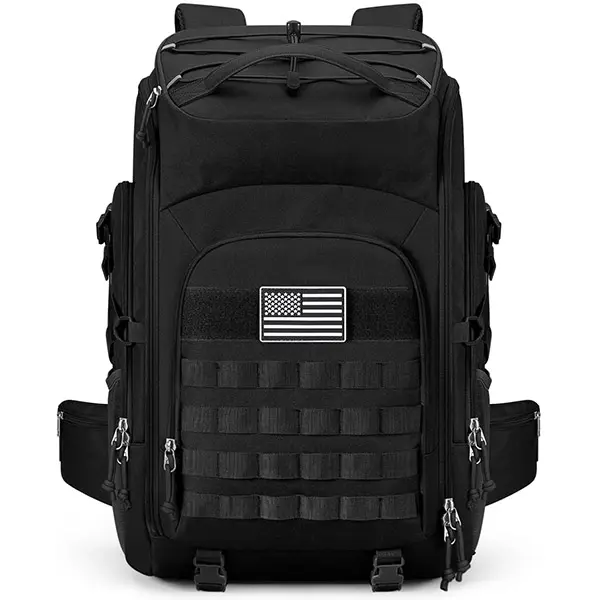
Medium bags are the most versatile option and the safest recommendation for anglers fishing a mix of venues. They carry several utility trays, leader spools, tools, terminal tackle, and a rain jacket without becoming awkward to shoulder. A tactical fishing backpack in this class keeps your hands free while moving between spots, which matters if you hike, cycle, or wade to reach fish.
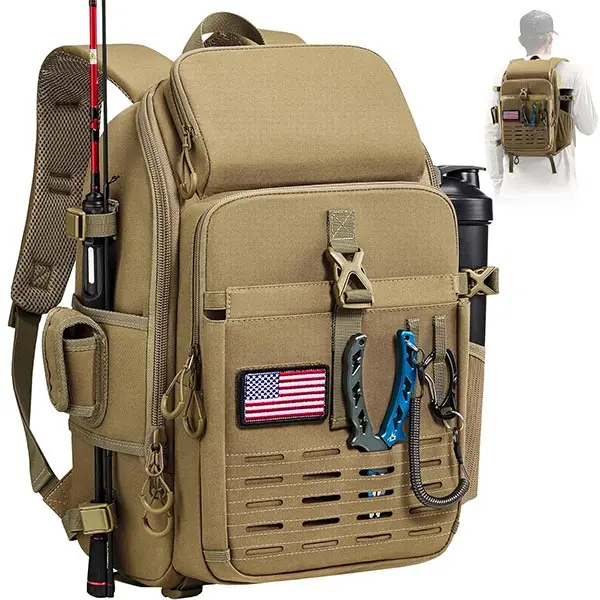
This size class also offers the widest choice of internal layouts. Look for a main compartment that swallows trays whole, side pockets that hold pliers and cutters where you can reach them without looking, and a molded or water-resistant base that survives wet decks and muddy banks.
Large Tackle Bags: 30 Liters and Up
Large bags earn their bulk when you genuinely need range: full boat days, trips where multiple rods and techniques are on the cards, family outings with shared tackle, or remote sessions where resupply is impossible. They swallow six to twelve 3700 trays plus food, layers, and electronics cases, and their padded harness systems make heavy loads manageable.
The downside is weight that grows faster than most anglers expect. A large bag loaded with twelve full trays can exceed 30 pounds before you add a jacket or water, and once packed it rarely leaves the boat deck or the tailgate. Choose this class only if your normal session, not your fantasy session, justifies it.
| Bag Class | Capacity | Typical Tray Count | Best For |
| Small | 5 to 15 L | 1 to 3 of 3600 | Short sessions, bank and wade fishing, minimalists |
| Medium | 15 to 25 L | 4 to 6 of 3600 or 3700 | All-round bank, pier, kayak, and small boat fishing |
| Large | 30 L and up | 6 to 12 of 3700 | Boat days, multi-technique sessions, group or multi-day trips |
How the 80/20 Rule in Fishing Shapes Bag Size
The 80/20 rule in fishing applies the Pareto principle to angling: roughly 80 percent of your catches come from about 20 percent of your tackle. For bag sizing, it argues for a lean kit built around proven rigs rather than the largest bag you can fill.
Experienced anglers consistently find that a small number of lures, hooks, and rigs account for the overwhelming majority of their fish, while the rest of a crowded tackle collection goes years without wetting a line. If you log a season of trips and note which trays you actually open, the pattern is usually stark: two or three trays do almost all the work.
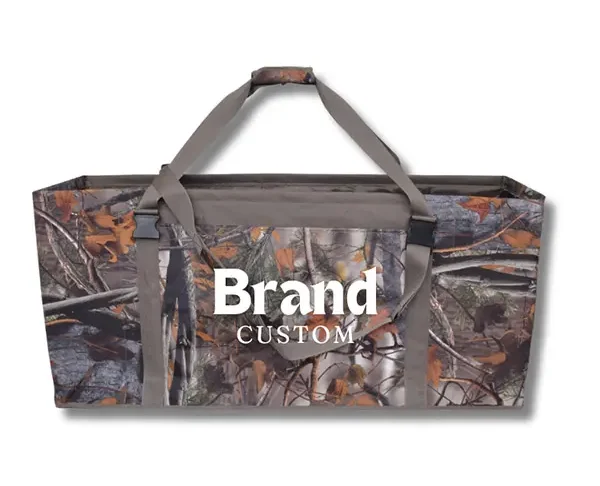
This observation is the strongest argument against sizing up. A bag chosen to fit your proven 20 percent will be lighter, faster to search, and easier to carry, and it forces the discipline of packing deliberately instead of hauling every option you own. Anglers who apply the rule systematically often request custom fishing bags dimensioned around their exact tray count and field gear list, which produces a lighter, better organized kit than any off-the-shelf size class.
The same logic protects your budget on the water. The space you save by leaving low-frequency tackle at home can hold the items that genuinely improve a trip: a rain layer, extra water, a first-aid kit, or a camera instead of a tenth tray of lure duplicates.
How to Measure and Test the Right Tackle Bag Size
To find your ideal size in four steps: inventory your gear, count the trays it fills, verify the bag’s internal dimensions against those trays, and simulate a loaded carry before buying. The process takes about twenty minutes and removes nearly all guesswork from the purchase.
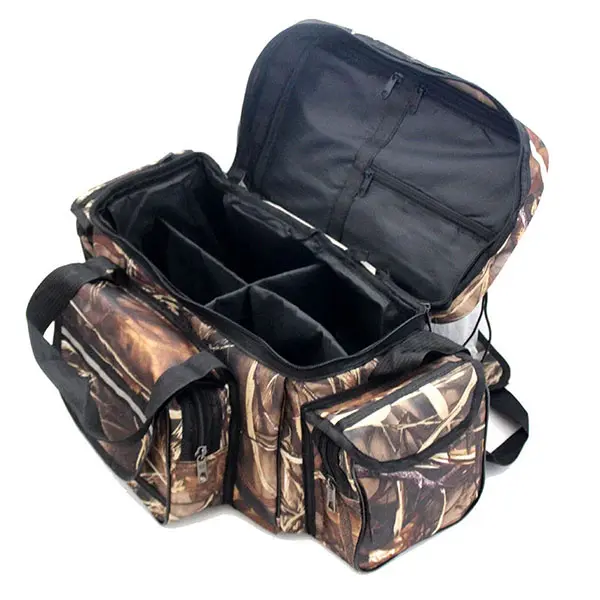
- Inventory your gear. Lay out everything you carry on a normal trip, including tools, line, and personal items. Remove anything you have not used in the last five trips.
- Count your trays. Sort the tackle into your actual utility trays and note the format, 3600 or 3700, and the number of trays filled.
- Match dimensions, not liters. Check the bag’s internal measurements against your tray footprint, including clearance to open trays without unpacking the bag.
- Test the loaded carry. Fill the bag with your trays and walk for ten minutes. A size that looks right on a shelf can dig into your shoulders at full load, especially above 25 liters.
Common Sizing Mistakes to Avoid
- Buying oversized “to be safe.” Extra space invites extra gear, and half-empty trays rattle and shift in transit. Size for your normal trip plus a small buffer.
- Ignoring tray compatibility. Trays that jam, sit too deep, or must be stacked awkwardly will annoy you on every trip regardless of total capacity.
- Overlooking empty weight. Large bags with heavy-duty fabric and hardware can weigh several pounds before anything goes in, and that weight is carried all day.
- Forgetting external pockets. Tools, leader spools, and licenses stored in external pockets free up main compartment space, effectively increasing usable capacity without increasing bulk.
A good fishing bag balances capacity, organization, and comfort in proportion to the fishing you actually do. If you follow the steps above and size the bag to your proven gear rather than your full collection, the result is a lighter, faster, and more enjoyable setup on every trip.
Frequently Asked Questions
Should I size up my tackle bag for saltwater fishing?
Saltwater anglers often benefit from one modest size increase, moving from a four-tray bag to a six-tray format, because saltwater sessions typically involve more rig changes, spare hardware, and corrosion-management items than freshwater trips.
The extra space holds dedicated items such as rinse supplies, spare swivels and snaps, and a separate tray that never mixes with freshwater tackle. Resist going beyond one size class, though, because saltwater kit still obeys the 80/20 rule, and oversized bags are harder to rinse, dry, and store between corrosive environments.
How do I know if my fishing tackle bag is too small?
The clearest signs are zippers that strain at the teeth, trays that must be removed to reach anything beneath them, and gear that migrates to your vehicle seats or pockets because it has no home in the bag.
A bag at capacity also slows you down on the water: if re-rigging takes more than a minute or you carry duplicate tools “just in case” outside the bag, capacity is the bottleneck. Count your trays, add the 20 percent buffer described above, and compare against your bag’s stated tray count to confirm whether the issue is size or layout.
Can one tackle bag work for both short and long trips?
Yes, a medium bag in the 20 to 25 liter class with a modular tray system covers both short sessions and full days for most anglers, because you simply pack fewer trays for short trips.
The key is choosing a bag whose main compartment accepts standard 3600 and 3700 trays, letting you scale contents rather than switch bags. Dedicated boat anglers with heavy loads may still keep a second large bag, but a well-designed medium bag with flexible tray storage handles the great majority of real-world fishing calendars.